Born Early in an Attack, a Toddler Met Her Mother Two Years Later
Evacuated in an incubator as a newborn, she grew up in Egypt and did not recognize her mother at first.
 Reuters World News · Delhi protests, Trump's Russia diesel deal and Panama quake
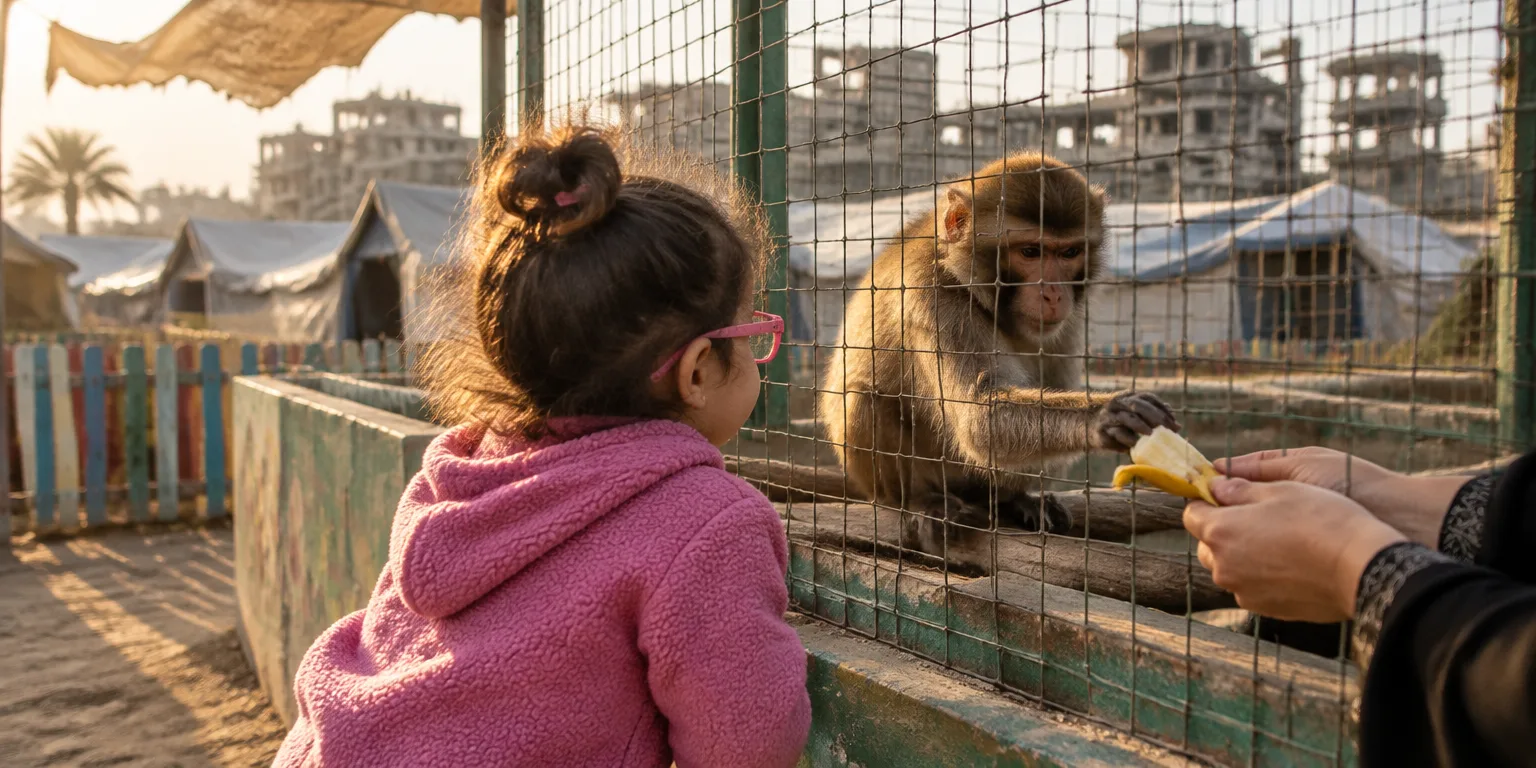
Bisan, a 2-and-a-half-year-old wearing pink glasses, is intent on a monkey while her mother helps with feeding it at a small animal park in Gaza.
Early in the war, in October 2023, the family's house was hit in an Israeli attack. It killed a sister Bisan never met, and left Soundus, who was hurt, to give birth to Bisan six weeks early. As Israeli forces closed in, Bisan was carried from Gaza while still in an incubator, among 29 premature infants who were moved out of the fighting.
What followed was a separation that lasted her first two years. Bisan lived without her mother, first in an Egyptian hospital and later in a children's home there. In March this year, a mission assisted by the United Nations returned her to Gaza to rejoin Soundus.
After two years apart, Bisan did not recognize her mother. Soundus says Bisan initially called every kind woman "Mama." Since then, she has been slowly earning back the right to be called Mama.
In Egypt, Bisan had attended a nursery. In Gaza, she now sleeps in a tent. Soundus says the hardest thing is seeing her daughter lock up without a word when blasts go off nearby.
The one comfort, Soundus says, is that "Bisan knows who she is now and who to reach for."
Questions people ask
Why would a premature baby have to be evacuated from a hospital?
Premature babies often need incubators, steady electricity, oxygen, and close medical supervision to stay warm and breathe and feed. When fighting damages hospitals or cuts power and supplies, staff cannot keep that equipment running. Moving the babies is risky, but staying can be riskier.
What did the UN mission do?
UN agencies in Gaza and Egypt help coordinate medical evacuations, permissions to cross borders, and family reunifications. That usually means arranging paperwork, transport, hospital beds, and escorts so children and sick or injured people can move safely. In Bisan's case, the mission brought her from care in Egypt back to her mother in Gaza.
Why is she living in a tent?
Large parts of housing in Gaza have been damaged or destroyed during the war, forcing many families into tents and temporary shelters. Tents offer little protection from heat, cold, noise, or nearby strikes. For a toddler, that can mean disrupted sleep, illness, and frequent fright from explosions.