Brad Jacobs Turns Small Companies Into Big, More Profitable Ones
After trash, rentals, and trucking, he screened 55 industries and chose building supplies as the next place to buy up many small companies.
 research.contrary.com · QXO: A Vertical AI Case Study
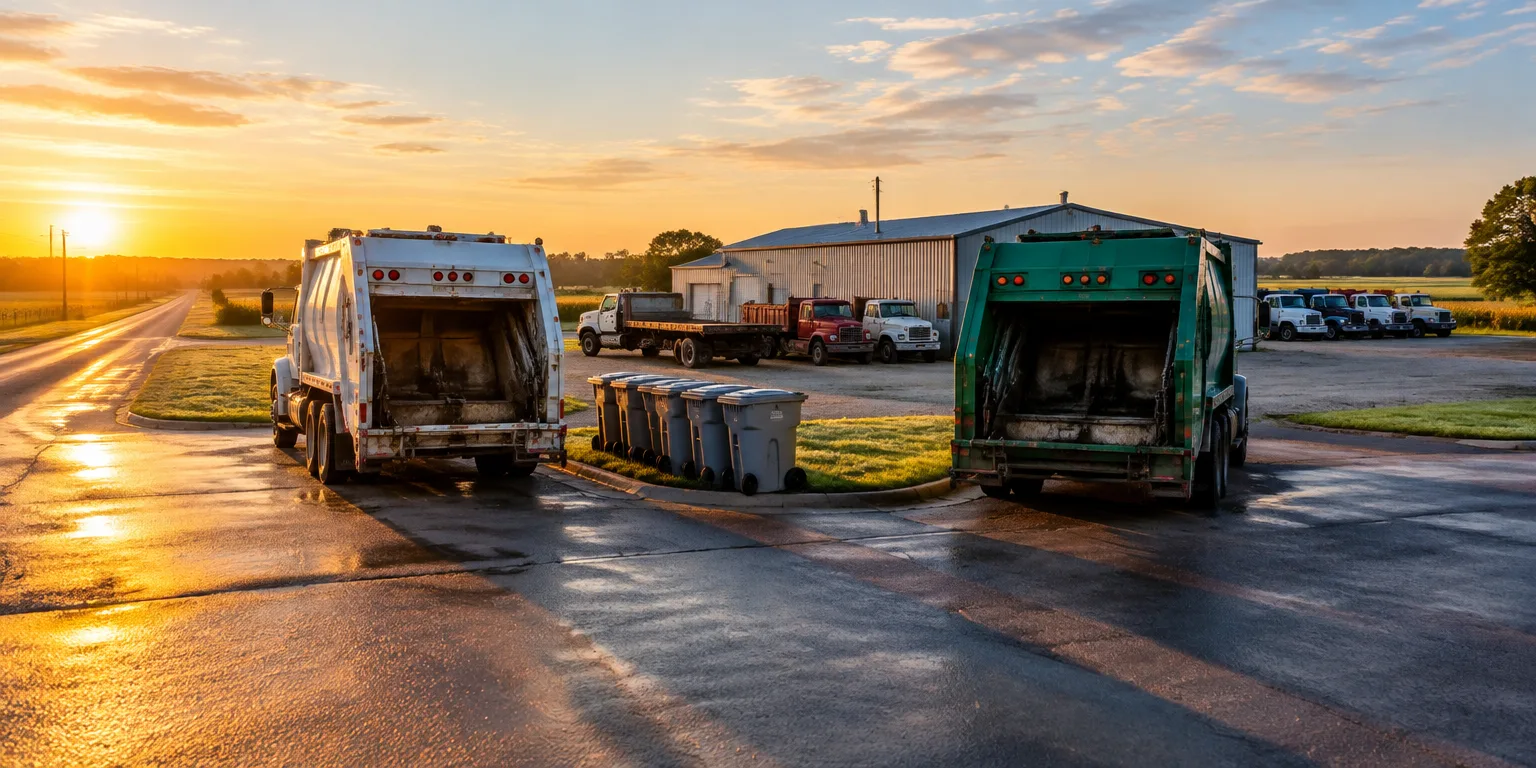
In 1989, Brad Jacobs started buying small trash collectors in rural towns, places where two trucks from two companies drove overlapping routes to pick up the same garbage. He combined duplicate trucks and overlapping routes, then kept buying.
For more than three decades he has repeated the same move, buying up many small competitors in a big industry made up of many small local firms and using scale and technology to make the combined business more profitable.
Jacobs learned trading first. He founded an oil trading firm in 1979 and later another business trading raw materials, guided by Ludwig Jesselson, who led the commodities giant Philipp Brothers. He learned arbitrage, buying and selling the same goods in different markets to profit from price gaps. In 1989, he left trading for operations and founded United Waste Systems.
He took United Waste public in 1992 at $6 a share, grew it by buying local haulers, and sold it to Waste Management in 1997 at $45.42 a share, for a total price of $2.5 billion. That same year he started again.
His next target was equipment rental, another business of local dealers owning excavators, scissor lifts, and other heavy machines for builders and factories. He founded United Rentals in 1997, took it public three months later, and bought up regional dealers across North America. It became the biggest equipment rental business on the planet and ranked among the best performing American stocks of the 2010s, returning more than 1,400% from December 2009 to December 2019.
In 2011, Jacobs did it a third time in trucking. He put $150 million into a small delivery company, renamed it XPO Logistics, and took over as chairman and chief executive. He spent $3.5 billion for the French freight company Norbert Dentressangle, and $3 billion for Con-way, a major American carrier. Norbert Dentressangle and Con-way both grew twice as profitable in the three years after Jacobs bought them. XPO's business carrying shipments too small for a whole truck alone generated more than $4 billion in cumulative net cash from 2016 to 2022.
Each company was more technological than the last. XPO was among the first freight companies in the world to test collaborative robots, machines designed to work alongside people, at its facilities, and it expanded quickly to handle the surge in online shopping during the pandemic. Jacobs later split off its warehouse business as GXO in 2021 and its truck brokerage business as RXO in 2022. Across those ventures he raised about $50 billion from institutional investors, and all three outperformed the S&P 500.
After stepping back from daily work at XPO in August 2022, Jacobs screened 55 industries for the same traits: large, fragmented, inefficient, with little use of digital tools and steady demand. In December 2023, investors led by Jacobs bought SilverSun Technologies, a small publicly traded software company, and put in $1 billion in new capital to use it as a vehicle for acquisitions. In June 2024, it was renamed QXO, with plans to buy distributors of building products.
The discipline has stayed the same. Jacobs doubled the profits of companies he bought, within about three years, and has set a more cautious five year goal for QXO until the formula works in building materials. He has raised equity at prices rising from $9 to $22 a share, which he says gives him trusted currency for deals. He praises Home Depot and Lowe's as well run companies that will probably offer more than QXO for many deals, but notes he faced larger rivals before, including UPS, FedEx, Waste Management, and Ashtead, an equipment rental company, and still made acquisitions that raised profits per share.
Questions people ask
Why buy lots of small companies instead of building one big company from scratch?
Buying lets a consolidator get customers, trucks, warehouses, and local relationships immediately, then cut duplicate costs by combining routes, purchasing, and back offices. Building from scratch is slower and forces a newcomer to steal customers one by one in places where reputation and next day service matter.
What does "fragmented" mean, and why do investors like it?
A fragmented industry has thousands of small, local owners and no dominant national player, which often means inconsistent prices, old systems, and room to improve operations. A well funded buyer can purchase those businesses at lower prices, professionalize them, and earn a higher valuation on the combined, more profitable company.
How does technology actually help a roofing distributor or trucking firm?
Software helps with pricing, inventory, warehouse routing, truck scheduling, online ordering, and tracking deliveries and invoices. Even small gains help because distribution runs on thin margins, so fewer missed deliveries, better stocked branches, and faster quotes can add up across hundreds of locations.