Brain Rot Is Not Rebellion, It Is Resignation
Gen Z sees how social media monetizes attention but keeps scrolling because it has never known anything else.
 Deep Questions with Cal Newport · The Truth About Brain Rot
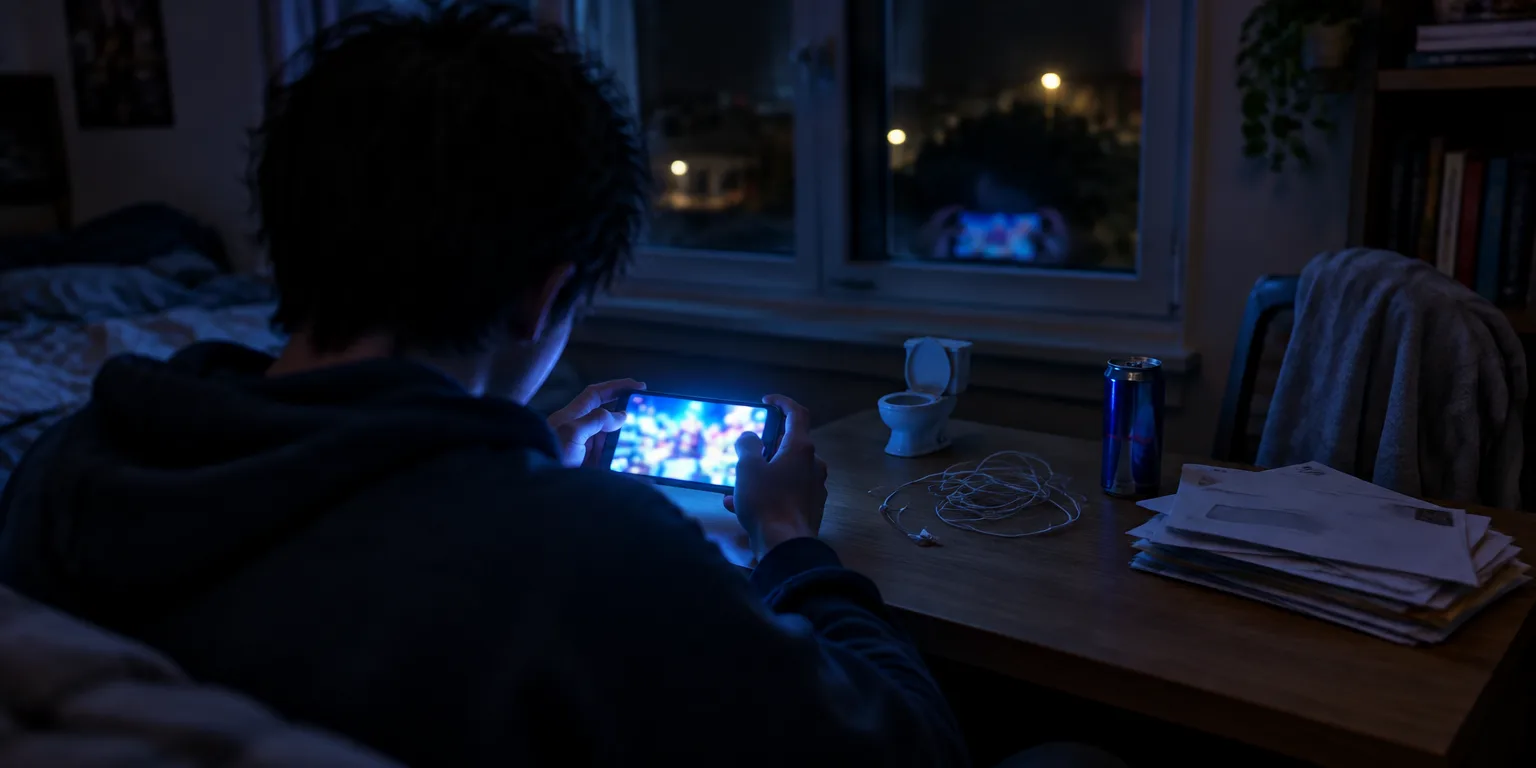
The stupidest videos online may be the most clear eyed. Skibidi Toilet, with its singing toilets, and Trippi Troppi, with its AI hybrid animals babbling in Italian, look like mindlessness. Maxi Heitmeier, a professor at Rowan University who interviewed members of Gen Z for an opinion essay in The New York Times, argues they are a knowing refusal to play along in a system that mines attention for money.
Heitmeier wrote that the business model treats "user focus as a commodity to be extracted and sold." One young person she interviewed described brain rot as anti-content, "the only way to be free online," something so stupid that it cannot be monetized. The comparison is to Dada, the deliberately irrational art that rejected the cultural logic behind World War I, where, as Heitmeier put it, "The joke is that there is no joke."
Heitmeier's warning, taken up by Cal Newport, a middle-aged millennial with a doctorate from MIT, is blunt: "Do not romanticize brain rot." Her conclusion is melancholy. "They see the manipulation, understand what the algorithms are doing, but they keep scrolling anyway because they cannot imagine a life outside the system. Most of them never lived one." In this reading, brain rot is less resistance than resignation, a way to preserve some integrity while staying stuck inside.
That resignation is why the habit matters beyond teenagers. In Newport's reading, Gen Z is firing up a signal flare about a condition everyone shares, a digital world that tracks, measures, and monetizes every interaction. The older generations live there too, just without the performance.
Hence his description of the videos as a cry for help, prison harmonica music from people who know they are confined and cannot picture the exit.
Questions people ask
What exactly is Skibidi Toilet?
Skibidi Toilet is a long-running series of short, surreal videos that began on YouTube in 2023, featuring singing toilets with human heads battling humanoid characters with cameras for heads. Made with simple animation tools, it has no conventional plot and became playground currency for very young viewers before spreading as shorthand for aggressively meaningless content.
What was Dada?
Dada was an art and literary movement that emerged in Zurich, New York, and Paris during and after World War I. Artists like Marcel Duchamp and Tristan Tzara made deliberately nonsensical, ugly, or jokey work to reject the reason, nationalism, and industrial logic they blamed for the war.
What do people mean by the attention economy?
It is the system in which free platforms earn money by holding user attention and selling that attention to advertisers. More time on screen means more ads seen, so the software is tuned to maximize engagement, which often favors outrage, novelty, and volume over quality.