America Should Break Its Most Dangerous China Dependencies First
Eyck Freymann says Washington should prove it can replace drone parts, older chips, and cancer drugs first, then expand with allies.
 Uncommon Knowledge · Eyck Freymann on Why Taiwan Matters
America should not try to cut itself off from China all at once. It should first replace the few supplies Beijing could use as weapons and leave less critical trade for later, argues Eyck Freymann, a Hoover researcher and author of Defending Taiwan.
Freymann calls that sequencing “an economic contingency plan for a crisis,” one part of deterring China over Taiwan. The point is to remove leverage before any confrontation while keeping everyday commerce flowing.
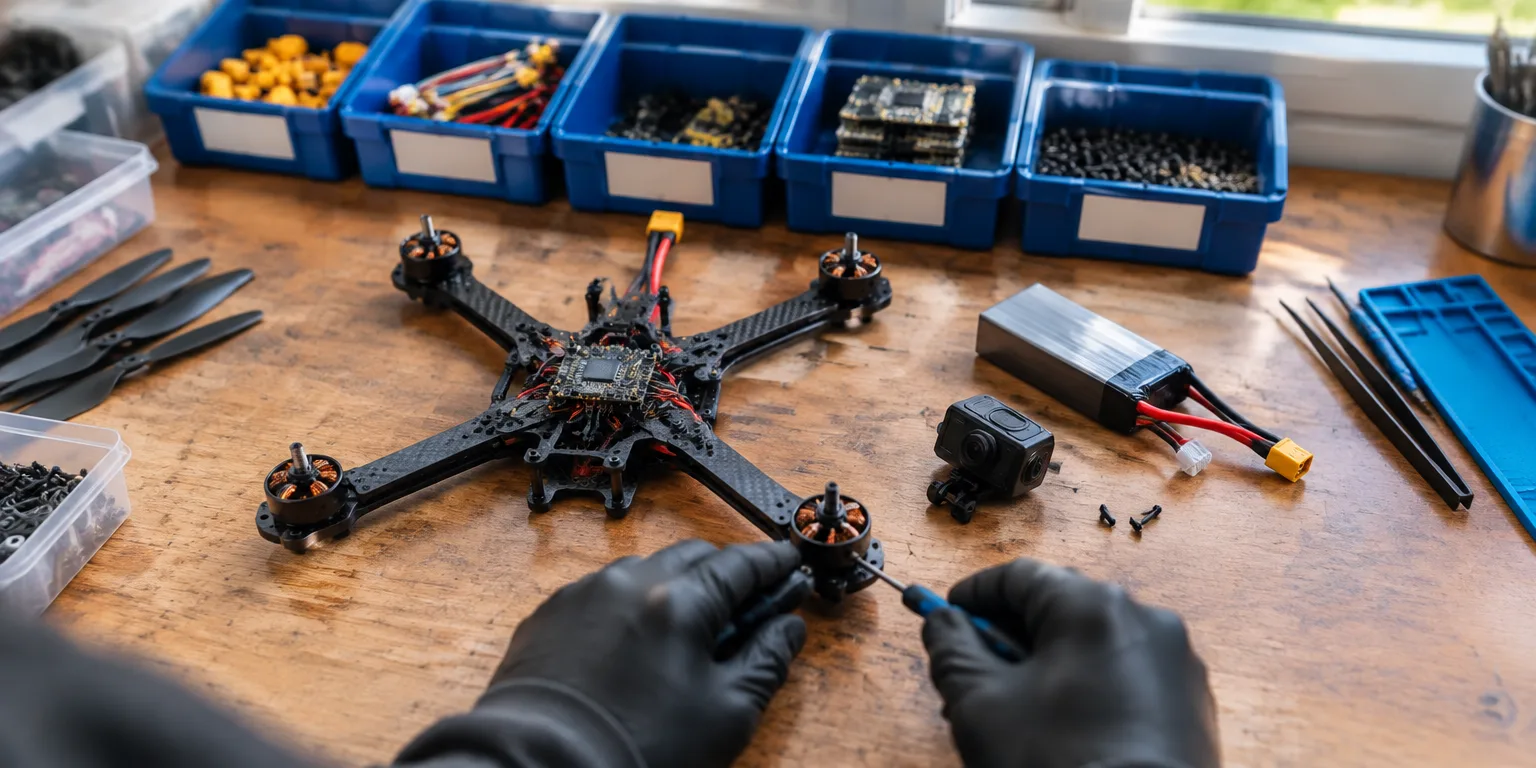
The weaponizable list is short. It starts with drones, which America cannot build without Chinese parts for military, farm, and consumer use. If Beijing blocked exports of those batteries, sensors, motors, and other components, American makers and their allies would struggle to adapt.
The same is true for older embedded chips and for medicine. Those chips control unglamorous functions like moving a car window, and China now dominates many of them. Freymann puts some medical devices and lifesaving cancer drugs in the same critical group.
A sudden break is unrealistic because the two economies are deeply connected after decades of outsourced manufacturing. Freymann described “an industrial base that costs tens of trillions of dollars to build” and that “employs about 100 million people in China just making stuff for export.” Shifting that production away from China would be worthwhile in the long run, but it only makes sense if shortages and price rises can be managed.
Washington got what he calls a natural experiment, a real-world test of sudden separation, after Liberation Day, the White House tariff announcement in April 2025. Freymann said Washington asked “what if we put tariffs up to 100-something percent?” and then, in his words, “the bond market blew up.” The tariff plan was reversed after bond markets sold off.
His fix, which he calls avalanche decoupling, means proving the approach in small sectors first, then expanding with allies. Start with drones, older chips, and cancer medicines, show America can replace them without shortages, then repeat the process at larger scale with allied suppliers.
Questions people ask
What are legacy chips, and why does China dominate them?
Legacy chips are older, simpler semiconductors used for everyday control functions, such as power management, sensors, and car electronics. They are made on mature production processes and sold cheaply in huge volumes. China has added large amounts of this capacity, which gives it pricing power even though the chips are not cutting edge.
Why can’t the U.S. quickly make drones without Chinese parts?
Many small drones rely on inexpensive lithium batteries, electric motors, cameras, sensors, and controllers where Chinese factories lead on scale and cost. American firms can design drones, but replacing that supply chain requires new factories and certified parts. That transition is underway, but it takes time and investment.
Why does Freymann want allies involved in decoupling?
Working with allies lets America share costs and find other suppliers, so replacing Chinese parts does not cause shortages or sharp price rises. A larger allied order also gives firms more reason to build factories outside China. Freymann argues that small successes should then be scaled up with that wider group.