Britain Expected Panic in the Blitz. Londoners Made Jokes Instead.
When Britain bombed German cities ten times harder, the same pull-together spirit showed up there too.
 Channel 4 News · Rutger Bregman on elites, survival of the friendliest, rethinking human history
Before a single bomb fell on London, the men running Britain were already afraid of their own people.
Dutch historian Rutger Bregman says British leaders, including wartime prime minister Winston Churchill, expected German bombing to quickly shatter morale. They predicted mass panic, and feared the army would be tied down controlling crowds at home instead of fighting the enemy abroad.
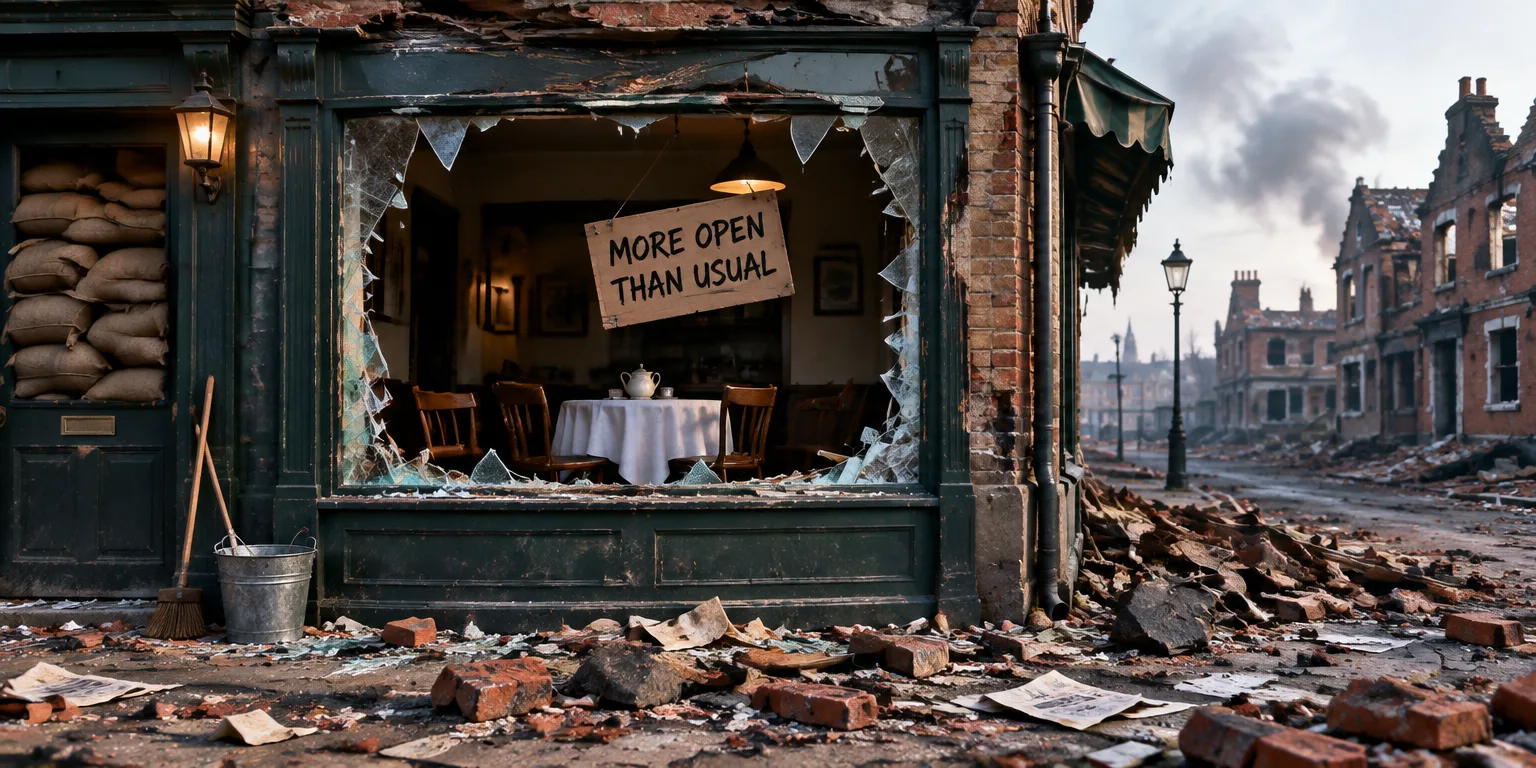
Then the bombs did fall, and the opposite happened. Londoners met destruction with humor. Bregman describes damaged cafes and restaurants posting joking signs saying they were "more open than usual." Far from collapsing, war production increased.
The question afterward was how to explain that response, and in 1942 experts had to decide how to use the Royal Air Force. Many assumed the London reaction reflected a special national spirit, while Germans had weaker character and would crack easily.
The Allies then hit Germany with bombing ten times heavier than what Britain had suffered, only to see hard-hit cities grow tougher and produce more for the war than places bombed lightly or left alone.
The lesson, in his telling, is not about British exceptionalism. It is about human nature. In a crisis, ordinary people tend to pull together, work harder, and joke through the fear, whether they are in London or in Hamburg.
Questions people ask
Did the Blitz really have no effect on British morale?
No. Morale wobbled, absenteeism rose after heavy raids, and people were frightened and exhausted. But studies of wartime Britain found no mass panic or collapse of order, and factories largely kept running, which is why Bregman says the elite fear of chaos was wrong.
How heavy was the Allied bombing of Germany?
Yes, on a vastly larger scale. Allied bombing killed hundreds of thousands of German civilians and destroyed large parts of cities such as Hamburg, Cologne, and Dresden. Yet war production rose until late 1944, and civilian administration generally continued to function.
Why would bombing make people more resilient instead of breaking them?
Shared danger can give people a common purpose, helping neighbors can restore a sense of control, and joking can ease fear. That mix helps explain why heavily bombed cities kept working rather than falling apart.