Browned Food Tastes Better Because Heat Builds New Flavor Molecules
Sugars and protein pieces collide in a hot pan to make the nutty, meaty, and caramel notes that raw food lacks.
 Reactions · Why the Maillard Reaction Makes Everything Delicious
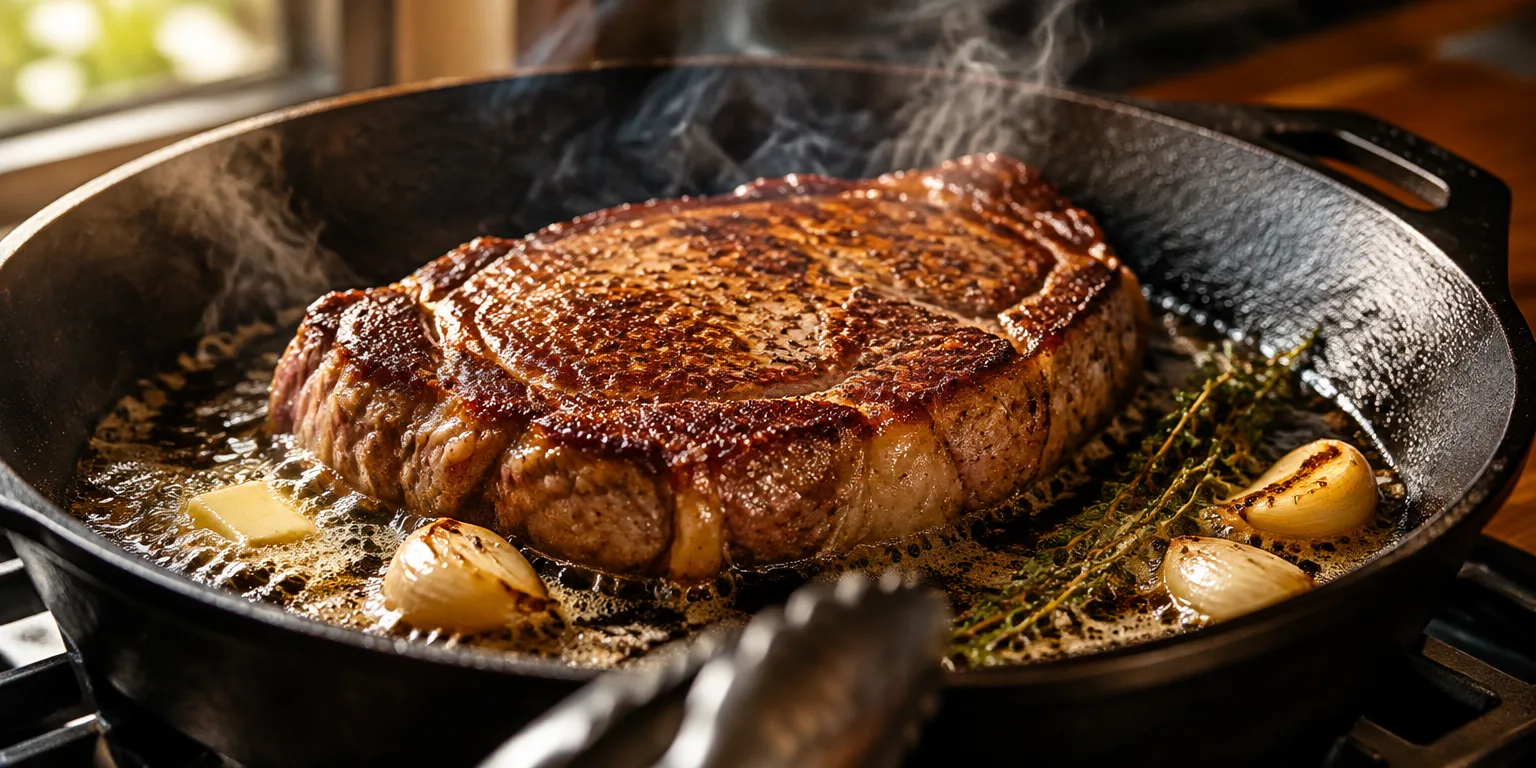
That brown crust on a steak, the golden edge of toast, and the roasted smell of coffee come from new flavor created by heat.
The process is what chemists call the Maillard reaction, sometimes called the browning reaction. It is not a single reaction but a cascade of many reactions happening at once while food cooks.
It starts with two ordinary building blocks. One is sugar, abundant in carbohydrate rich foods like bread and potatoes. The other is amino acids, the tiny pieces that join to form protein, found in meat, dairy, and nuts. Raw, they are relatively bland. Heated together, they collide.
In a hot pan, those amino acids react with sugary compounds to form unstable intermediate compounds. The structure of those intermediates gets rearranged into other compounds.
The payoff is variety. The cascade produces hundreds of new compounds, and many of them add taste and smell. One family of chemicals, called alkylpyrazines, brings cocoa flavor and the nutty, roasted notes in coffee. Another, called furanones, adds caramel like sweetness in bread and toast. A third, called thiophenes, delivers meaty depth in cooked meat, and also shows up in garlic.
Heat sets the pace. The reactions work best between 230 and 340 degrees Fahrenheit, when chemistry runs faster and excess water evaporates from the surface. Go much hotter and burning takes over, leaving charred and bitter flavors.
Questions people ask
Why doesn't boiled food brown like roasted or fried food?
Boiling water tops out around 212 degrees Fahrenheit, below the range where browning runs fastest, and the water keeps the food surface wet and cool. Without higher heat and evaporation, sugars and amino acids rarely collide with enough energy to start the cascade. That is why boiled chicken stays pale while roasted chicken turns golden and savory.
Is the Maillard reaction the same as caramelization?
No, though both cause browning. Caramelization involves only sugars breaking down under relatively high heat, while the Maillard reaction needs both sugars and amino acids. That is why milk, meat, bread, and coffee develop such complex roasted and meaty flavors that plain heated sugar does not.
Is there a simple way to make browning happen faster?
Slightly raising the alkalinity, or pH, can speed the reactions. Cooks sometimes add a tiny pinch of baking soda to sliced onions, which helps them brown faster and taste sweeter. Too much will leave browned, mealy onion goop, so use only a pinch.