Caffeine Wakes You Up the Same Way It Kills Bugs
It mimics one of life's basic building blocks, and plants keep stumbling into the recipe.
 vlogbrothers · Caffeine is Very, Very Strange...
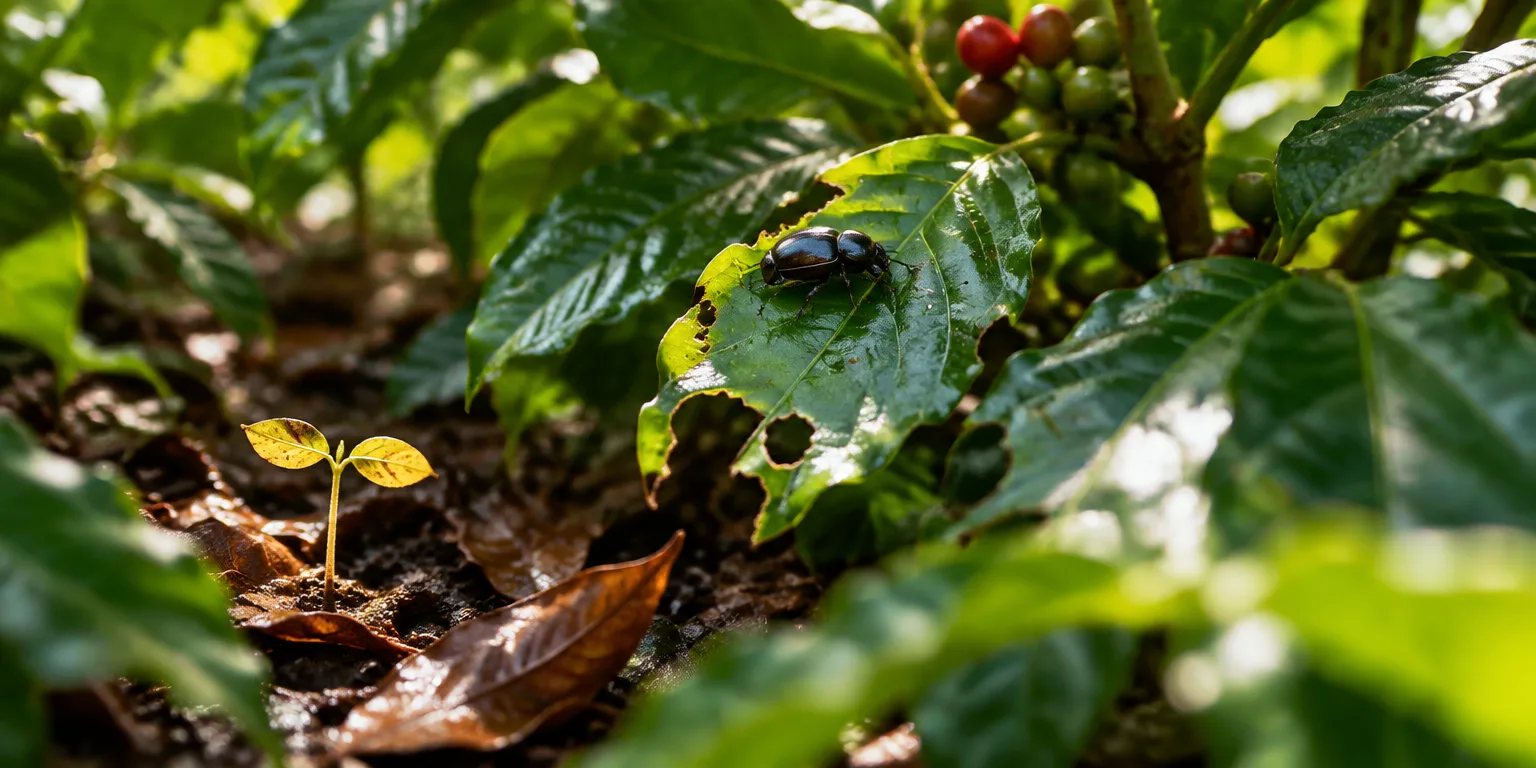
Your morning cup is a bug killer, diluted. The lift you feel from coffee or tea comes from the same chemical attack that plants use to kill hungry insects and to sabotage rival seedlings. You just get a much smaller dose.
The trick starts with familiarity. Caffeine resembles part of adenine, a basic building block of life. Adenine shows up in DNA and RNA, which carry genetic instructions, and in ATP, the molecule cells use to store energy. Because all living things already do a lot of chemistry with adenine, turning it into hormones, waste products, and energy stores, plants probably stumbled into making caffeine by accident when that ordinary chemistry went slightly off track.
That accident is a powerful weapon. In people, caffeine's biggest effect is to impersonate adenosine, a brain chemical made from adenine that helps signal sleepiness. By standing in for adenosine, caffeine keeps that drowsy message from getting through.
It works a similar trick in insects, plus two other disruptions, and the result is far more violent. Affected bugs seize up, jitter, suffer shutdowns of their nervous systems, and die. Part of the difference is portion size, since a bug chewing through leaves takes in a huge dose for its tiny body, and part is that insects are worse than people at breaking the molecule down.
The same impersonation can poison plants. A plant that starts making a lot of caffeine must also evolve a way to tolerate it, and that protection gives it a second advantage. It can leak caffeine into the soil around it, where seedlings that lack immunity struggle to grow.
For people, the dose is low enough that the interference is useful rather than lethal. It messes with our physiology just enough to give us that extra pep, and to make caffeine mildly habit forming without wrecking lives.
Questions people ask
Why does caffeine make me jittery if it just blocks sleepiness?
Adenosine normally puts the brakes on brain activity, so blocking it lets excitatory signals run stronger. That extra activity can raise heart rate, make hands shaky, and create anxiety at high doses. The effect fades as the liver breaks caffeine down, usually over three to six hours.
How much caffeine would it take to poison a person?
Severe poisoning generally requires several grams at once, roughly 40 to 50 strong cups of coffee consumed very quickly. That is almost impossible from drinks alone, and nearly all serious cases involve concentrated caffeine powder or pills. Ordinary daily use of one to four cups is considered safe for most healthy adults.
How do caffeine-making plants avoid poisoning themselves?
They store caffeine in compartments, such as vacuoles inside leaf cells, and make enzymes that tolerate or break down stray amounts. Coffee and tea plants also produce caffeine mainly in young leaves and seeds, where protection against insects matters most. Neighboring plants without those defenses absorb the caffeine from fallen leaves and soil and grow more slowly.