Campaigns Prepare to Win the Day After Election Day
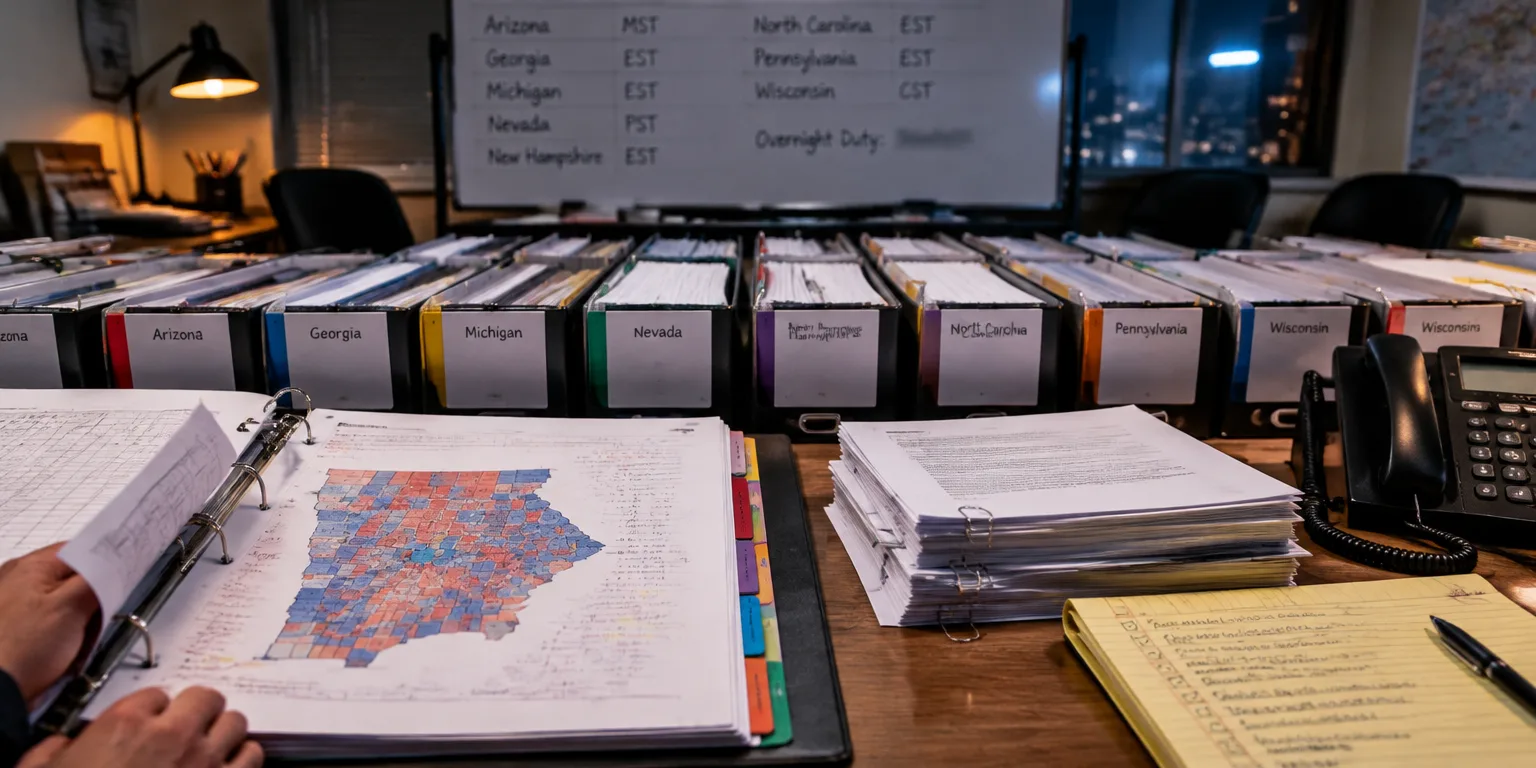
Months before voting ends, staff build recount binders for every swing state and learn which judge is on duty overnight.
 Original Jurisdiction · Last Branch Standing: Sarah Isgur
Sarah Isgur, a lawyer who ran election day operations for Mitt Romney's 2012 presidential campaign, said the job was to "live in the day after the election." Months before votes are counted, part of the campaign is already preparing for voting day itself and for what happens if the result is challenged.
Her work covered the legal volunteers for voting day, lining up draft court filings, and getting ready for a recount. A motion is a written request asking a court to do something.
The work centered on binders for every competitive state where the result might need a second count. A swing state is one where either party might win. Building those binders took months and months, and Isgur visited competitive states around the country to prepare them.
She also practiced with the teams in every state. Each state team also had to know the duty judge overnight.
So if a race is very close, the campaign has already rehearsed the legal fight that follows voting. The motions are ready, the binders are built, and each state team knows who the overnight judge is.
Questions people ask
What is a swing state?
It is a state where the presidential race is close enough that either the Democrat or the Republican could win it. Campaigns focus extra staff, ads, and lawyers there because a small shift in votes can decide the statewide winner, and with it the state's electoral votes.
What is a motion?
It is a formal written request asking a judge to order something. In elections, a campaign might ask to extend voting hours, allow observers to stand closer, or preserve ballots for a recount. The judge then decides whether to grant the request.