Cheap Drones Can Force an Air Base to Move Its Bombers
Old rules block shooting down drones over public spaces, and newer drones are much harder to jam.
 WSJ What's News · Do Smartglasses Belong in Public Spaces?
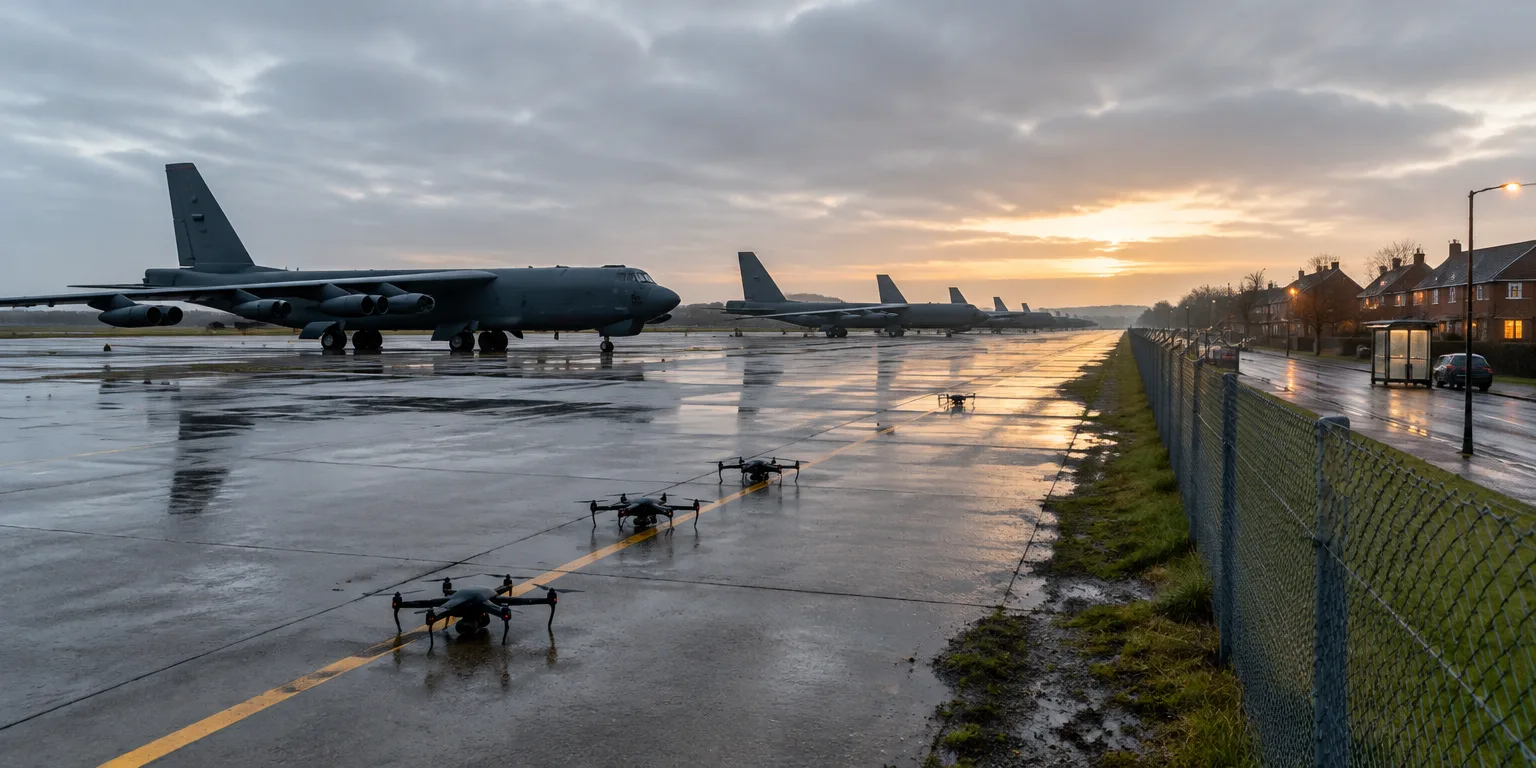
Last month, the United States abruptly moved about a dozen B-1 bombers, large, long-range American warplanes, off Britain's RAF Fairford, a British base that hosts American aircraft. American officials said they had learned of a possible Iranian plan to strike the aircraft with drones and other weapons, though Iran's ability to carry out such an attack remains uncertain.
The reason a small number of drones could force that kind of move comes down to two problems, according to Max Colchester, a Wall Street Journal correspondent in the United Kingdom who covers the episode.
The first is the law. Under old British rules, armed forces cannot shoot down unmanned aircraft over areas open to the public.
The second is the technology. The standard defense is jamming, flooding the radio frequencies a drone uses to navigate and communicate so the operator loses control. But newer drones have evolved to make that much harder to do.
Together, those gaps leave a base exposed.
At Fairford, the bombers were moved after U.S. officials reported the suspected plot. More broadly, armed forces are putting more money into defenses against drones. Britain is changing the law so that, as Max Colchester put it, "from next year, the military will be able to down drones in public spaces near military bases," and the Pentagon is investing in new counter-drone systems.
Questions people ask
Why doesn't jamming stop a modern drone?
Jamming works by overwhelming the radio links a drone uses for control, video, and satellite navigation. Many newer models hop between frequencies, follow preprogrammed routes without a live link, or use more resistant navigation, so there is no single signal to block.
What do counter-drone systems use besides jamming?
Options include guns and missiles, nets, interceptor drones, high-powered microwaves, and lasers. Lasers and microwaves are attractive because each shot is cheap, but they can be bulky, weather dependent, and hard to use safely near civilians.
Can the U.S. military shoot down drones near its own bases?
In the United States, the military has broader authority around designated bases and restricted airspace, but it still faces strict limits over civilian areas. Federal agencies, local police, and the Federal Aviation Administration share responsibility, which can slow a response to a fast-moving drone.