Chess masters do not remember more, they recognize more
On a sensible board, a master recalls 16 pieces to a beginner's four. On a nonsense board, both recall three.
 Veritasium · The Expert Myth
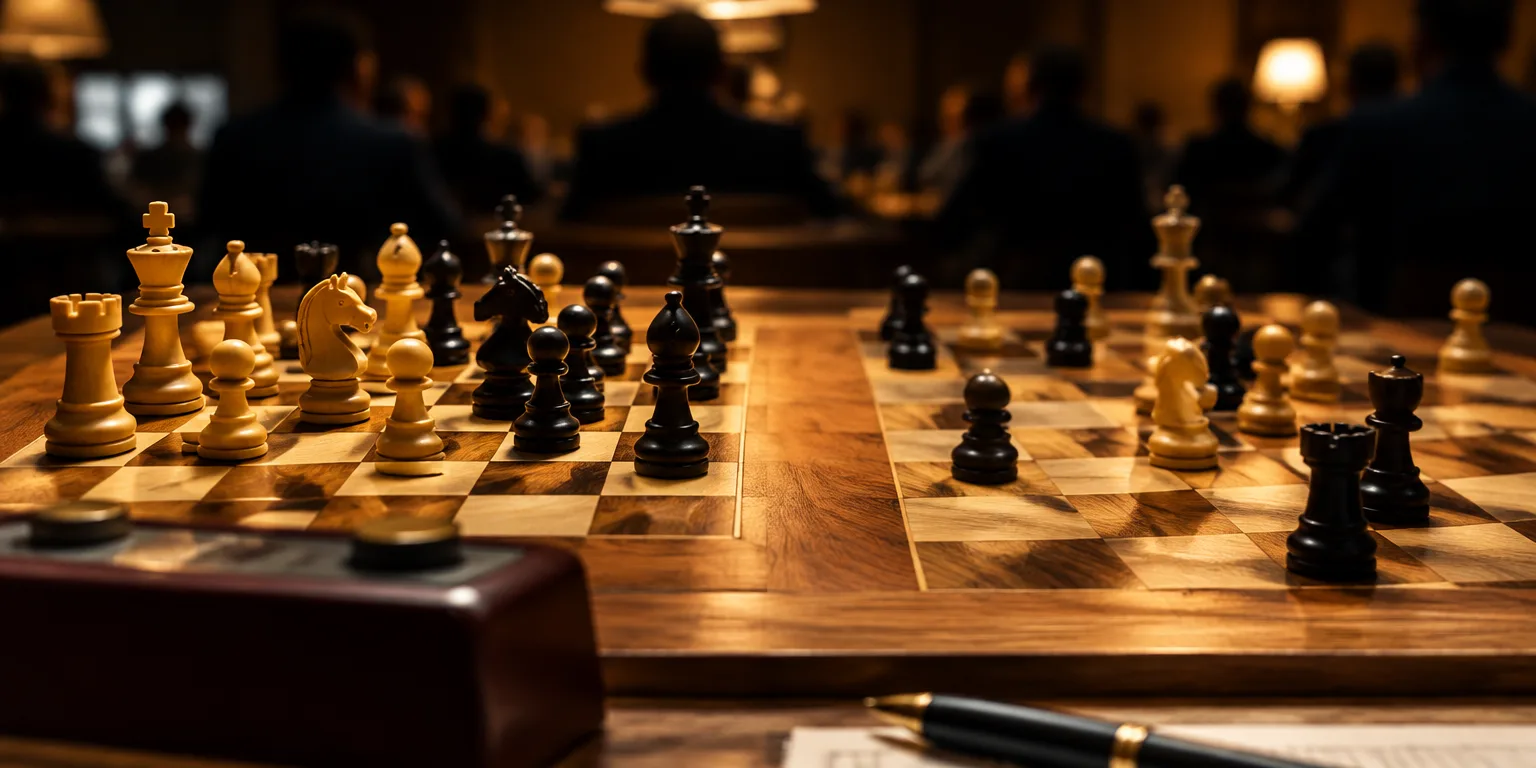
Show a chess master a real game in progress for just five seconds, and he can rebuild most of the board from memory. Show him the same number of pieces placed at random, and his amazing memory disappears.
That is what researchers William Chase and Herbert Simon found in 1973. They recruited three players, a master, an advanced amateur called an A player, and a beginner. They set up about 25 pieces as they might appear in a real game, gave each player five seconds to look, and then asked them to recreate the position on a second board. They could steal as many extra five second glances as they needed.
After the first look, the master placed 16 pieces correctly, the A player placed eight, and the beginner placed four. The master also reached a perfect rebuild in roughly half the glances the advanced amateur required.
Then the researchers scrambled the pieces into positions that would never occur in a real game. After a five second look, everyone, master included, remembered only about three pieces.
The difference was not raw memory. Tests show chess masters, as a group, do not have unusually high IQs, spatial reasoning, or short term memory. What they have is a huge library of patterns learned from seeing thousands of games.
Psychologists call it chunking. Instead of seeing 25 separate pieces on 64 squares, a master sees a handful of familiar groupings, like a kingside attack or a pawn chain, stored in long term memory. That turns a nearly impossible memory task into a manageable one.
You do the same thing in ordinary life. You see the symbol for pi and instantly read it as one thing, not six squiggles. One numbers enthusiast reads 3 0 1 7 3 as basketball star Stephen Curry, number 30, plus the 73 wins his Golden State Warriors set as a record in 2016. Five digits become one story.
Chess champion Magnus Carlsen works the same way. He recognizes board positions the way the rest of us recognize faces. And recognition creates intuition. Just as an angry face tells you what is likely to come next, a familiar position tells a master which move feels right, often before he can explain why.
Questions people ask
Do chess masters have bigger brains or higher IQs?
No, not as a group. Studies find masters score in the normal range on IQ, spatial reasoning, and short term memory tests. Their advantage is specific to meaningful chess positions, not general brainpower.
How many patterns does it take to become a master?
Estimates vary, but later work building on Chase and Simon suggested strong players recognize tens of thousands of chunks. That library is built over years of games, study, and puzzles, which is why recognition feels instant.
Does chunking work outside chess?
Yes. Doctors chunk symptoms into diagnoses, readers chunk letters into words, and musicians chunk notes into chords and phrases. In each case, long practice turns many small details into a few meaningful units that are easier to remember and act on.