China Grew So Much Chicken It Has to Sell It Cheap Abroad
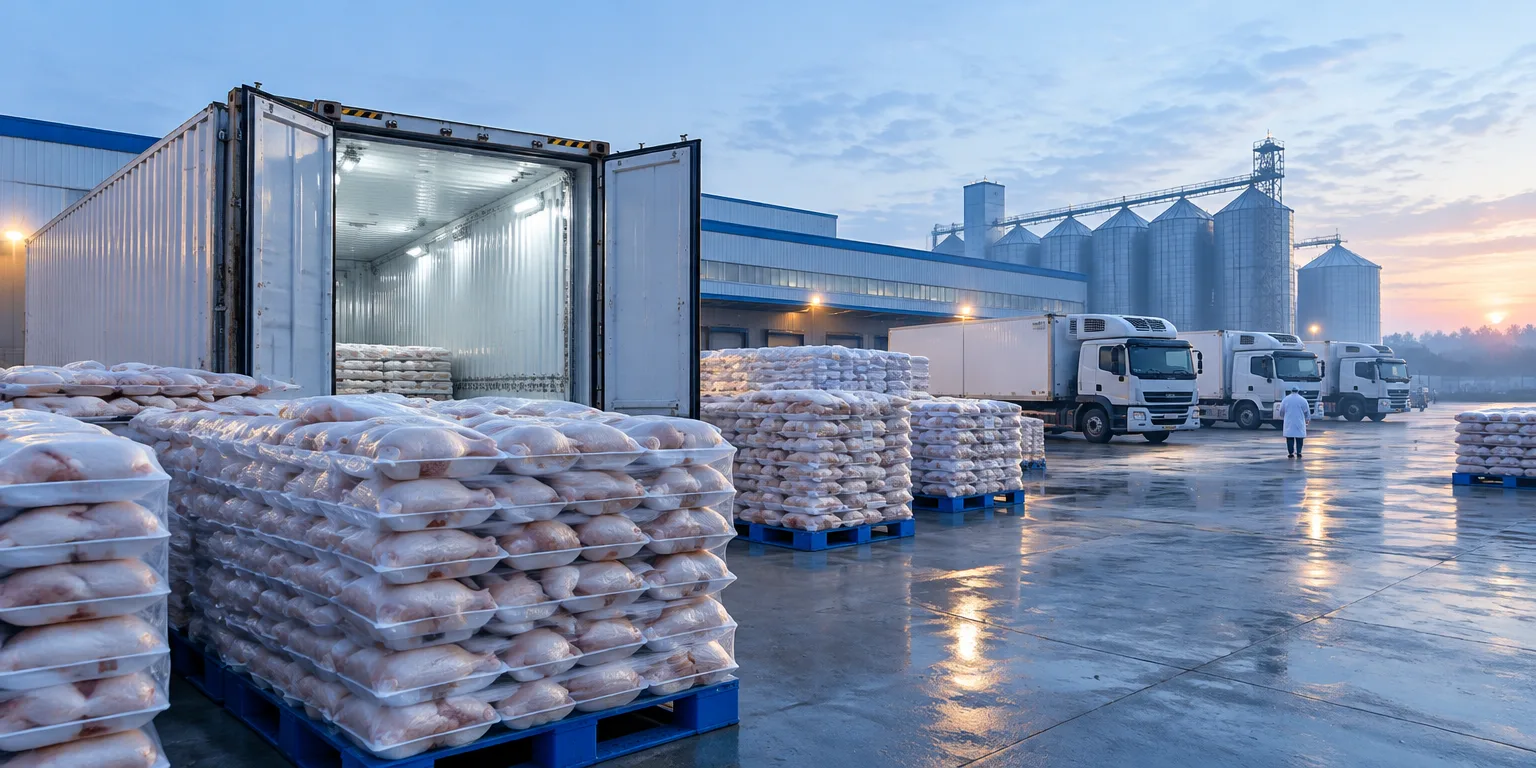
Its chicken now sells for about $1,000 a ton less than rival supplies, a bargain for foreign shoppers and a threat to Western producers.
 Reuters World News · France unrest, Canada military base, Pope Leo and Siberian bears
China wanted to grow more of its own food so it would not have to depend on other countries. To do that, companies poured money into new barns, breeding, and processing technology. It worked too well. China is now producing more protein than its own shoppers can eat.
When supply outruns demand at home, the extra has to go somewhere. For Chinese poultry companies, the answer is to ship chicken abroad at very low prices. Journalist Daphne Zhang, who has investigated the trade with fellow journalist Lewis Jackson, called it "a pattern similar to what we've seen in autos, solar, and steel," adding: "Huge overcapacity at home has forced these companies to go abroad to look for new markets."
That is now happening across Asia and Europe, with the strongest demand in lower-income countries where cheap meat stretches budgets further. Chinese chicken is being offered at about $1,000 per ton less than chicken from Brazil and Thailand, two of the world's biggest exporters. At that discount, dealers in Middle Eastern countries seek out Chinese sellers, producers told the reporters.
For shoppers in poorer countries, that is good news. They get meat at a price that many Western producers say they cannot match. For those rival producers and for regulators in the West, it looks like dumping, or selling abroad at unfairly low prices, and it is drawing complaints and scrutiny.
Rivals also raise questions about inconsistent quality and food safety. Jackson notes that the reputation of Chinese products has improved over the past 10 years, but worries linger in the minds of many buyers. For now, price is winning. And that is why a plan meant to make China more self-sufficient is turning into a new source of trade friction.
Questions people ask
What does food security mean for China?
It means being able to feed its 1.4 billion people without depending too much on imports. China imports large amounts of soybeans, dairy, beef, and other foods, which leaders see as a risk if trade routes close or relations sour. That is why Beijing has pushed farms and food companies to raise output with better technology.
What is overcapacity?
Overcapacity is when an industry can make much more of something than customers want to buy. Prices then fall at home, and companies try to sell the surplus abroad, often very cheaply. In China, government support and competition among local producers have created this problem in steel, solar panels, electric cars, and now protein.
Why is Chinese chicken so much cheaper?
The main reason is simply that there is too much of it at home, so sellers cut prices to move it. Large, newer facilities can also produce birds at lower cost per pound. The $1,000 per ton gap is the market result producers themselves describe when comparing Chinese offers with Brazilian and Thai chicken.
Could the U.S. or Europe block Chinese chicken?
They can, and often already do, restrict poultry imports over food safety and animal disease rules. Regulators can also add tariffs if they find dumping or unfair subsidies. The scrutiny mentioned in the story suggests more complaints and investigations are likely, especially if low priced shipments keep growing.