China's Biggest Treasure Ships Are Estimated at 250 Feet, Sailing in Fleets of 25,000 Men
They were not exploring unknown seas, but showing off imperial power to ports that already traded with China.
 Dan Snow's History Hit · The Rise and Fall of the Ming Dynasty
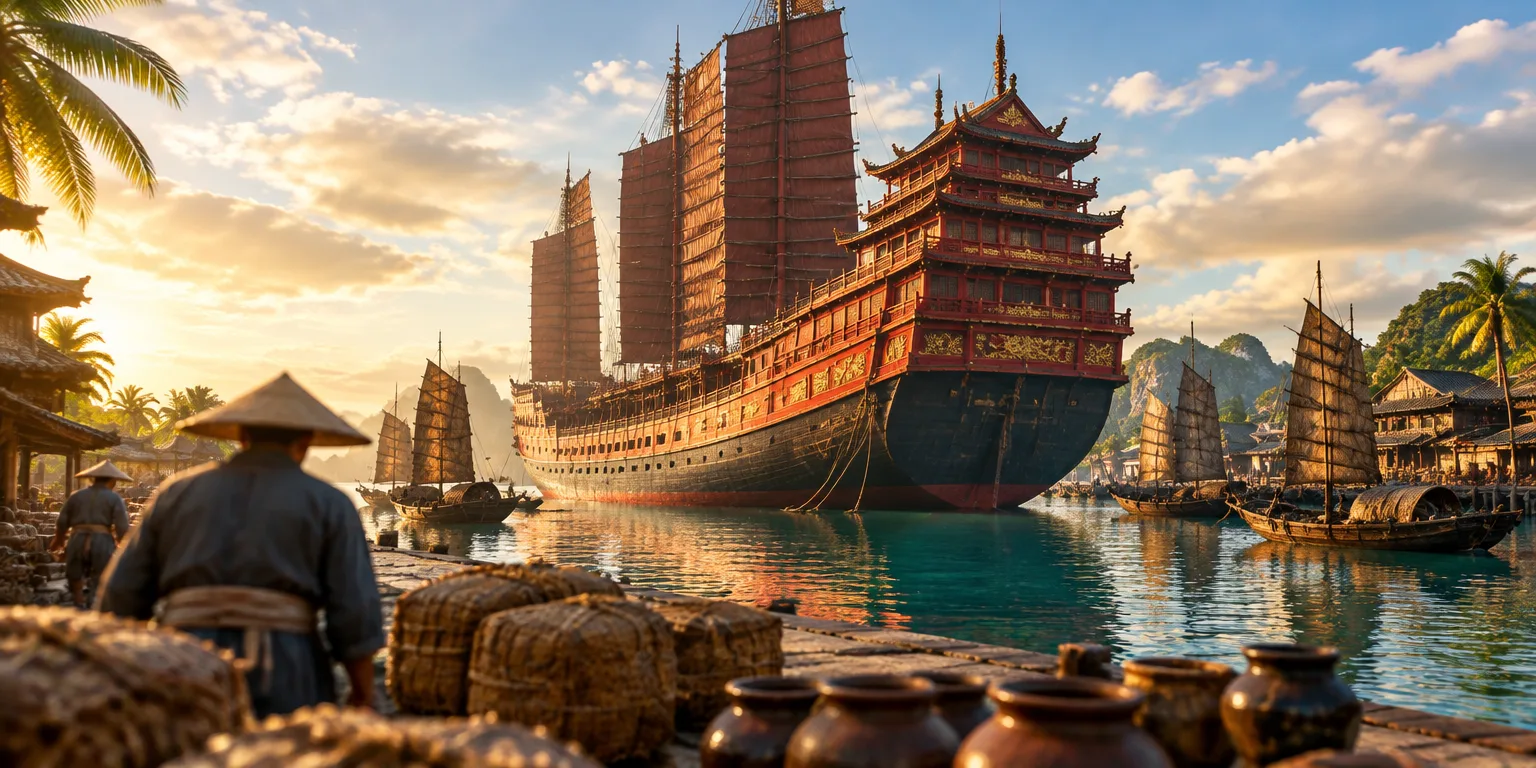
China's Ming dynasty sent out fleets whose largest treasure ship flagships are estimated at about 250 feet long, longer than the 186-foot Victory, the 18th-century British warship preserved at Portsmouth, with some 25,000 to 27,000 heavily armed men spread across the fleet to overawe other states.
The fleets were commanded by Zheng He, a captive boy from Yunnan who became a palace eunuch and a trusted military leader serving the Yongle emperor, according to Craig Clunas, a professor at the University of Oxford. The missions were not voyages of discovery. Chinese merchants had used those sea lanes for hundreds of years, and the navigators knew the routes, winds, and ports.
The aim was to overawe Southeast Asia and the Indian Ocean world with the emperor's power, and the few local rulers who resisted were quickly overwhelmed. The ships typically stayed out for roughly two years, since sailing ships could move only with the seasonal monsoon winds. The fifth voyage, from 1417 to 1419, was the first to reach Africa, while also calling at Bengal, Java, southern India, Sri Lanka, and the Persian Gulf.
Questions people ask
Who was Zheng He?
Zheng He came from Yunnan in southwest China, from a Muslim family, and was captured as a boy and castrated. As a eunuch with no children of his own, he was considered especially loyal and safe to serve inside the imperial household. He became a servant of the future Yongle emperor, fought for him in a civil war, and proved himself as a military leader.
Why did the voyages stop?
The historian Craig Clunas argues they ended because they had succeeded, not because China retreated. The voyages were extraordinarily costly, and the court had other expensive priorities, including moving the capital to Beijing, rebuilding the Grand Canal, fighting the Mongols, and trying to hold Vietnam.
Were all the ships 250 feet long?
The size is debated, and 250 feet is a best estimate for the largest flagships, called baochuan, based on work by researchers including Sally Church. Not every ship in the fleet was that large. The fleets combined a few giant flagships with many smaller troop carriers and supply ships.