China's Boom Was Built on Extra Workers Who Are About to Retire
For a few decades China had abundant workers, few children, and few retirees, but that workforce will retire together.
 PolyMatter · Demographic Collapse — China's Reckoning (Part 1)
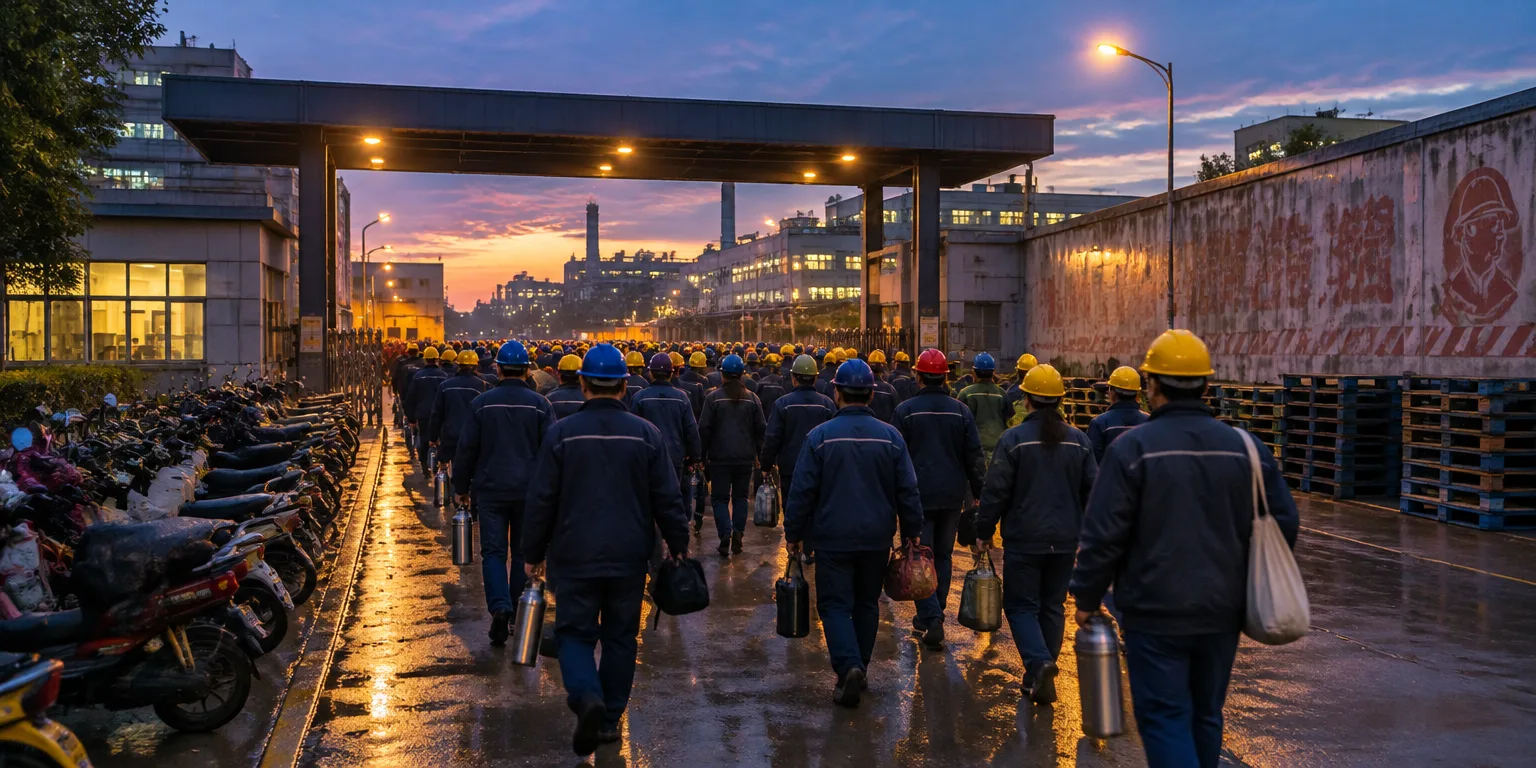
China did not just get richer over the past 40 years. For a brief window, it had an unusually large share of people at their most productive working ages, and that window is now closing.
Picture the population as a pyramid, with children at the bottom, workers in the middle, and retirees at the top. For China, the middle swelled into a hump representing tens of millions of extra workers. Everything behind the country's celebrated growth, the optimism, and the predictions of continued rise coincided with that hump.
Demographers have a name for this phase. It is called a demographic dividend, meaning the extra economic push a country gets while it moves toward becoming industrialized.
It works like this. Birth rates fall as women gain access to education, so there are fewer children to support. Life expectancy has not yet fully caught up, so there are still relatively few retirees. For a few years, and only those years, a country has manpower to spare, and when that labor is well coordinated, it produces exceptional growth.
The trouble is that what feels like a gift behaves like a loan. A career builds gradually, but retirement arrives on a single day. Income does not fade gently at age 65, it falls to zero. When tens of millions of workers reach that day together, the pyramid shifts upward all at once and leaves a smaller base of young workers behind.
That is what is happening now. China's working-age share rose from 58 percent of the country in 1978 to 74 percent in 2010. In less than 20 years, the United Nations expects it to fall back to roughly where it started, with twice as many seniors as children under 15. By the end of this century, China's total population is projected to be cut in half. The boom was borrowed, and the bill is coming due.
Questions people ask
What is a population pyramid?
A population pyramid is a chart that stacks age groups, with the youngest at the bottom and the oldest at the top. A wide middle means lots of workers, a wide bottom means lots of future workers, and a wide top means lots of retirees to support.
Why does retirement hit an economy all at once?
People of similar age tend to stop working around the same time, so a large birth cohort creates a large retirement cohort decades later. Their paychecks stop on their individual retirement days, but for the economy the effect is concentrated in a short period.
Will China's population really be cut in half by 2100?
No projection is certain, and fertility, mortality, and migration can shift. But the UN projection cited in the source reflects a simple fact: if families keep averaging well below two children, each generation is much smaller than the last, and the total shrinks fast over a century.