China's market reformer oversaw an estimated 35 million state job cuts
The cuts helped build China's export engine, but families remember relatives who never recovered.
 The Prof G Pod with Scott Galloway · China Decode: Microsoft's China Retreat, Remembering Zhu Rongji, and Typhoon Dolphin's Aftermath
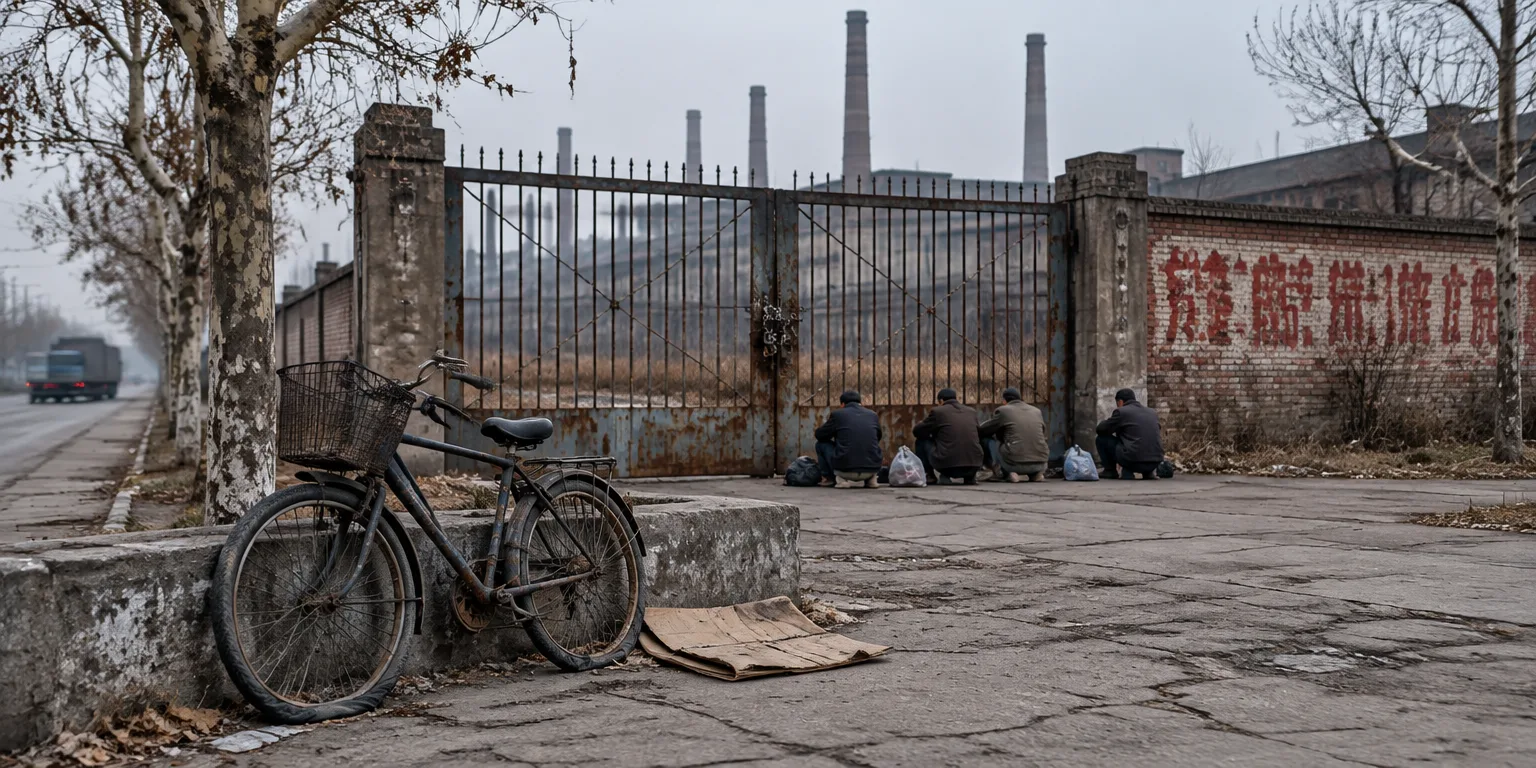
On a street in Shenyang, in China's industrial northeast, thousands of workers sat on the pavement. They had just been let go from the big plants that had employed them for years, and they stared ahead, in what James King, a reporter who covered China for years, described as "as if their whole world had come to an end."
There was very little for them to fall back on. China's social safety net at the time offered poor protection for people thrown out of work, and the men and women on the sidewalk had no clear place to go.
The cuts were overseen by Zhu Rongji, China's premier from 1998 to 2003. He pushed China toward markets, private business, and global trade, and that push helped turn the country into the export engine it is today. It also put tens of millions of people out of work.
King compares Zhu to Margaret Thatcher, the British prime minister who reshaped Britain in the 1980s through deregulation and privatization. Both leaders, he argues, created huge social dislocation and friction. The difference was scale.
Under Thatcher, by one estimate often cited, about two million positions in manufacturing, mining, and related industries disappeared. Under Zhu, one estimate puts the toll far higher, at roughly 35 million positions eliminated across government owned businesses, as inefficient, state run factories and plants were cut back or closed.
At the time, people had a phrase for what they saw on streets in the northeast, a region then known as China's Rust Belt for its aging heavy industry. The word was "ma mu," meaning numb. People felt, King recalled, "that the tides of history had just swept them away and there they were sitting" on the pavement, hoping someone would come along with a job or a handout.
Alongside praise for his market reforms, Zhu has faced criticism from people describing relatives who went through the layoffs and never really got back on their feet.
Questions people ask
Why did China have tens of millions of state jobs to cut?
State enterprises were government owned factories and workplaces that provided lifetime jobs, housing, clinics, and pensions. By the 1990s, many were losing money and carrying far more workers than they needed, which is why closing or shrinking them cut so many jobs at once.
What does China's Rust Belt mean?
The northeast, provinces like Liaoning, Jilin, and Heilongjiang, was the center of steel, coal, machinery, and other heavy industry built up under central planning. When state plants closed, cities like Shenyang lost their main employers, much as factory towns did in the American Midwest.
What happened to the laid off workers?
Many older workers struggled because their skills fit one factory and they had limited savings or pensions. Some found informal work, relied on family, or retired early on small payments, while younger workers moved to private factories and booming coastal cities.