Christopher Nolan Dreamed Up Inception at 16, Then Needed 23 Years to Film It
He made several attempts and once got about 80 pages in, until a short story gave the teenage dream its shape.
 Founders · #426 How Obsession Built Christopher Nolan
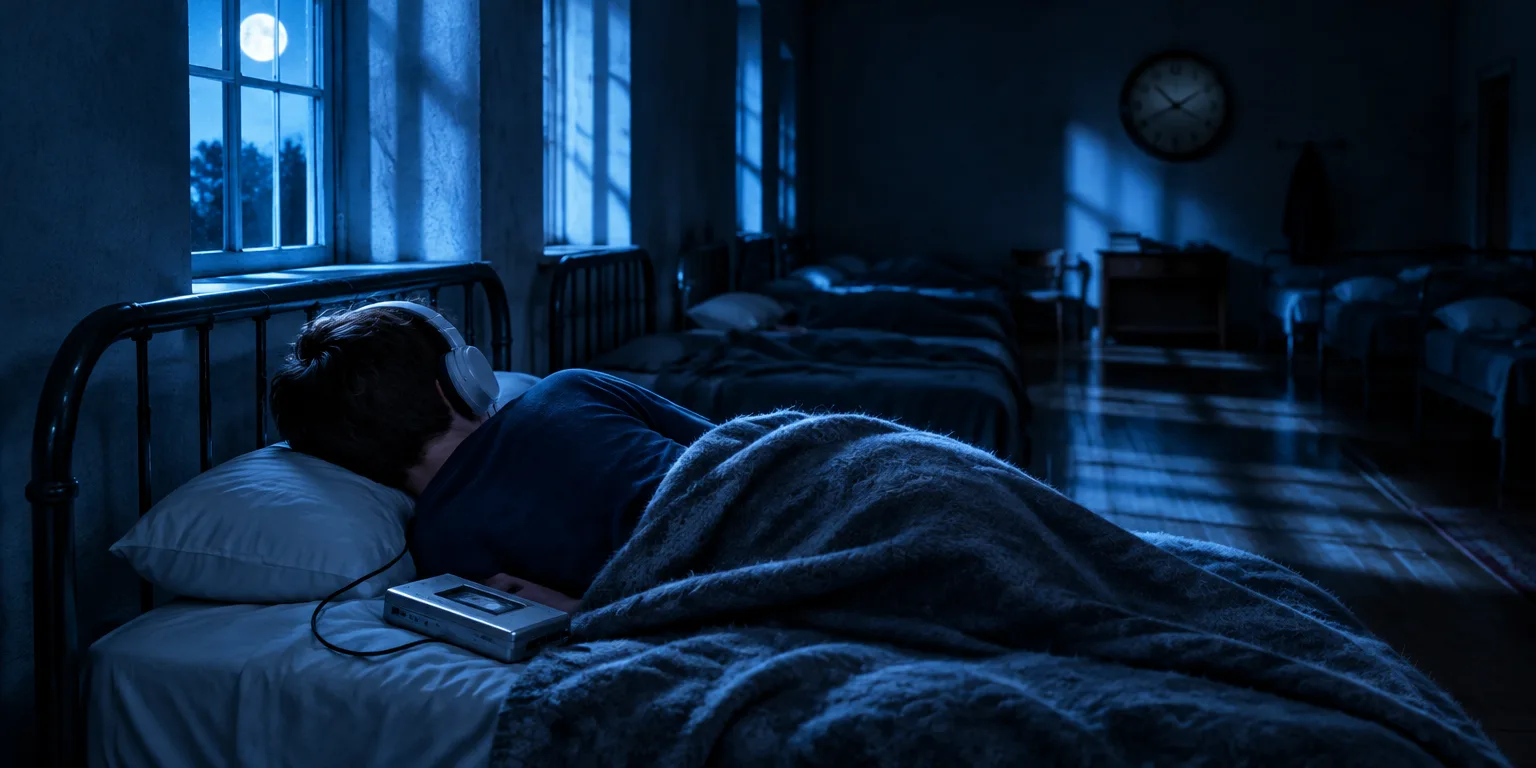
Lights out at boarding school came around 9 o'clock, after a day lived under the clock. The boys were supposed to be too tired to do anything but fall into bed.
Christopher Nolan, the filmmaker, then about 16, stayed awake in the dark instead. With a Walkman on, he listened to film scores and thought about pictures that were not there.
He played the soundtracks to Star Wars, 2001, and Chariots of Fire, music with room to imagine. Nolan said film scores "leave a bit of space for the pictures and for imagination." He prized that space, and used it to run films and stories in his head.
One of those nighttime games turned out to be a 23 year project. The idea was sharing a dream, putting a dream inside a dream, and playing music to someone who was asleep so that, as Nolan put it, "it would translate in some interesting way." Nolan said, "I really did come up with a couple ideas that went into Inception when I was about 16."
That private thought survived every stage of his life. He kept developing it through university and his early years in Hollywood, then finally filmed it after the success of The Dark Knight. Twenty three years after he first imagined it, he started filming Inception on June 19, 2009.
The middle was mostly stuck. He made several attempts at the script, and once he got about 80 pages in, reached the start of the third act, and stopped. Nolan said, "I stayed stuck for years and years."
Part of the unlock came from a short story by Jorge Luis Borges, the writer, which supplied one of the film's main ideas. Nolan's point was that influence only works if something is already rattling inside you. If someone just hands you a story, he argued, it does not necessarily spark anything.
Nolan likes to take an idea and "flip it," turning it over until it becomes a three dimensional object he can walk around. He had been turning this one over since he was a schoolboy in the dark. As the book puts it: "The schoolboy, the university student, the Hollywood neophyte, the success story, the father." All of them put something into the same film, until the music in the dark finally reached the screen.
Questions people ask
Can music played to a sleeping person really shape a dream?
Yes, in a limited way. Sounds, music, light, and touch can be incorporated into dreams, and researchers use scheduled sounds to cue lucid dreams or to trigger memories during sleep. A full shared dream with engineered layers, as in the movie, is fiction.
Why did the script stay unfinished for so long?
Nolan kept returning to the same structural problem, how to make dream layers clear, emotional, and rule bound enough for an audience to follow. After The Dark Knight gave him unusual freedom at the studio, he committed to solving the third act rather than taking another assignment. Constraint helped, since he works best with tight budgets, short schedules, and aggressive cuts.
Did Inception pay off after all that time?
It was a large commercial and critical success, earning more than $800 million worldwide and four Academy Awards, mostly for craft categories like cinematography and visual effects. It also cemented Nolan's standing as a director who could get original, complicated stories funded at blockbuster scale.