Cities exist because farming slowly grew more food than farmers needed
That extra food freed some people from farming for the first time, and they clustered together to do everything else.
 Wendover Productions · Why Cities Exist
For almost all of human history, a city was impossible. People lived as hunter-gatherers, moving around to scavenge for food the way many wild animals still do. As long as finding dinner took all day, everyone had to spend the day finding it.
That changed around 10,000 BC, when people learned to farm. Growing plants in one place let families stay in one place, but it did not yet allow a city. Early farming lacked technology and expertise, and nearly every person still had to farm to feed himself.
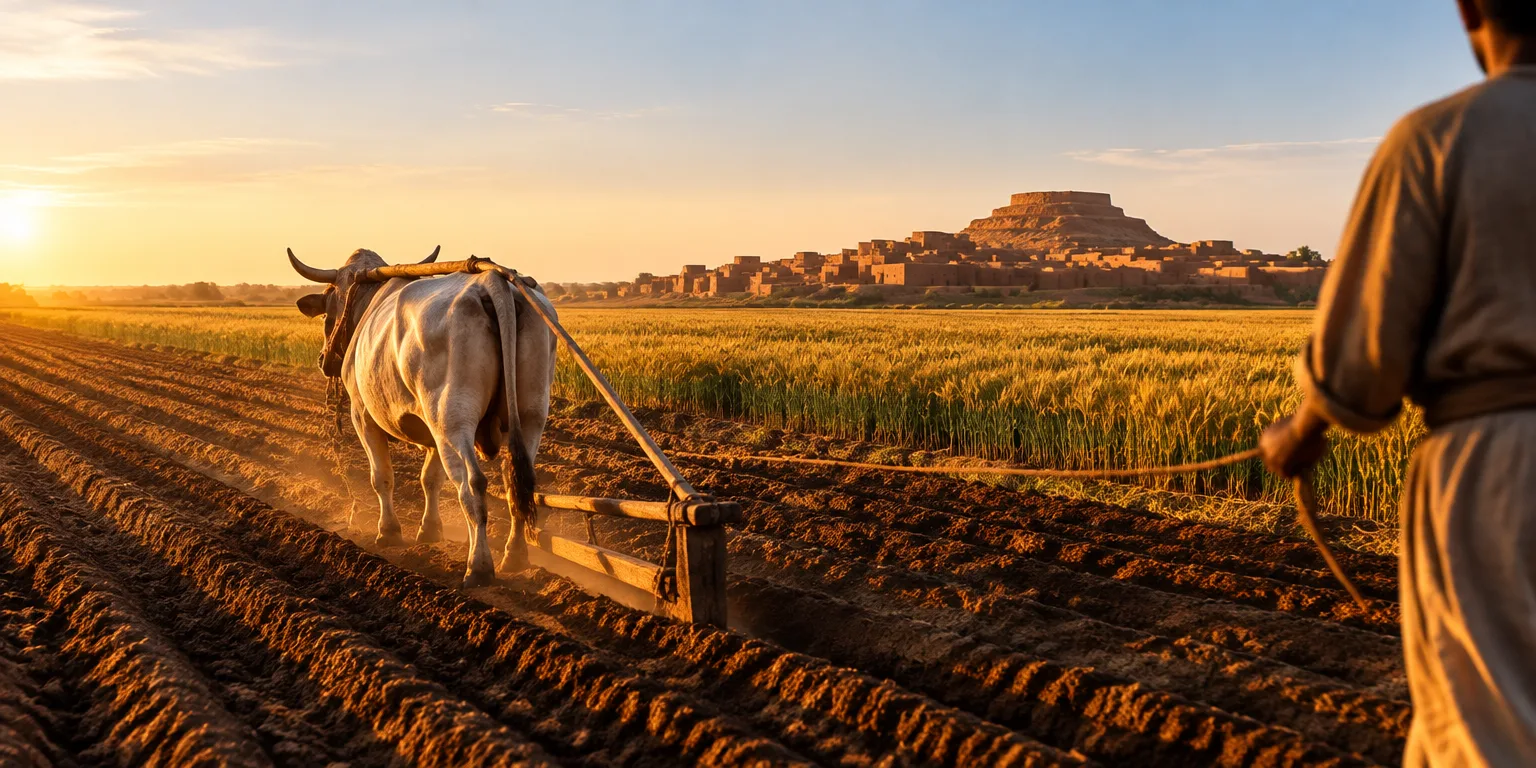
Yields rose only slowly. The first plowed fields, which greatly increase how much a field grows, do not show up in the archaeological record until about 3,000 BC. It took thousands of years more before farmers could harness an ox, a castrated bull used as a draft animal, to pull that plow.
Then farmers began producing more food than they themselves ate. In modern mechanized farming, one farmer feeds 155 people, and only about an acre is needed to feed one person. Once that surplus appeared, for the first time some people did not have to farm at all.
Those people could later live in cities, packed together and doing other work, and that other work became languages, literature, science, and technology, essentially the modern world. In this account, billions of people each choosing where to live add up to a kind of natural selection for good places to live.
Questions people ask
When did the first real cities appear?
The earliest large cities appear in Mesopotamia around 4000 to 3000 BC, including Uruk in what is now Iraq. That timing lines up with the story of better plows and bigger surpluses. They grew where irrigation farming could reliably produce extra grain.
Why did it take thousands of years after farming to get cities?
Early crops and tools produced only a little more than farmers needed to survive, so almost everyone still had to farm. Yields had to rise through plowing, animal labor, irrigation, and better seeds before one family could feed others. Only then could a community support full-time builders, traders, and rulers.
If one farmer feeds 155 people, why does hunger still exist?
That figure is an average for highly mechanized farming, mostly in the United States, not the global average. Hunger today is usually a problem of poverty, war, waste, and distribution, not total supply. The world grows enough calories, but not everyone can afford or reach them.