Cold made Challenger's rubber booster seals too stiff to close in time
Engineers had seen slight burn damage before and believed it would stop on its own.
 Throughline · Forty years of what if
The space shuttle Challenger was brought down by a rubber ring that got too cold to do its job.
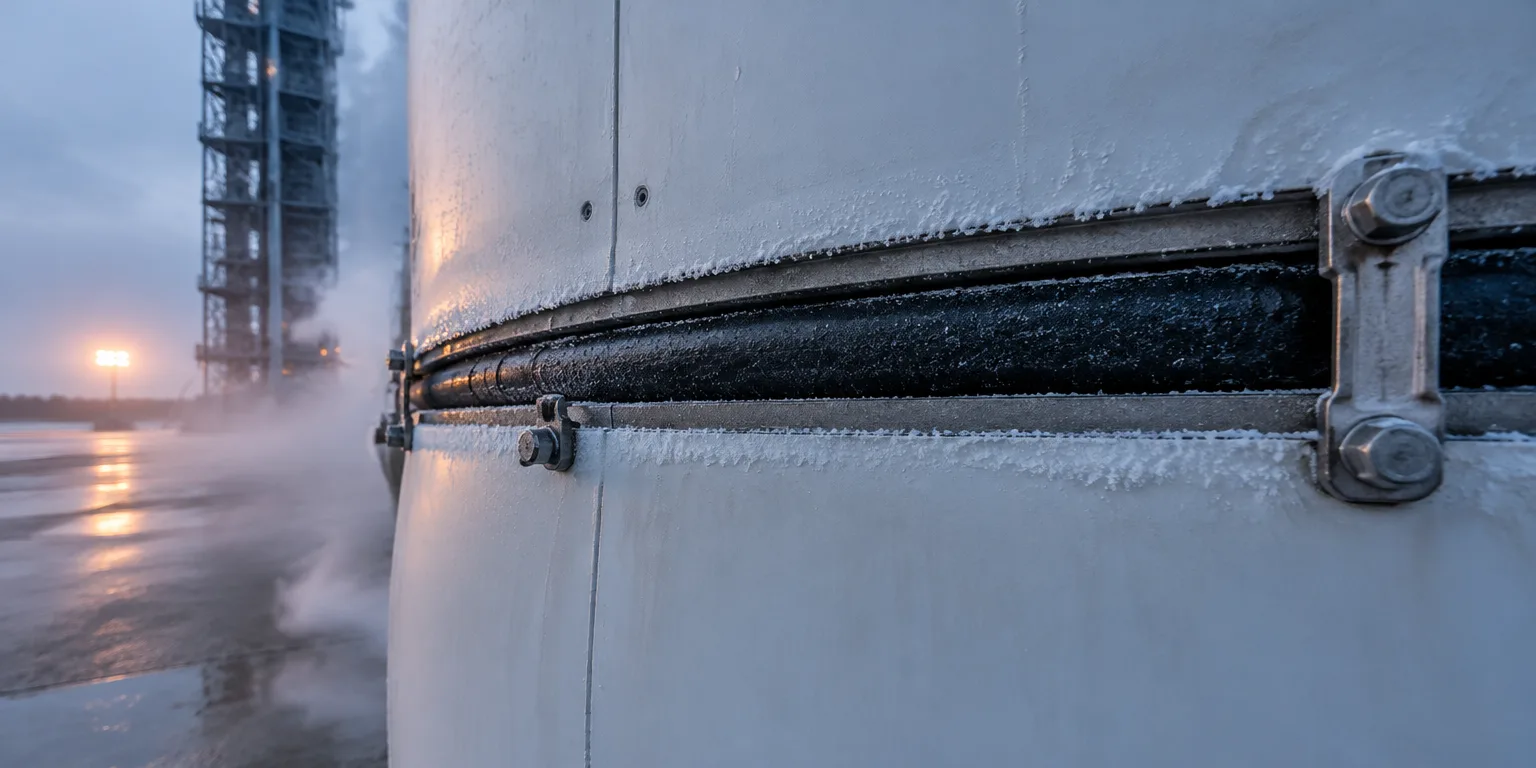
The shuttle's two white booster rockets were built in sections, and where those sections met there was a joint. That joint was sealed by an O-ring, a gasket that kept scorching, high-pressure gas from eating through the rocket wall. Morton Thiokol, the company hired by NASA to build the rockets, had a team dedicated to making sure those seals worked.
A seal like that works because it is springy. The instant the motor lights and pressure surges through the booster, the ring is supposed to swell and press into the gap, blocking the burning gas in a fraction of a second. Brian Russell, an engineer on Morton Thiokol's O-ring team, said the worry before launch was that overnight cold would rob the rings of that rubbery behavior.
As a general rule, cold rubber gets stiff, and stiff rubber springs back slowly. Instead of flexing instantly under pressure, a stiffened ring can leave a small opening. Through that opening, superhot gas can rush past and wear away at the ring and the metal around it.
Engineers had seen some erosion before, hot gas wearing at the ring and the metal around it, and extensive testing had led them to believe the damage was self limiting. Russell said the belief was that it "would only erode for a split second, and then it would stop." Russell said the team was working hard on a fix for the erosion, even as flights continued, which is why a freezing night mattered so much: the rings were supposed to swell and seal at once, and cold made them hard.
Questions people ask
Why were the boosters built in sections that needed sealing?
The solid rocket boosters were too large to make or move in one piece. They were manufactured in Utah in four segments each, shipped by rail to Florida, and stacked together. Every place two segments joined needed a seal to contain the pressure inside.
How cold does rubber have to get before it stiffens?
There is no single number, since different rubber compounds stiffen at different temperatures. In general, as temperatures fall toward freezing, many rubbers become harder, less springy, and slower to bounce back after being squeezed. Heaters, different materials, or tighter limits are used when a fast seal is needed in the cold.
What did engineers mean by self limiting erosion?
They meant that hot gas might nick the ring for an instant, but then pressure would push the ring into its groove and close the path. In tests and earlier flights, the damage appeared to stop after that split second. The danger on Challenger was a gap that stayed open long enough for the burning to keep going.