Compost Improves Heavy Clay a Layer at a Time
Spread a measured layer, mix it shallowly with a fork, and repeat the routine for steadier drainage and roots.
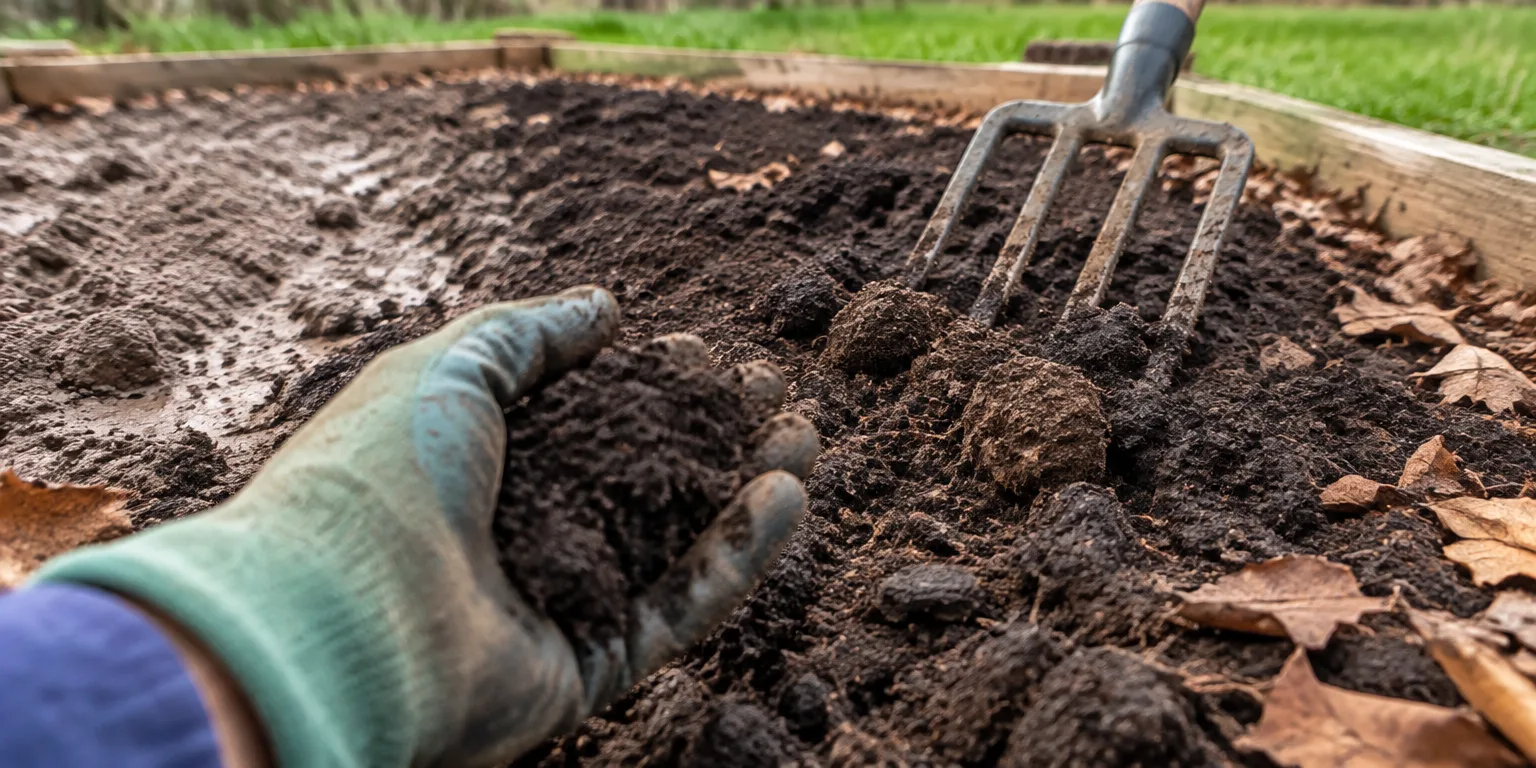
Spring gardeners in much of Illinois deal with heavy clay that holds water, sticks to boots, and later bakes into hard clods.
The durable answer is smaller than it looks. Lay a few inches of mature compost across the bed, roughly two to four, then blend it into the upper soil, about six to eight deep, using a digging fork or broadfork.
First clear the bed. Pull off spent plants and sickly stems to open the surface to light and air, and save sound shredded leaves to scatter lightly once planting is done.
Then check readiness by feel, not by the calendar. Wait until the ground has thawed and dried to a loose, crumbly handful that falls apart with a squeeze.
If it sticks to a shovel in thick ribbons, leaves footprints, or forms a sticky rope on a boot, stay off it for several dry days. Working wet clay crushes the structure that compost is meant to build.
Mixed in this way, compost improves drainage, lets roots penetrate more easily, and holds spring moisture more evenly. On heavy clay, those gains accumulate over several seasons rather than arriving in one pass.
Resist doubling the layer to hurry things. Check the soil with the squeeze test before you reach for the fork.
Questions people ask
What counts as finished compost?
Finished compost is dark, crumbly, and earthy smelling, with no recognizable food scraps or bedding. Unfinished yard waste can tie up nutrients as it decays, and fresh manure can burn roots and carry weed seeds.
How often should I repeat the compost layer on clay?
In most cases, once a year in spring is enough, with a thin addition after fall harvest. Gains build over several seasons, so plan to repeat the measured layer instead of trying to fix the bed in one pass.
Can I just add sand to loosen clay?
Usually no. Sand plus clay can pack into something closer to concrete unless very large amounts and organic matter are added. Compost is the safer amendment because it builds pore space, feeds soil life, and improves both drainage and moisture retention.