Conservationists build fake beaver dams to restore rivers
Beaver dams act like sieves, not plugs, and the copies are built to do the same.
 Practical Engineering · Are Beavers Actually Good at Dams?
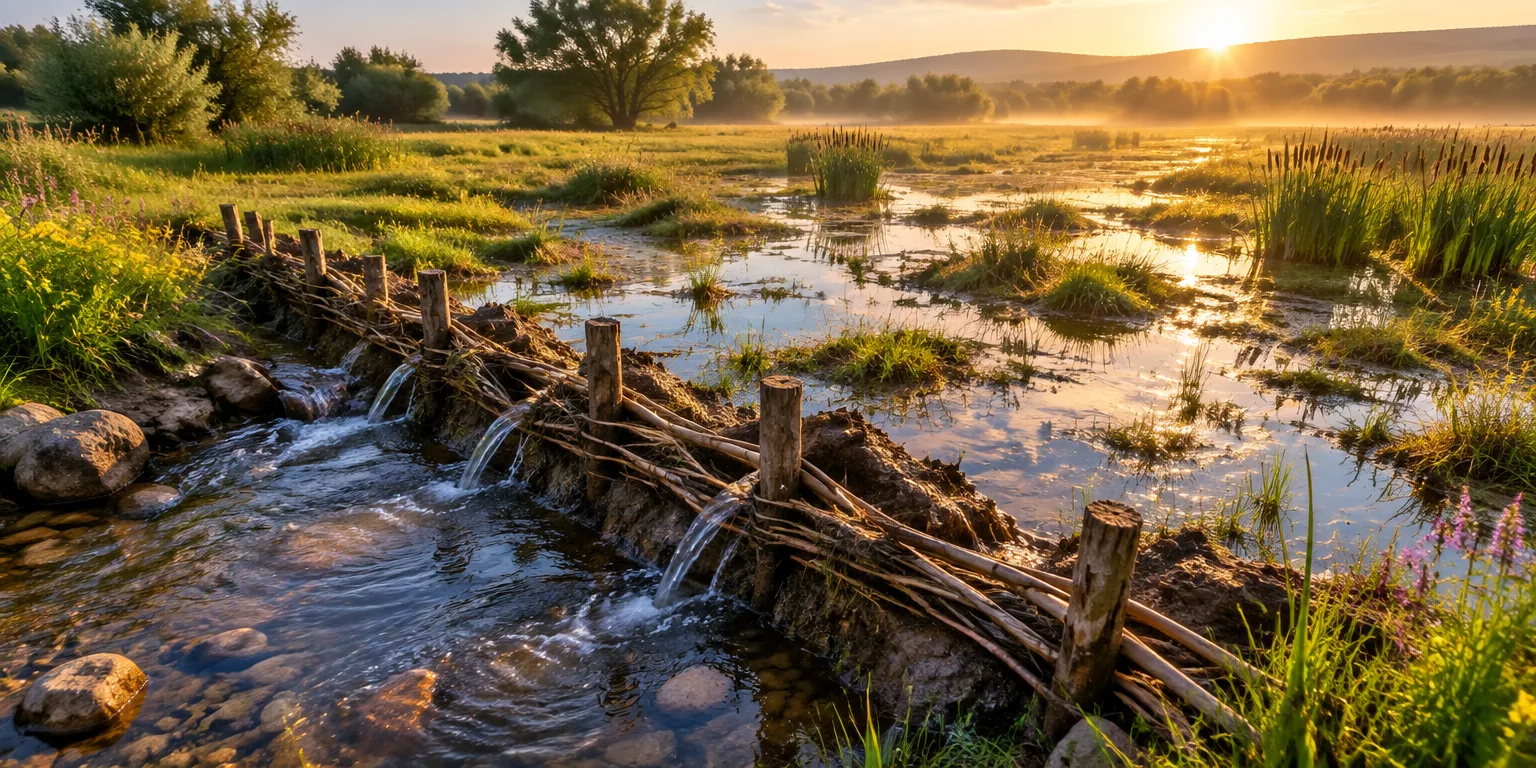
People build fake beaver dams, called Beaver Dam Analogues, to improve water quality, add habitat, and recharge groundwater when relying on beavers isn't feasible. Real beaver dams do useful work that human dams often don't.
Real beaver dams, built of sticks and mud, are porous and, as civil engineer Grady puts it, "act more like a sieve than a plug," letting water, fish, sediment, and nutrients pass through. They are also temporary, often washing out or being abandoned to become wet clearings called beaver meadows, and they are short enough to push water sideways into surrounding flat land.
That sideways spread creates a patchwork of slow, shallow wetlands, while still letting big floods carry sediment downstream.
Questions people ask
What does a Beaver Dam Analogue actually look like?
Usually they are simple structures made of wooden posts woven with branches and packed with mud, built across a small stream. They are meant to mimic the leaky, low barrier of a real dam, not to hold back a reservoir like a human dam.
Do real beavers ever move into the fake dams?
Sometimes, yes. The ponded water and wetland plants can attract beavers to take over and maintain the site. In other cases, managers prefer to keep it beaver free, especially near farms, roads, or culverts where flooding and gnawed trees would cause problems.
Why not just use real beavers?
Real beavers can be unpredictable and unwelcome neighbors. They flood pastures and crops, clog culverts, burrow into banks, and cut down trees, so in places where people do not want those side effects, a human-built copy offers more control.