Countdown clocks make red lights safer and green lights more dangerous
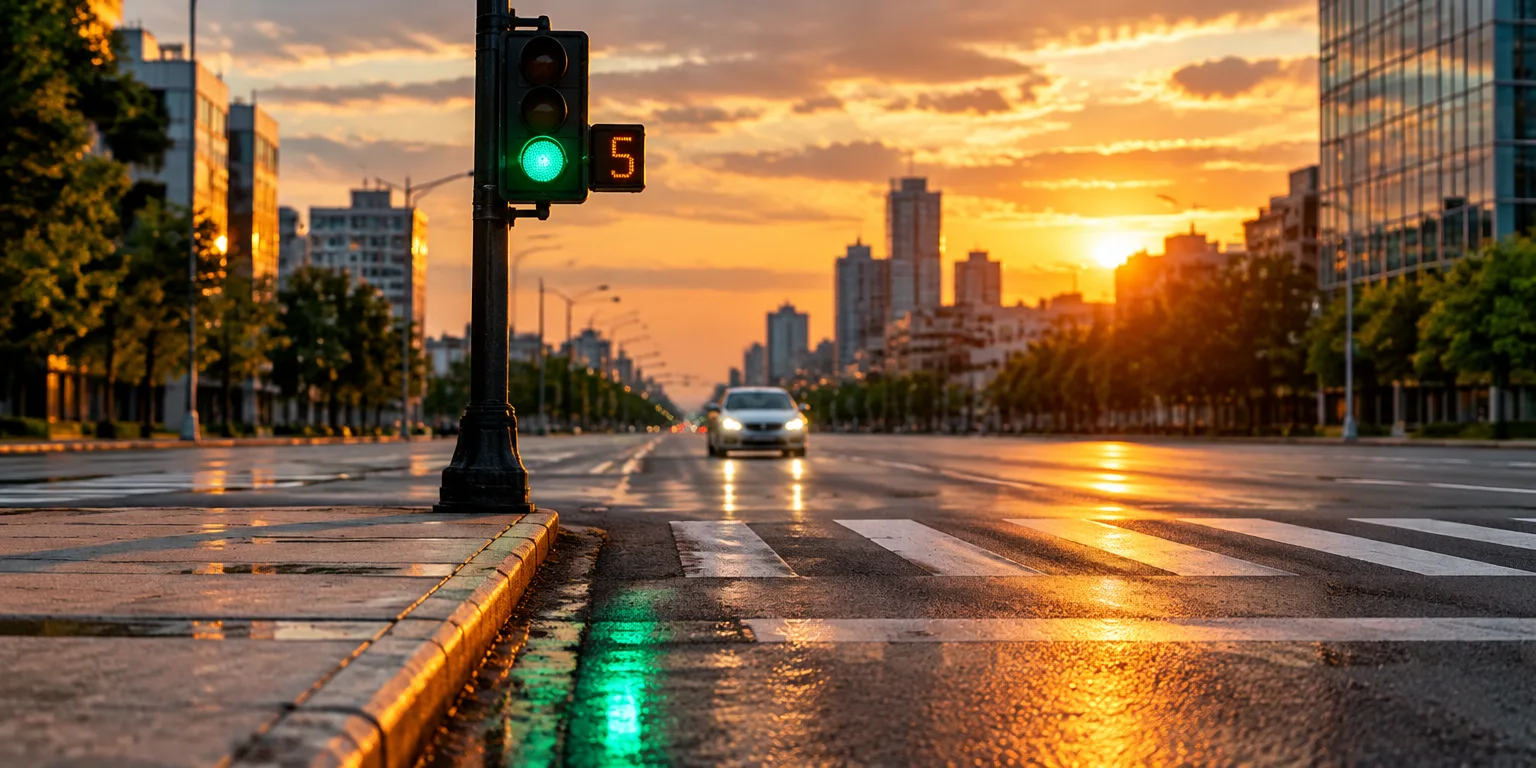
At red, a clock makes waiting bearable. At green, it turns five seconds left into a dare.
 TED · Rory Sutherland: Perspective is everything
Put a countdown timer on a red light and drivers calm down and crashes fall. Put the same timer on a green light and crashes rise.
One way to read the difference is what the number tells the driver. At red, the clock answers the driver's main question: how long until I move. Seeing the wait removes some of the uncertainty that makes waiting irritating, so impatience, irritation, and road rage ease.
At green, the clock seems to ask a different question: can I make it. A driver 200 yards away who sees five seconds left faces a dare, and the foot goes down.
South Korea tested both versions. Timers on red reduced accidents. Timers on green increased them.
Questions people ask
Why does seeing the wait time make drivers calmer?
Uncertainty makes waiting feel longer than it is. A visible countdown gives drivers a clear endpoint, so seven minutes of known waiting can feel less irritating than four minutes of not knowing. That sense of predictability lowers frustration and aggressive behavior.
Are these countdown lights used in the United States?
They are rare for cars but increasingly common for pedestrians and cyclists. Many American cities now show countdowns on walk signals to tell people how much crossing time remains. Full countdowns for vehicle red and green lights remain much more common in parts of Asia.
Could a green-light timer ever help?
It can help if it changes behavior earlier rather than encouraging a last-second sprint. Flashing warnings well before the light changes can prompt smoother braking. The problem comes when the display invites drivers to judge whether they can beat the clock.