Cows Get Facial Recognition Because People Cannot Tell Their Faces Apart
Algorithms do it well, and matching a face to the right cow makes it possible to follow its health over time.
 Y Combinator · Why Physical AI Is the Next Platform Shift
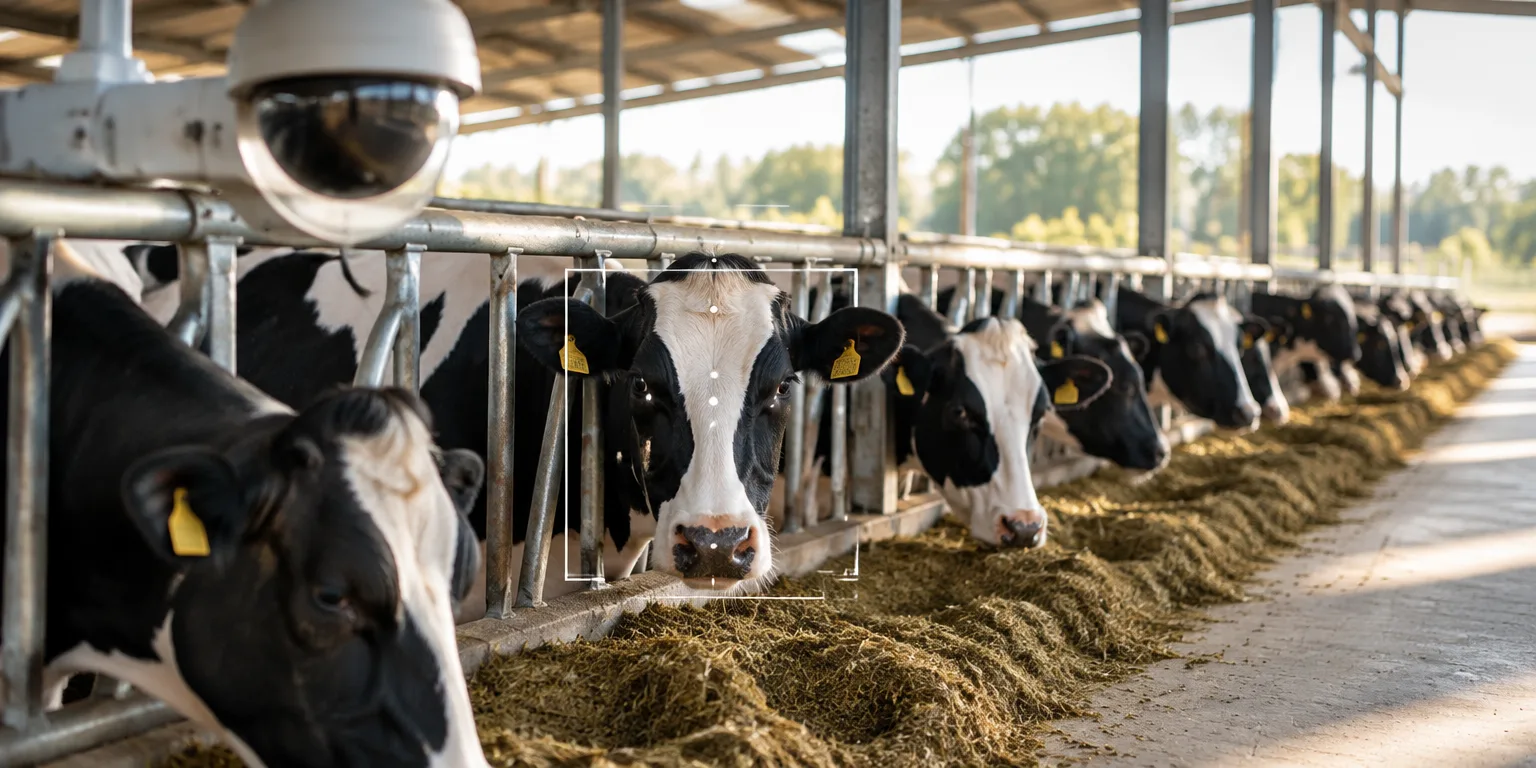
Dairy barns are using facial recognition on cows to follow their health. Humans, in the words of Eric Landau, co-founder of Encord, an AI data company, "are really bad at recognizing cow faces, but algorithms can do it quite well."
Landau says that when people ask about the most interesting use, the most fun one is facial recognition for cows.
Human experts do part of the annotating work. They tag the cow first, and there are other ways of tracking cows as they move through the barn.
Once a cow is tagged, the system can pick it out again in later footage. That keeps health information tied to the same animal, even when people cannot tell the faces apart.
Questions people ask
Does facial recognition replace ear tags on cows?
No. Ear tags, collars, and brands are still common for identifying cattle. Facial recognition is an addition that can work from cameras alone, without handling the animal or relying on a tag that can fall off or become hard to read.
How can an algorithm tell cows apart when people cannot?
Like human faces, cow faces have distinctive proportions, markings, and textures around the eyes, muzzle, and forehead. Computer vision models learn those patterns from many labeled photos, and they do not get confused the way people do when they have little experience telling animals apart.
What does health tracking mean for a cow?
For dairy and beef operations, catching illness, lameness, or changes in eating early matters for animal welfare and for costs. If cameras can reliably know which cow they are seeing, behavior and body condition can be linked to that individual over days and weeks.