Cows Turn Hay Into Energy With an Enzyme Fuel Makers Need
Plant fiber holds abundant sugar, but its sheath must come off before an enzyme called cellulase can chop the chain into usable pieces.
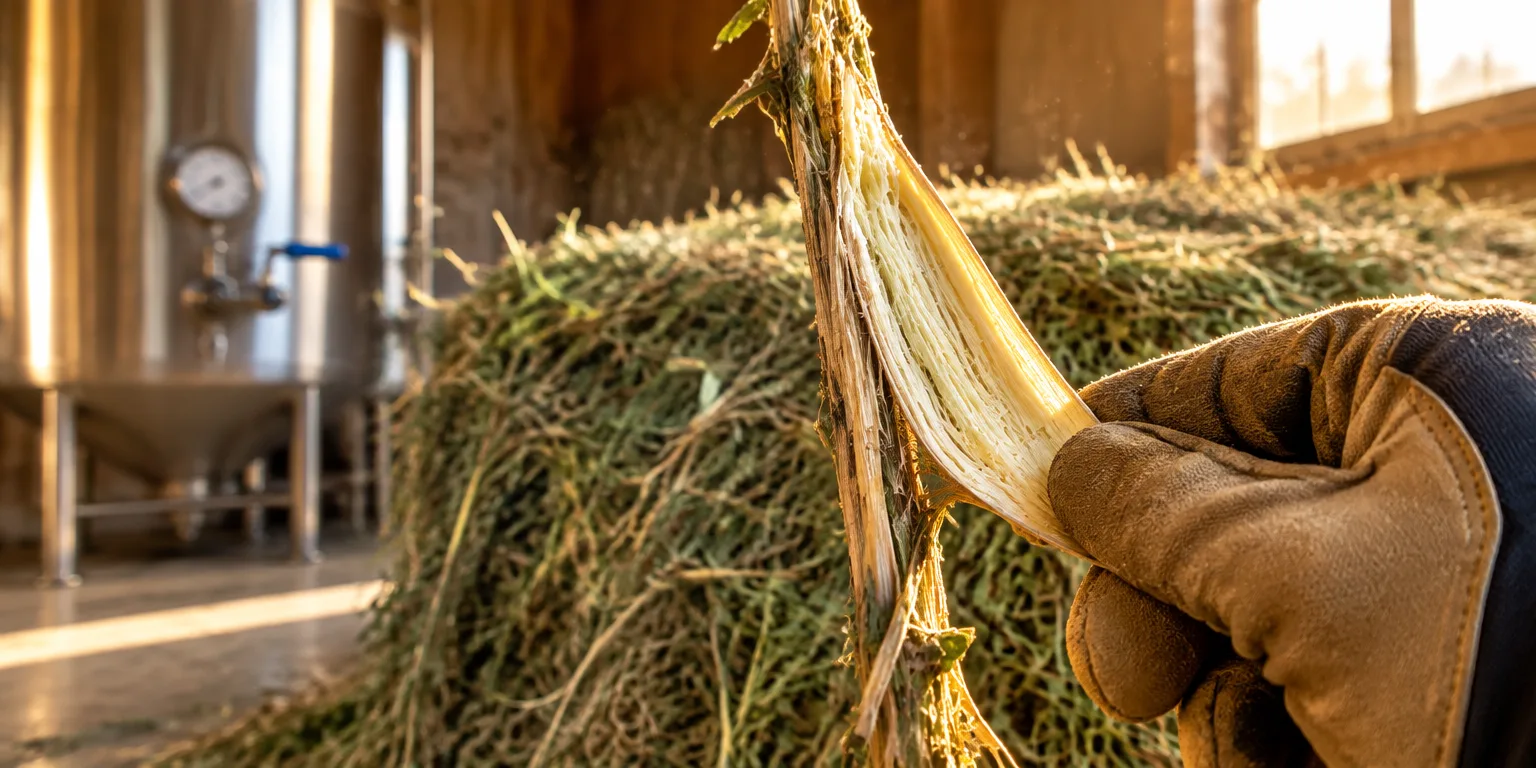
 TED-Ed · Biofuels and bioprospecting for starters - Craig A. Kohn
Dairy cows eat hay and alfalfa, foods that are full of cellulose. The trick is not in the cow itself, but in the microbes living in its stomach.
Cellulose is the most abundant natural material on Earth. It forms the stiff walls of plant cells, and plants make it from little more than water and carbon dioxide.
It is also packed with sugar, because each cellulose molecule is a long chain of glucose. The chain is wrapped in a tough outer covering that makes it hard to pull apart.
To use that sugar, the protective sheath must first be removed, and then the cellulose chopped into individual glucose pieces. Only after that unpacking can fermentation begin, the step that turns sugar into ethanol fuel.
The stomach microbes supply a key tool for the second part, an enzyme called cellulase. Cellulase cuts up that cellulose so the cow can use what remains for energy.
That unwrapping and chopping is the main obstacle to making fuel from plant material. If researchers can borrow efficient cellulase enzymes, cellulose could be unpacked and fermented much as hay is inside a cow.
Questions people ask
Why can't people live on grass the way cows do?
People lack the stomach environment and microbes needed to make enough cellulase. We can digest starches and simple sugars, but cellulose mostly passes through us as fiber.
What happens during fermentation?
Fermentation is a process in which yeast or bacteria eat sugar without using oxygen and release alcohol and carbon dioxide as byproducts. For fuel, glucose is fermented into ethanol, the same alcohol found in beer, but purified for use in cars.
Why look beyond corn for biofuel?
Corn grain can be fermented easily, but there is only so much of it and growing it takes large amounts of land, water, and fertilizer. Cellulose is found in stems, leaves, straw, and grasses, so it could supply far more material with less farming effort.