Crews Left Seven Strands Holding Two Mississippi Bridges, Then Blew Them Down
With the spans stripped to towers and cables, engineers thinned the steel to the edge of stability so focused blasts could drop large pieces for barges to lift.
 Practical Engineering · Bridge Demolition is Complicated
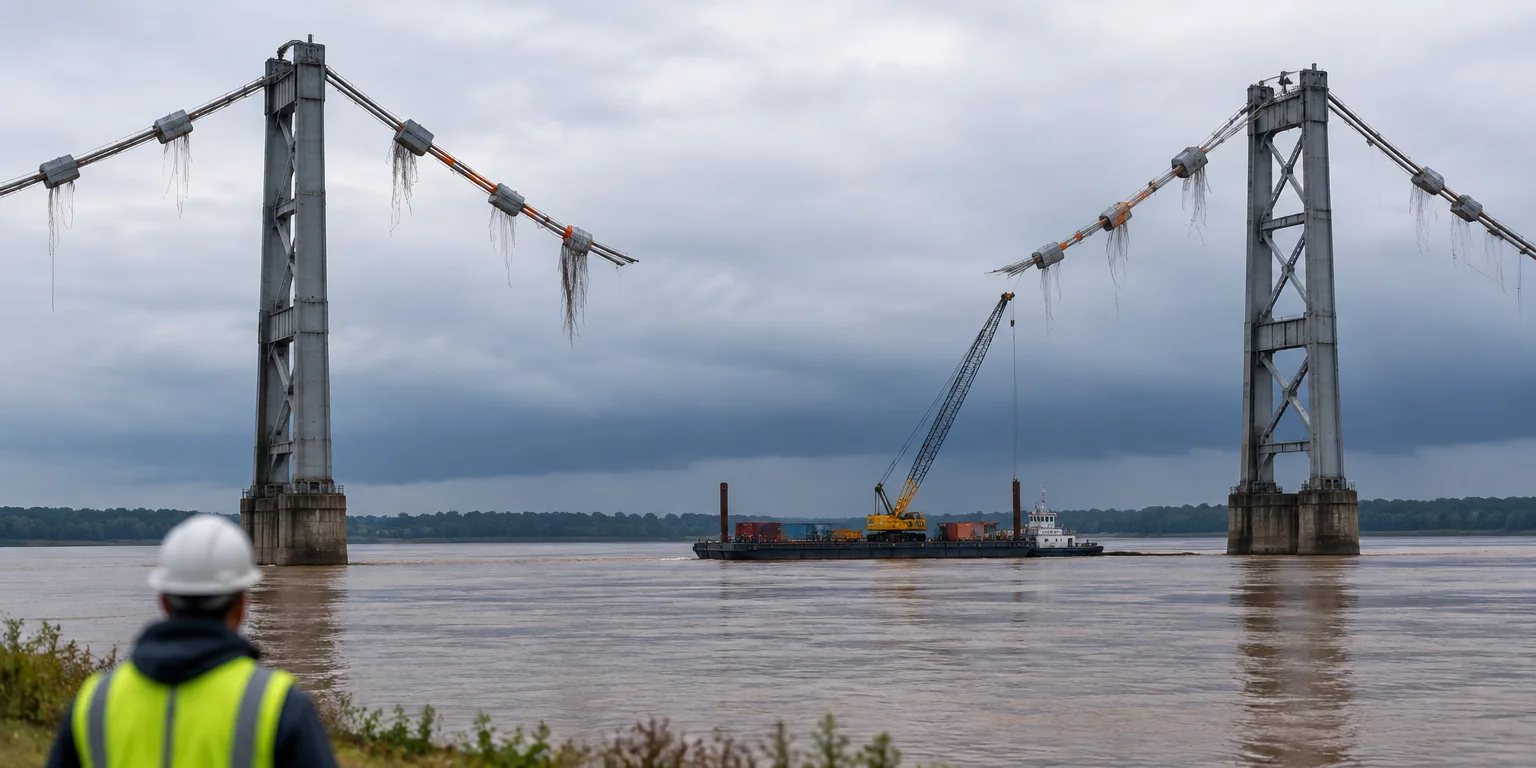
Crews had already stripped each old I-74 bridge over the Mississippi to its bare towers and cables by the time they prepared the final blast. High above the river, workers cut into the thick main cables that had once carried the road, removing the outer layers of steel until only seven of the original 37 strands remained at each break point.
Safely taking a structure apart can take even more engineering than drawing up a new one, and those cables showed why. Each cable acted as a single long member holding great tension, so there was no safe way for workers to cut it apart by hand with people standing nearby.
So the team used explosives less like bombs than like remote cutting tools. Contractors used shaped charges, small devices that focus explosive force into one narrow line, to slice through steel at chosen spots at the same instant and from a safe distance. The aim was not rubble but large pieces that would fall where barges could reach them and be lifted from the water without blocking the shipping channel.
Before the charges were set, crews cut every blast site to flat steel and smaller parts so the explosions would cut completely through. A partial blast would have been far more dangerous, leaving workers to finish the job on a weakened structure with uncertain stresses. On each main cable the thinning was done in four places to divide it into manageable lengths, and the towers were cut in selected spots to guide where they would drop into the river.
Once weakened, the bridges stood right at the edge of stability, where the charges could carry them the rest of the way down. That left the schedule open ended. Crews worked long shifts and watched the sky, not wanting a storm to bring the spans down before they could trigger the blast.
When they did, both bridges fell in controlled shots, and barges moved in soon after to retrieve the fallen steel. The road and the navigation channel had to close only briefly. The aftermath showed clean breaks where the charges had sliced the cables. Separately, other steel removed earlier in the job was taken to a spot on shore to be cut down with a hydraulic shear and sent for recycling.
Questions people ask
Why could workers not simply cut the cables apart?
Each cable was essentially one long structural member full of stored energy. There was no safe way to cut it loose by hand, and no one could be nearby when it came down.
What happened to the steel taken off earlier in the job?
Other steel taken off earlier in the job was brought to a location on shore. There a hydraulic shear cut it down to size, and the metal was then sent off for recycling.