Crows memorize a face they saw with a dead crow
After one staged encounter, Seattle crows scolded the face they linked to the body and avoided the spot where they saw it.
 TED Talks Daily · What crows teach us about death | Kaeli Swift (re-release)
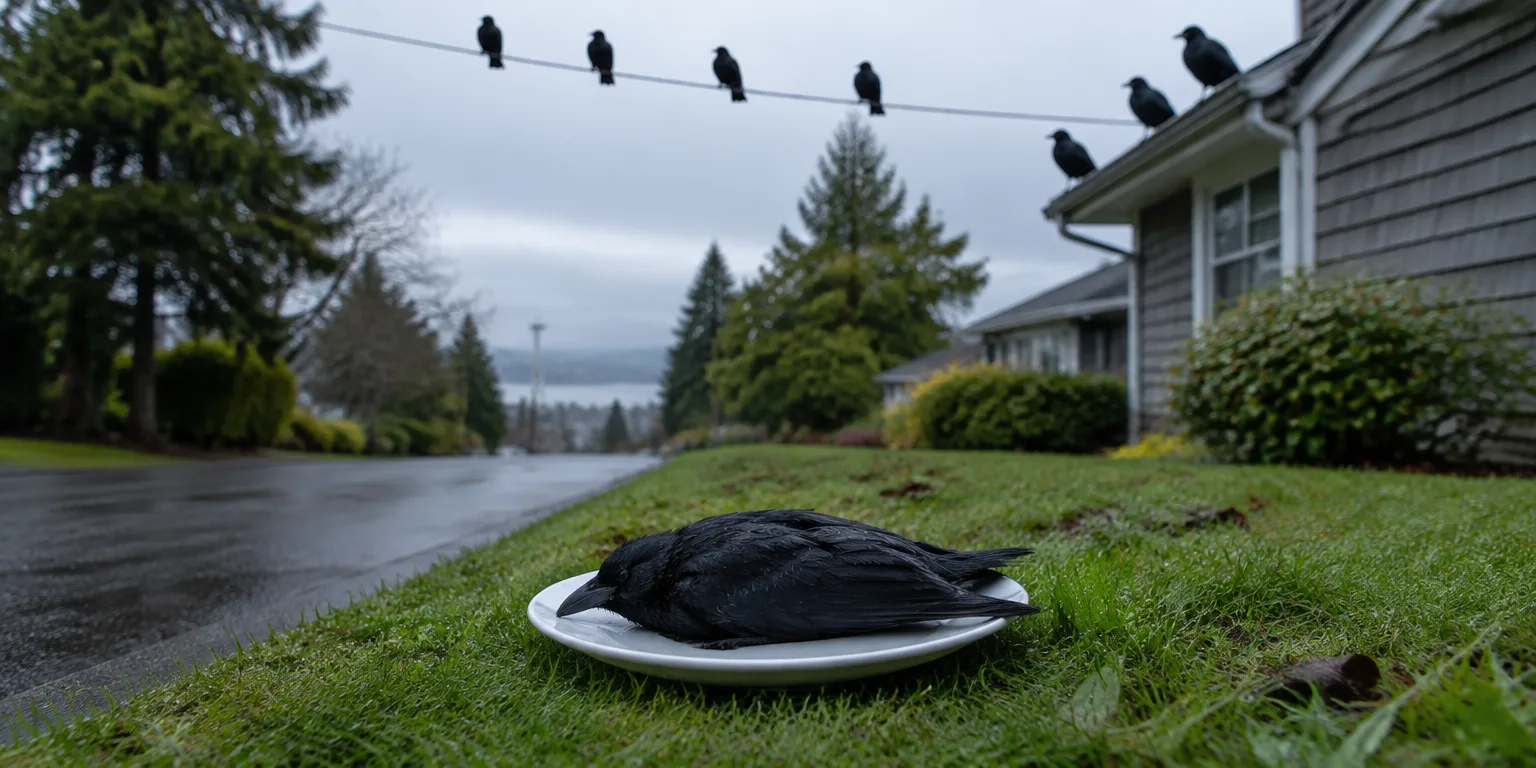
On a quiet street in Seattle, a volunteer stood perfectly still for 30 minutes holding a dead crow on a small hors d'oeuvre plate. She wore a rubber mask known to the research team as Linda, and said nothing while neighborhood crows gathered overhead.
The setup belonged to Kaeli Swift, an animal behaviorist who was then a graduate student studying how crows respond to their dead. For three days, she had fed a breeding pair of crows in the neighborhood to learn how quickly they would swoop down for food. On the fourth day, she staged a funeral.
The volunteer in the Linda mask held the body while Swift watched and took notes. What mattered was what happened a week later. The same masked volunteer returned to the same spot, this time without any dead crow, to see whether the birds would regard her as any other passerby.
They did not treat her like an ordinary passerby. Most of the crows in the study scolded and dive-bombed the masks they had seen handling a dead crow, treating those faces as threats. The scolding continued when the masks reappeared over the next six weeks, a long memory built from a single encounter.
Swift also tested whether the spot itself had become risky. In the days after the staged funeral, as she kept putting out food, the crows were much less willing to come down to the pile where they had seen the body. Crows that had not seen a funeral, the control groups, did not show the same decline in coming down to food.
Swift's take is that attention to the dead might be an important way for crows to learn about danger, with face memory lasting six weeks in her study and place avoidance seen in the days after. She also notes other explanations remain open.
Questions people ask
Can crows really tell human faces apart?
Yes. Research on wild crows has shown they can learn and remember individual human faces for years, especially faces linked to capture or threats. They also pass that information to other crows, so birds that never saw the person can join in scolding.
How long did the place avoidance last?
In Swift's feeding test, the reluctance to come down to food was clear in the days after the funeral. The study was designed to track face memory for six weeks, while place avoidance was measured over the shorter follow-up feeding period.
Why would remembering a dead crow help crows survive?
A dead crow can signal that a predator, a person, or another hazard was recently active nearby. Crows that link that place and that face to danger, and stay wary, are less likely to be caught in the same way.