Crows remembered one dangerous mask for eight years
Young birds that were never caught learned to attack the face just by watching older birds do it.
 TEDx Talks · Crows, smarter than you think | John Marzluff | TEDxRainier
The man in the caveman mask came to catch crows. On a university campus, he and his team pulled on the rubbery, heavy-browed face, grabbed seven birds, and then let them go. It was not a procedure the birds enjoy, and the researchers made no effort to look normal while doing it.
John Marzluff, a University of Washington professor who studies crows and their relatives, wanted to test whether the birds could learn a single dangerous human face. For comparison, his team also walked the campus in a mask of former Vice President Dick Cheney, and did nothing harmful while wearing it.
At first, the crows did not care. Before any captures, Marzluff showed, neither mask drew much response. Weird looking people were not unusual on campus, and the birds largely ignored them both.
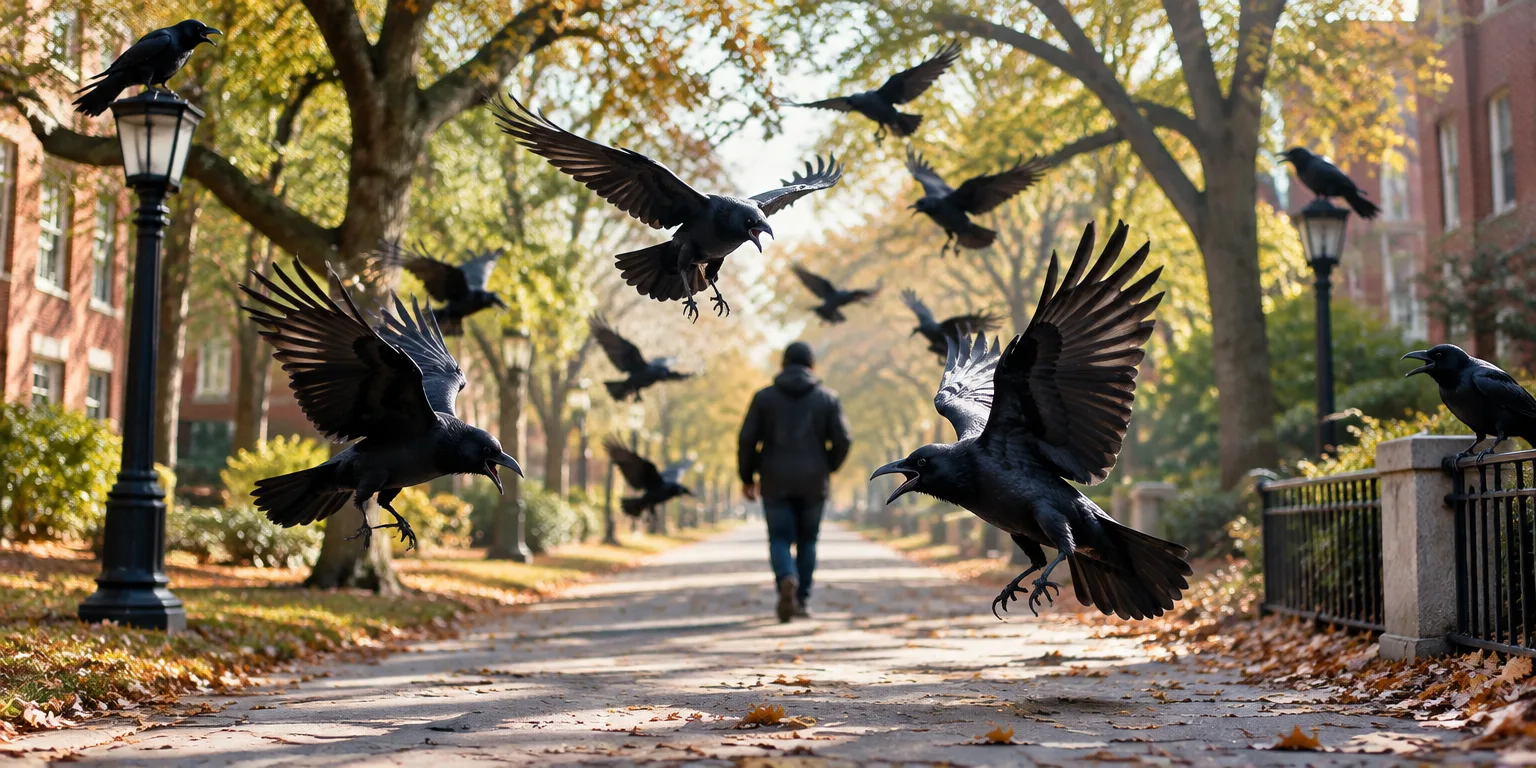
That changed after the seven birds were caught. When someone later walked the campus wearing the caveman face, crows scolded loudly, dived at him, and chased him down the path. They recognized the face upside down, with a hat, and without one. When the same walker wore the Cheney face, or no mask at all, the birds stayed quiet.
The point was survival. Crows live around people with different attitudes, some who feed them and some who chase them, so telling one person from another matters.
What surprised Marzluff was what happened next. Over eight years, scolding of the caveman roughly doubled, and it continues today. Almost every bird in the mob had never been touched or harmed by the masked catcher. Many of the birds scolding now were not even born when the first captures happened seven and a half years earlier.
They had learned by watching. A young crow sees older birds screaming and diving at that one face, and joins the attack. The grudge spreads from bird to bird, without each bird having to be caught itself.
Eight years later, the caveman still cannot walk in peace.
Questions people ask
How do crows scold an enemy?
They gather, caw loudly and repeatedly, dive toward the person, and follow them. The noise recruits other crows, so a few angry birds can quickly become a noisy mob.
How long do crows live in the wild?
American crows commonly live 7 to 8 years in the wild, but some reach their teens or twenties. Longer lives give them more time to learn dangerous places and people, and to be watched by younger birds.
Can crows really recognize individual human faces without masks?
Yes. Later studies using bare faces have shown crows remember people who captured them and people who fed them. They also pass those distinctions to mates and offspring that observe the encounters.