Crows usually mob a dead crow, but some reports describe silence and objects left nearby
The noisy gathering is the usual pattern; the quiet gatherings come from accounts shared with a researcher.
 TED Talks Daily · What crows teach us about death | Kaeli Swift (re-release)
A crow that finds a dead crow usually sounds the alarm. Other crows fly in and gather around the body in a loud group, what scientists call a mob.
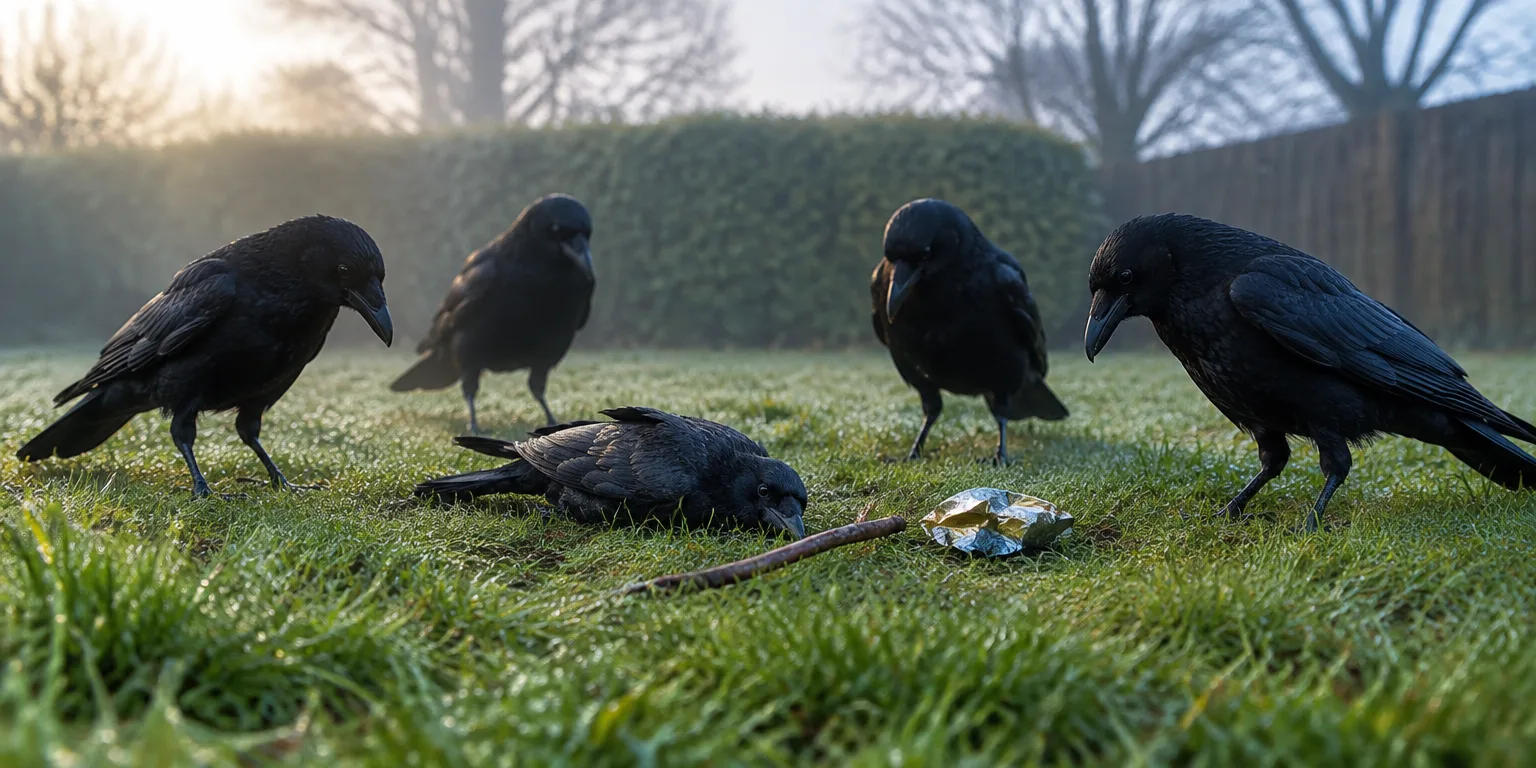
But animal behaviorist Kaeli Swift says people have shared with her accounts of a quieter response: crows gathered around a dying or dead crow for a long stretch without calling, in what looks like a vigil.
People have also told her of crows setting items such as sticks and candy packaging down beside or on the dead bird. These are reports from members of the public, so how often this happens, and what it means, is not known.
Questions people ask
How common are the silent vigils compared with the loud mobs?
The loud alarm and mobbing is the typical response Swift describes, seen again and again. The silent vigils and object placements are reports shared with her by members of the public, so scientists do not have a firm count of how often they happen relative to mobs.
Are crows leaving gifts the way people leave flowers?
There is no evidence they mean it that way. Swift treats the stick and wrapper reports as intriguing observations, not proof of ritual. Crows do handle and carry objects with their bills, so an object could be dropped by chance, out of curiosity, or for another reason entirely.
Do crows understand death?
Researchers cannot say for sure what a crow feels or understands. What experiments show is that crows pay close attention to a dead crow and use the experience to learn, especially about danger. Whether that includes anything like human grief remains an open question.