Cuba lost a third of its economy when Soviet aid vanished
With no fuel for cars, the island ordered more than a million bicycles from China.
 Economics Explained · Cuba Was Barely Holding On… And Then The Oil Ran Out
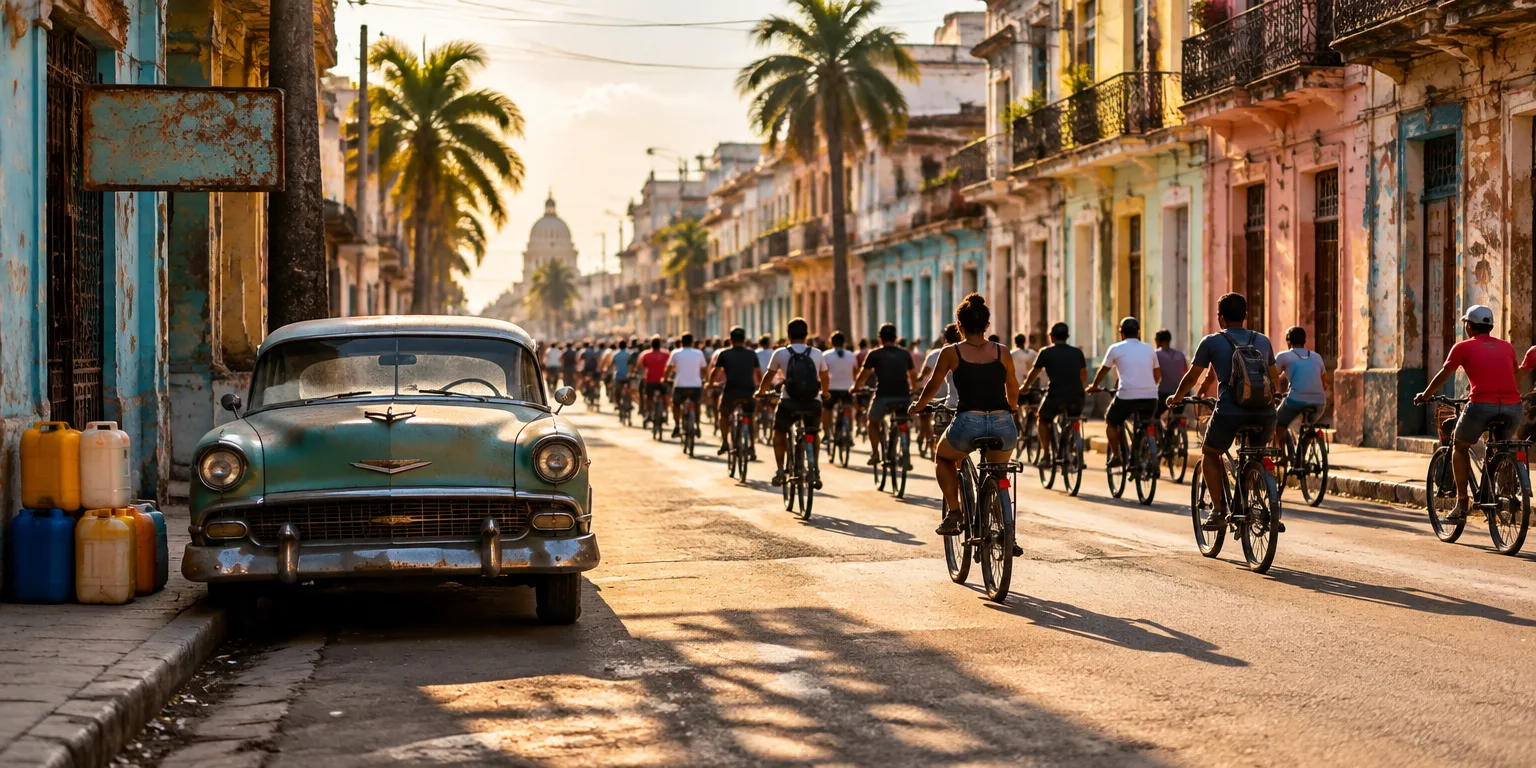
The cars stopped running. With no fuel left, streets across Cuba filled with bicycles, more than a million of them newly shipped from China.
For three decades, Cuba had managed to live under American sanctions with help from Soviet subsidies worth about a fifth of its output. When the Soviet Union broke apart in 1991, that help vanished. What followed showed how completely one island's economy had come to depend on a faraway patron, as output shrank by over a third within three years.
The dependence began in 1960, when Castro's government took over oil refineries owned by Americans and President Dwight Eisenhower halted trade in response. President John F. Kennedy formalized the ban two years later, after the Bay of Pigs invasion.
It grew into a trade ban that has lasted longer than any other in recent times, forcing Cuba to buy imports through more expensive routes and to struggle to find buyers and investors. Cuba's government estimates the cumulative cost at around $135 billion.
What cushioned the blow was Moscow. During much of the superpower standoff, the Soviet Union kept Cuba afloat with large-scale aid that equaled about one-fifth of all Cuban output.
When the Soviet Union broke apart in 1991, that lifeline disappeared within months. Cuba's gross domestic product shrank by over one-third within three years. The government called it the Special Period in a Time of Peace.
It was a euphemism for a shock that touched daily life. Food was mass rationed and blackouts spread across the island. With no fuel left for cars, the government brought in the bicycles from China to keep people moving.
Questions people ask
Why did the Soviet Union subsidize Cuba so heavily?
Cuba was a Communist ally in the Western Hemisphere during the Cold War, and Moscow valued it for ideological and strategic reasons. The Soviets bought Cuban sugar at above-market prices and supplied oil and aid at below-market prices, effectively keeping the Cuban economy afloat. The aid averaged about a fifth of Cuba's economy.
What did everyday life feel like during the Special Period?
Cubans faced severe shortages of food, fuel, electricity, and transportation, with strict rationing and frequent blackouts. Caloric intake fell sharply in the early 1990s, public transit collapsed, and bicycles and walking replaced cars for many workers. Historians note a rise in home gardens and creative repair culture as people improvised to get by.