Dancing Is Likely Among the Best Activities for an Aging Brain
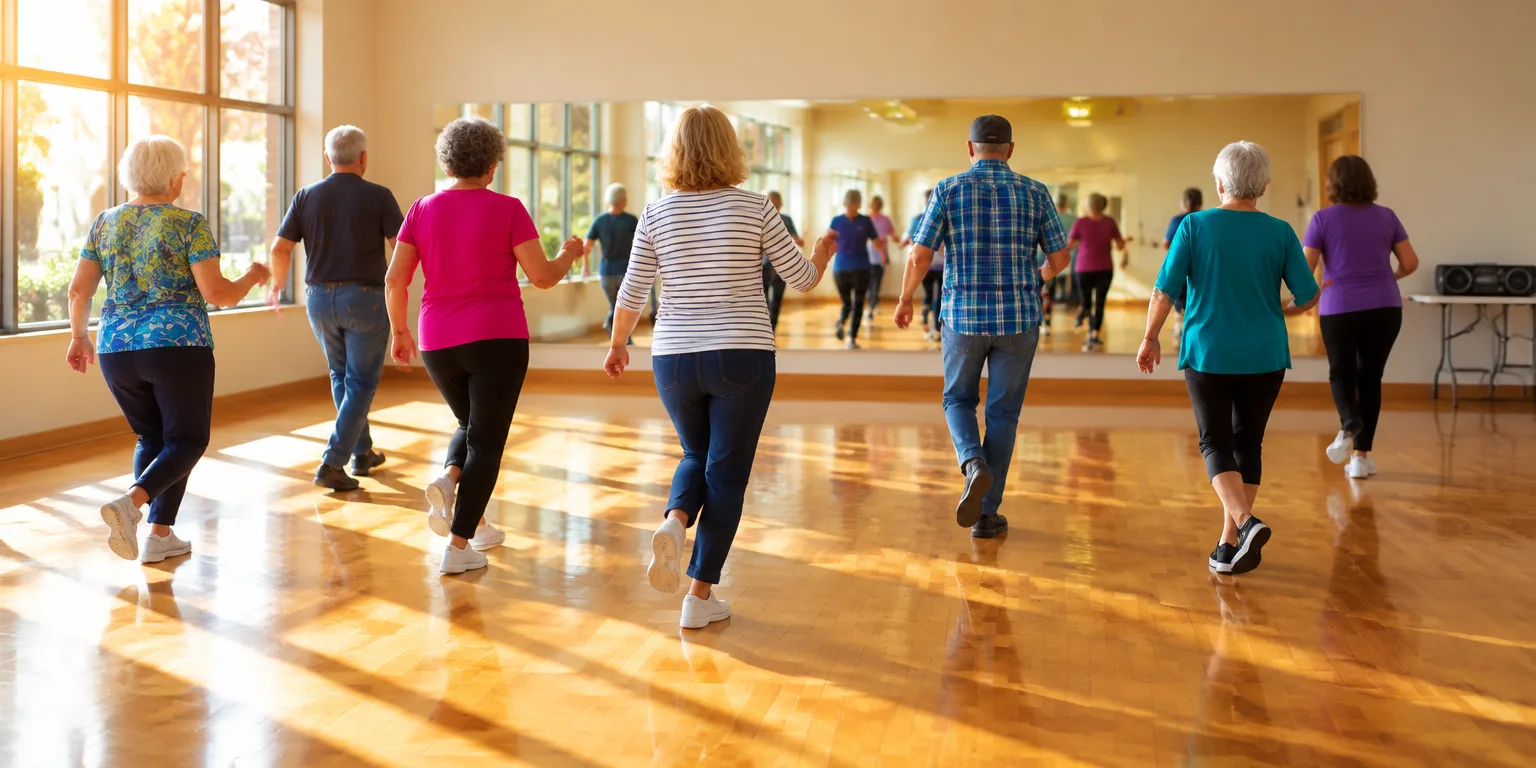
Ballroom and line dancing stand out because they combine new steps, music timing, exercise, and other people.
 Andrew Huberman · Accelerate Learning & Increase Cognitive Capacity | Dr. Tommy Wood
In combined analyses of programs for older adults, two dance forms stood out. Tommy Wood, a researcher who studies exercise and brain health, said meta-analyses of interventions in older adults showed ballroom and line dancing with the strongest link to cognitive function.
His explanation is that dancing bundles four demands at once. Dancers learn sequences, time them to music, exert themselves physically, and do it around other people.
The first demand is skill learning. Ballroom and line routines involve learning various sets of movements.
The second demand is timing. Dancers need to follow the beat and match steps to it, and Wood described that listening and matching as its own skill set.
The third and fourth demands are physical activity and social contact. Both dance forms generally involve other people, so exertion, learning, and social interaction occur together rather than separately.
Because of that bundle, Wood ranked learning a new dance as probably number one among activities that engage multiple brain networks at the same time. He described dancing alone in a living room as physical activity that is fun, while the strongest evidence involved the group forms with set routines.
Wood placed ball sports, team sports, board sports, skateboarding, and martial arts such as Brazilian jiu-jitsu in a similar category. Those also pair exertion with complex motor skill and reacting to other people or the environment.
Questions people ask
Why do ballroom and line dancing show up in the research?
Those were the dance forms tested in programs for older adults that were included in the meta-analyses Wood cited. Both generally require other people as well as learning sets of movements.
Does dancing alone show the same link?
Wood described dancing alone as physical activity that is fun. The larger effect in the analyses was tied to ballroom and line dancing, where set movements are learned and performed with others and timed to music.
What does music add beyond exercise?
Wood pointed to listening for timing and matching steps to it as a separate skill. That adds an auditory and timing demand on top of remembering sequences and moving the body.