Dead West Texas oil wells keep springing back to life
Injected wastewater is pressurizing shallow rock and pushing oil and brine up forgotten holes to the surface.
 Bloomberg Originals · The Looming Disaster Under America’s Biggest Oil Field
Sarah Stogner, a lawyer, picks her way through the West Texas brush with a warning and an invitation.
Watch out for snakes, she says. They are grumpy. Do not fall down. "You're going to want to see this," Stogner says.
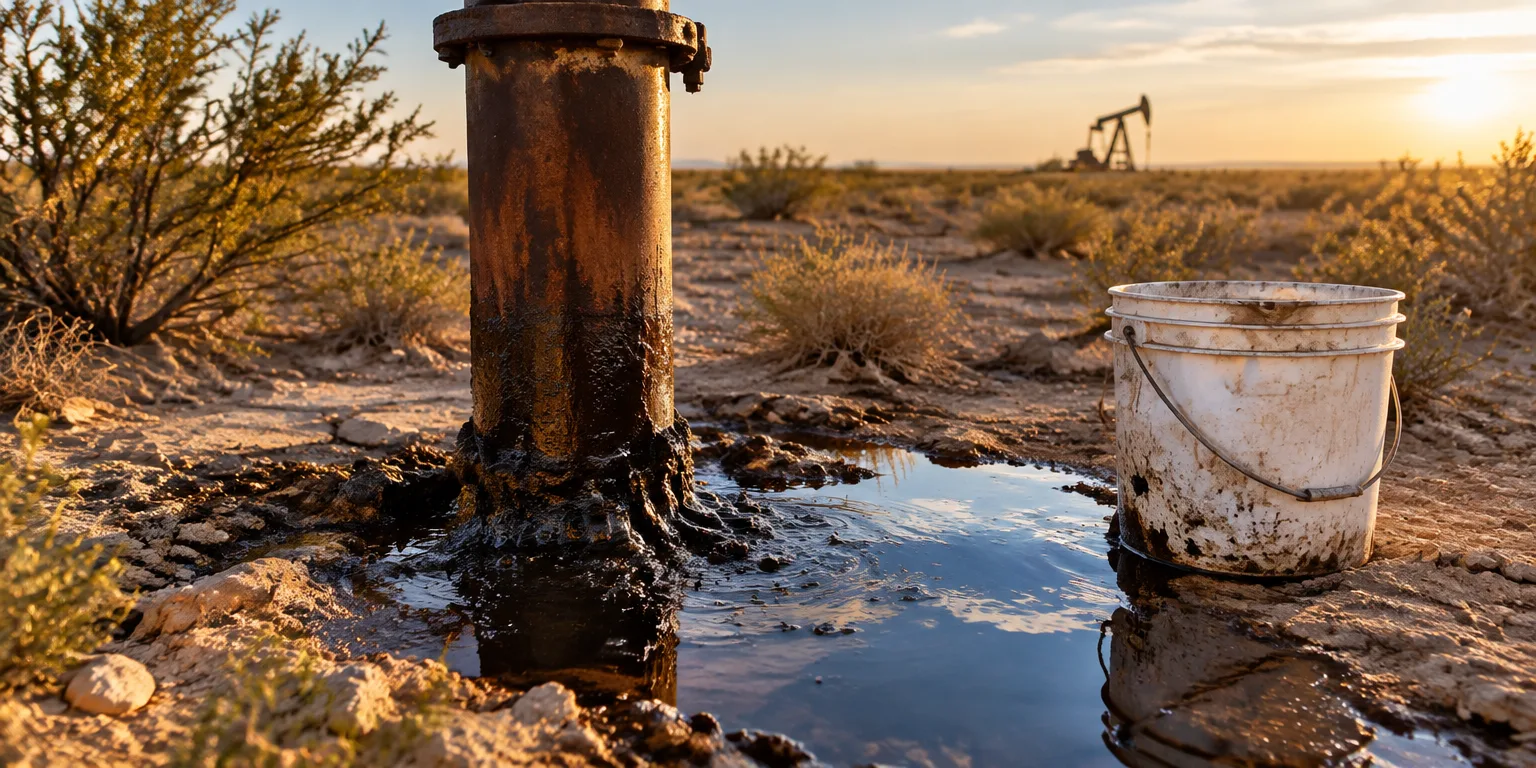
What she wants to show is a puddle and a bucket at the foot of an old oil well. Watery fluid is running out from around the surface casing, the steel pipe that is supposed to seal off fresh water from oil and gas below. "Nobody can come out here and say this well's not leaking," Stogner says.
Stogner said she came out expecting to find two, three, four, or five leakers. Instead, "every time I have stuck a bucket in the ground," Stogner says, she has found a problem well.
"I call them zombie wells because they are supposed to be dead," Stogner says, because they keep rising from the grave. They are unkillable, she says, because "you have to kill the source, which is the produced water" that comes up with oil and then gets pumped back underground for disposal.
The Permian Basin, the vast oil field that straddles West Texas and New Mexico, produces more shale oil than any other basin in the world. To keep oil flowing, operators inject billions of gallons of that used water back into the ground. After deeper injection was linked to earthquakes, operators and the state regulator shifted disposal to shallower rock, and pressure began building near the surface.
That pressure, Stogner says, is pushing black, stinky crude that should stay 2,400 feet underground up and through forgotten well bores. The oil and gas come up outside the protective pipe and spill at the surface. She describes the basin as a giant cake stabbed full of straws until it is fragile, and says the extra water in a shallow layer finds the path of least resistance.
The result is a well that was plugged and left for dead, now wet and bubbling again.
The field around her is not empty desert. Deer run through here, she says, and there are bobcats. "And this should be a huge concern for the Railroad Commission," Stogner says of the Texas regulator, "but it's not in their backyard."
Questions people ask
Why pump all that water underground in the first place?
Oil in the Permian does not come up alone. It comes up mixed with ancient, very salty groundwater. Operators separate the oil and then have to put the leftover water somewhere, and the cheapest option has long been to pump it back underground into porous rock.
What exactly is produced water?
It is mostly natural salt water from the oil formation, plus some oil, drilling chemicals, and naturally occurring heavy metals and radioactive material. It is far saltier than seawater and cannot be dumped on the surface or into streams without treatment.
Can a zombie well be killed for good?
Sometimes, by replugging the old hole with cement or by lowering pressure nearby. Stogner’s point is that fixing one well does not solve it, because as long as large volumes keep going into shallow rock, pressure will find another old hole.