Decide what you want to do at 100, then train backward from there
Working backward from old age reveals the training you need now, and the bad luck you should plan for.

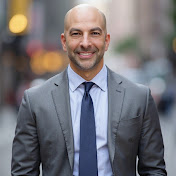 Peter Attia MD · #60 – Annie Duke: How to improve decision making, learning, & apply ‘backcasting’ for future success
Physician Peter Attia wanted a better reason to exercise than looking good, feeling good, or eating what he wants. He started from the day before his last breath and worked backward.
He calls it backcasting, a term he picked up from former professional poker player and cognitive psychologist Annie Duke. Instead of forecasting forward from today toward a vague goal, you start at the finish line and ask what had to be true just before.
Attia’s finish line is what he calls the centenarian Olympics. He made a list of 18 plain, practical things he wants to be able to do at age 100. One is a squat while holding a 30-pound weight, which is about what it takes to pick up a toddler or, by then, a great-grandchild. Another is getting up off the floor with no outside support, using only his legs and one arm. He could do both easily at 46, but very few 100-year-olds can.
Then he trains backward. If he can do that squat at 100, what must he have been able to do at 90, and at 60, and now. The decade-by-decade chain turns a distant wish into a training matrix for today.
Duke adds the second move, the pre-mortem. Imagine it is the day after the deadline and you failed, then ask why. Imagine you are 100 and cannot do the squat. Perhaps you did not exercise enough. Perhaps you tripped, fell, and broke a hip.
That failure story forces luck into a plan that would otherwise list only effort. A fall can happen to anyone, but whether the hip breaks turns partly on bone density, which training can improve. Where you cannot lower the odds, you look for a hedge. And where you cannot hedge, you decide in advance how you will respond, while you are calm, rather than improvising while panicked.
Working forward asks what you will do. Working backward asks what luck might do, too.
Start with one mundane task you want at 100, and write what must be true at 90 to keep it possible.
Questions people ask
What makes a good centenarian Olympics event?
Pick tasks tied to daily life, not gym numbers. Attia uses picking up a small child and getting up off the floor unaided, because they test strength, balance, and mobility together. A good test is whether a 100-year-old who can do it could still live independently.
How far back should I go when I backcast?
Work in roughly ten-year steps. Ask what capability at 90 would make the goal at 100 plausible, then what capability at 80 would make 90 plausible, and so on back to now. The point is to find the minimum you must maintain today, not to predict the future exactly.
What is the difference between backcasting and a pre-mortem?
A pre-mortem is imagining you have already failed and explaining why, while backcasting more broadly includes imagining you succeeded and tracing how. The failure version is especially useful because it surfaces bad luck, like a fall, and weak points, like low bone density, that forward planning tends to miss.