Dell Got Paid Before It Built Your Computer
With only five days of parts on hand, it bought cheaper, fresher chips than rivals stuck with three months of inventory.
 David Senra · Michael Dell, Dell Technologies | David Senra
When you bought a computer from Michael Dell, the founder of the Dell computer company, you paid first and he built it second. He started with almost no capital, so he asked customers for money upfront, ordered the parts, assembled the machine, and paid his suppliers a little later.
That timing created what accountants call a negative cash conversion cycle, which simply means cash came in before it went out. Instead of raising more money to grow, Dell generated cash by growing. The faster it sold, the more cash it had.
The second half of the trick was how little Dell kept on hand. Dell figured out how to operate with about five days of inventory. Its rivals, which sold through distributors and dealers, carried about 90 days of inventory across that longer chain, from factory to store to customer.
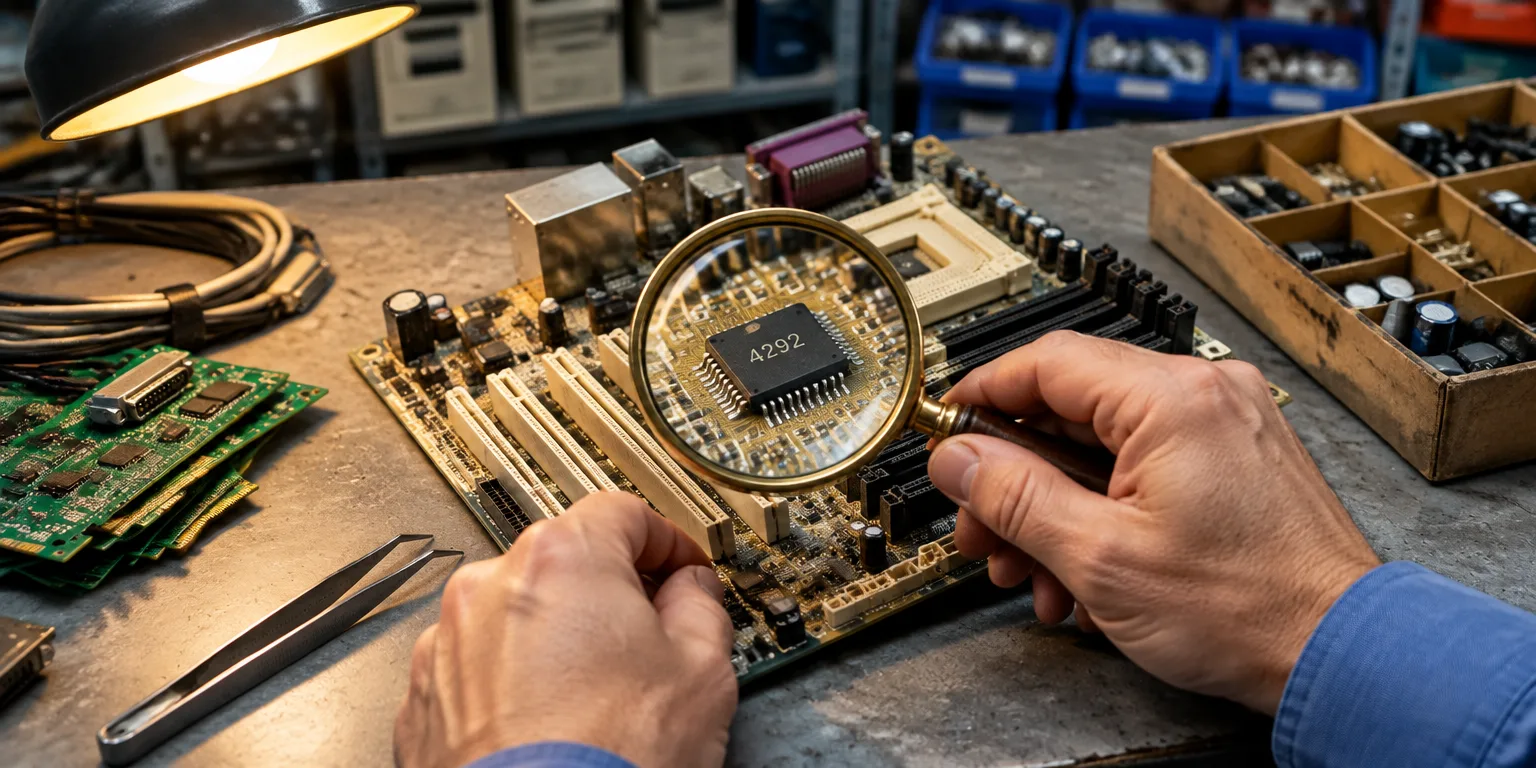
Dell could prove the 90-day inventory gap by opening a rival machine and reading the chips inside. Computer chips are stamped with date codes showing the week they were made, so a code like 4292 meant the 42nd week of 1992. Dell would take apart competitors' computers and read those codes to date how old their parts were.
That age gap turned into money because electronic components generally get cheaper over time. If Dell's parts were five days old and a competitor's were 90 days old, Dell had bought at the newer, lower price while the rival was stuck with the older, higher price. In his autobiography, Dell said the result was a structural cost advantage, with operating costs at 18% of revenue compared with 36% at rival computer maker Compaq.
Fresh parts also meant fresher machines. As he put it in the interview, "You're not selling the 90-day old fish or bananas," but the new chip with the latest capability. And because it sold direct, it got signal from customers about what they liked and wanted changed, which built a feedback loop.
Getting paid first made it possible to hold little stock, and holding little stock kept component costs lower and technology newer, while selling direct kept information about what customers wanted flowing back to Dell.
Questions people ask
Why do computer parts get cheaper over time?
Chipmakers keep learning how to make more transistors on the same slice of silicon, and factories get more efficient as they scale. That steady improvement, often summarized as Moore's Law, pushes the price of a given amount of computing power down year after year. So waiting to buy usually means paying less for the same performance, or the same price for better performance.
What exactly is the cash conversion cycle?
It measures how many days a company's cash is tied up between paying for inventory and getting paid by customers. It adds days of inventory and days customers take to pay, then subtracts days the company takes to pay suppliers. When the result is negative, as Dell's was, the company holds customer cash before it has to pay its own bills.