Desalination plants are a soft target Iran could hit, one commentator argues
Sacks estimates roughly 100 million people depend on coastal plants that turn seawater into tap water, and those plants are easy to hit.
 All-In with Chamath, Jason, Sacks & Friedberg · Iran War, Oil Shock, Off Ramps, AI's Revenue Explosion and PR Nightmare
Sacks argues the plants that make drinking water from seawater are soft targets Iran could hit.
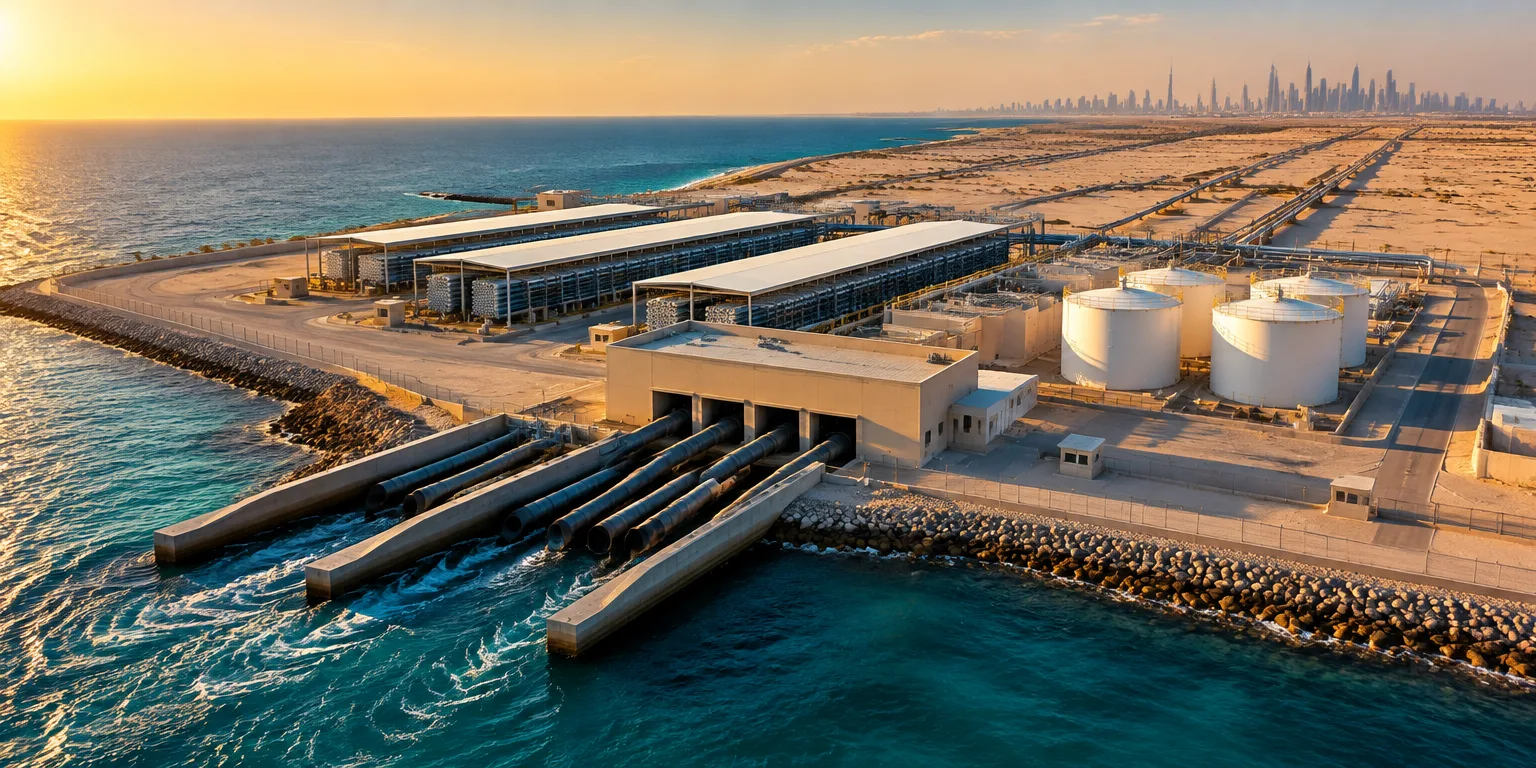
Much of the Arabian Peninsula is desert, with almost no rivers or lakes to draw from. The answer has been desalination plants along the coast, factories that remove salt from seawater to make tap water. Commentator David Sacks estimates that "something like 100 million people on the Arabian Peninsula" get their water that way, including something like 70 percent of Riyadh, the capital of Saudi Arabia.
Sacks argues those plants are what gives Iran leverage in a wider war. They are large, coastal, and lightly protected, in his phrase, soft targets. The Gulf states sit close to Iran, within reach of drones and short range missiles, while Israel is farther away, with more hardened infrastructure exposed mainly to long range missiles.
The first rounds show how it could spread. Sacks says Iran has said it will answer strikes on its own oil and gas sites with strikes on Gulf energy sites. He says Iran recently blew up a giant oil depot in Oman. Sacks says a desalination plant in Iran was hit, and one in Kuwait, he thinks, was hit in return.
If that kind of tit for tat continues, Sacks says, reopening the Strait of Hormuz, the narrow waterway now closed to oil tankers, would not solve the problem. There would be little oil and gas left to move. More important, there would be too little water, and people cannot survive long without it.
Sacks argues that if enough desalination capacity is destroyed, parts of the Gulf could become almost uninhabitable, an economic and humanitarian collapse at once. Sacks says he is hearing that Israel is being hit harder than ever before in its history. He added: "their air defenses could become exhausted, if it hasn't happened already." He said Iran essentially has "a dead man switch over the economic fate of the Gulf states." That is why, in his view, this is the moment to declare victory and seek a way out.
Questions people ask
How does desalination actually work?
Most large Gulf plants use reverse osmosis, which pushes seawater at high pressure through membranes with pores so small that water molecules pass but salt does not. Older plants boil seawater and collect the steam, which leaves the salt behind. Both methods use a lot of energy and sit on the coast, which is why losing power or damaging intake pipes shuts them down.
Why can't Gulf countries just use groundwater instead?
They do pump ancient groundwater, but it recharges extremely slowly in a desert and much of it is brackish or already depleted. Saudi Arabia, the United Arab Emirates, Qatar, and Kuwait all rely on desalination for most municipal supply because demand from cities far exceeds what wells can sustain. Without desalination, rationing and trucking water could help for days, not for a city of millions.
Can desalination plants be defended or quickly repaired?
They can be protected with air defenses, backup power, and water storage tanks that buy a few days, and damaged membranes or pumps can be replaced if supply chains hold. The problem is scale and location: the plants stretch along hundreds of miles of coastline and must stay next to the sea to work. A sustained campaign of drone and missile strikes could damage more capacity than crews could fix at once.