Design an Apartment Once, Then Build It Everywhere
The interior stays identical to win state preapproval, and developers reshape only the base, layout, and exterior for each lot.
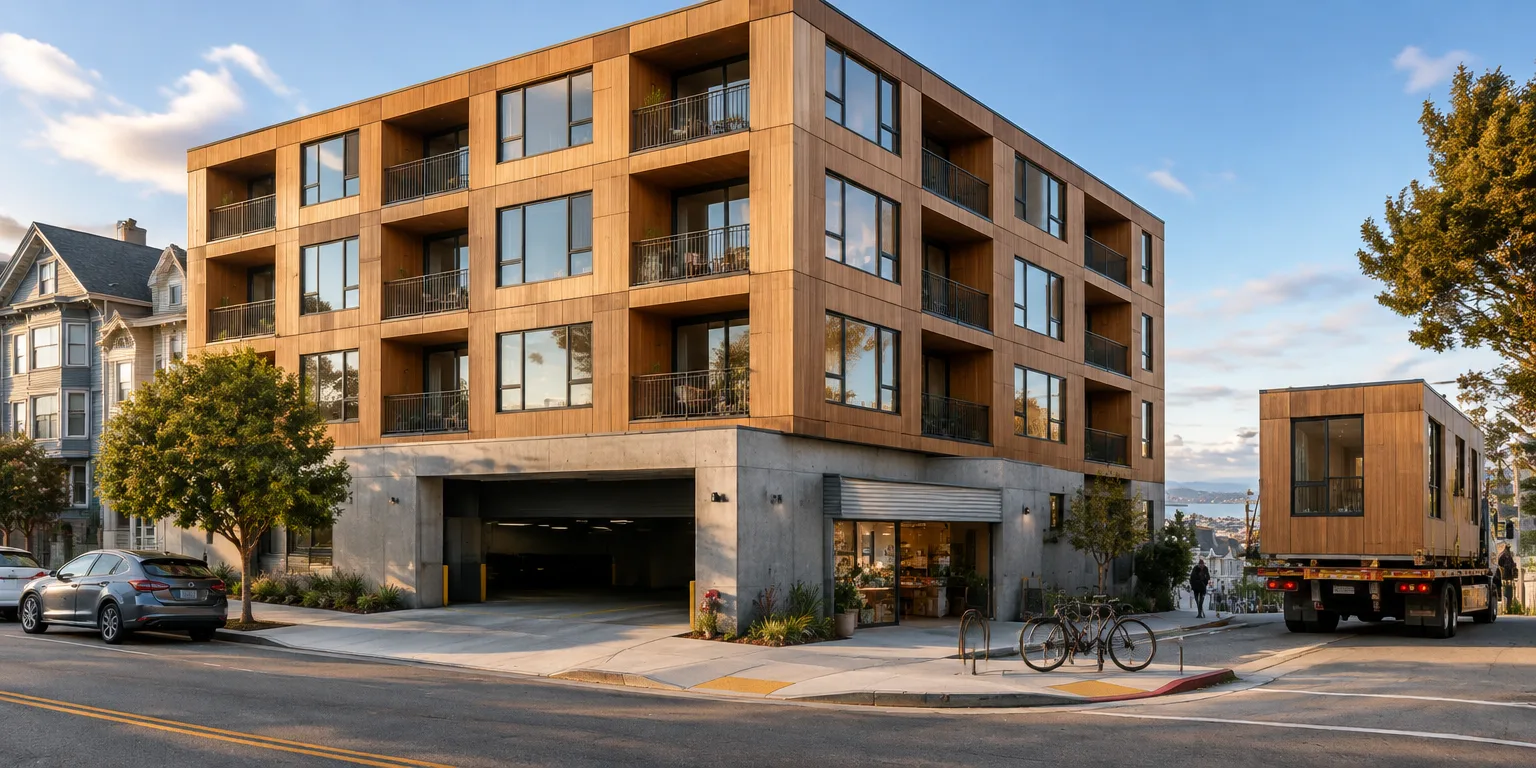
 Modular Building Institute · Harvard MBA Graduate & Former SpaceX Engineer Believes Affordable Housing Lies in the 'Cloud'
For a typical 200-unit apartment building in the San Francisco Bay Area, the math is brutal. It takes about 12 months to design the building and get it approved, another 24 months to build it, and then 12 to 18 months to fill it with renters and start earning money.
Curtis Wong, a former SpaceX engineer with a Harvard business degree who founded Cloud Apartments, thinks the long wait comes from designing every building from scratch. His fix is to design the apartment once, like a car, and then reuse it.
The company treats its apartment interior as a finished product. That product is permitted, inspected, and preapproved by the State of California before any particular lot is chosen. When a site is found, architects have to design only what is specific to that site, which cuts the 12-month design time roughly in half. As Wong puts it, "You don’t resign a car every time you buy a new car."
What stays the same is the inside. The interiors are not customizable because that is "where the product lies." What changes is almost everything around it.
A typical Cloud Apartments building is five stories of apartments set on top of a concrete base, called a podium, that holds parking and shops. The boxy units can be arranged in different shapes to fit odd lots, and the parking base and roof can be adapted for each site. The materials used for the facade can also be customized, and they can mimic any desired look.
Holding down what renters ultimately pay guides everything the company does. "Housing doesn't get built unless it pencils. Cost is everything," Wong says. By shrinking design, construction hookups, and leasing time, Wong argues a developer can go "from investment to opening in under 24 months," and share the savings with renters.
The takeaway is simple: standardize the part people live in, and vary the parts that touch the land.
Questions people ask
Does state preapproval mean a developer can skip city permits?
It means the factory-built portion meets state building standards in advance, so local reviewers do not reexamine every wall, wire, and pipe. The city still reviews the foundation, placement, parking, safety access, and utilities for that specific lot. It shortens review rather than eliminating it.
Would every Cloud Apartments building look the same?
The rooms, kitchen, bath, windows, and systems stay the same, so renters would recognize the apartment in another city. The building around them can look quite different because the shape, base, roof, and exterior materials change by site. Think identical phones in different cases.
Why put five stories of homes over parking and retail?
It is a common low-rise city formula. Concrete is strong and fire resistant enough for cars and stores at street level, while lighter wood or steel framing above keeps upper homes cheaper to build. Five stories is often the tallest practical height before rules, elevators, and structural costs jump.