Dirty Plastic Can Be Turned Into Oil by Heating It Without Oxygen
The oil can feed plants that make new plastic, but dyes, food residues, and other contaminants must be cleaned out first.
 Mexico Business Now Podcast Expert Contributor Audio Articles · 'Turning Plastic Waste Into Valuable Petrochemical Feedstocks' by Martin Toscano, President and General Manager, Evonik Industries de Mexico
When plastics can be sorted and reworked with reasonable effort, standard recycling is still the first choice. But a large share of waste cannot be handled economically that way.
That includes multilayer packaging, contaminated films, mixed polyolefins, the common plastics used in much packaging, and certain industrial residues. They are too mixed or dirty to sort and remelt at a reasonable cost.
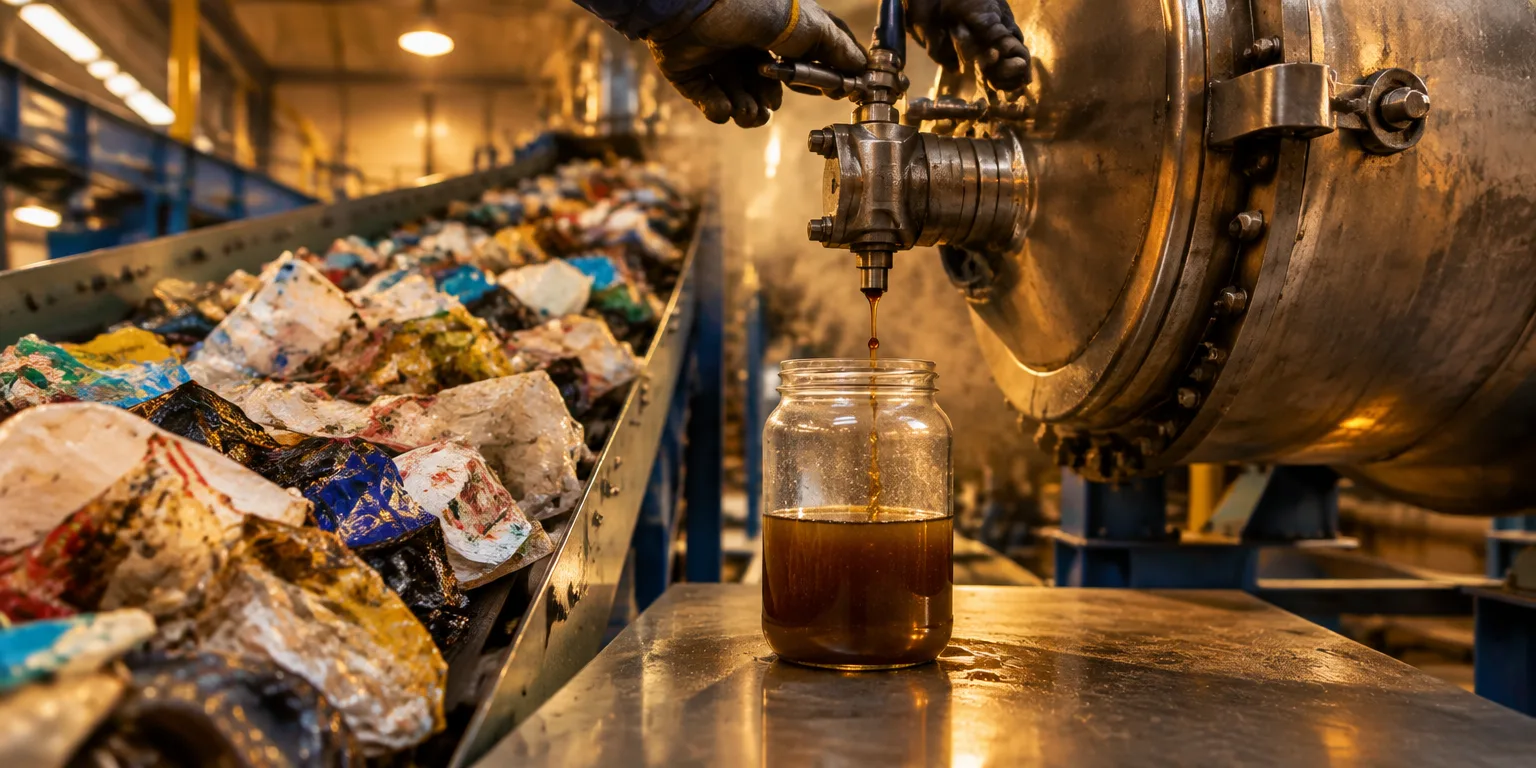
Chemical recycling, particularly a process called pyrolysis, is attracting attention as a complement for those materials. It heats the waste in an oxygen-free chamber, so the plastic does not burn, and the heat splits the very long molecules that form plastic into much shorter pieces.
The main product is a liquid called pyrolysis oil, alongside gas and solid fractions. That oil can be used as feedstock for steam crackers, the large furnaces that normally turn petroleum into the building blocks for new polymers.
That offers a possible path for material that would otherwise go to landfills, incinerators, or unmanaged dumps. Making the oil, however, solves just one step, and the approach is still being developed.
Mixed waste carries dyes, stabilizers, flame retardants, fillers, and food residues into the oil. Compounds containing chlorine, nitrogen, oxygen, and silicon can corrode equipment and deactivate the catalysts used in chemical plants.
Steam crackers can now co-process only relatively small amounts of this oil, diluted with conventional fossil feedstocks. Using higher shares will require much cleaner oil, so the challenge has shifted from producing oil to purifying it.
Questions people ask
Is pyrolysis just burning plastic?
No. Burning uses oxygen and mainly releases heat, ash, and carbon dioxide. Pyrolysis excludes oxygen, so heat breaks the plastic into pieces that can be collected as oil, gas, and solids for later use.
Why not use pyrolysis for all plastic waste?
When plastic is clean and easy to sort, washing and remelting uses less energy and keeps the material closer to its original form. Pyrolysis is aimed at the leftover share, such as layered packaging and contaminated film, where separation does not pay.
What happens to the gas and solid parts?
Pyrolysis also yields gas and a solid residue in addition to oil. In principle the gas can help fuel the heating process, while solids may be handled separately, though the source focuses on upgrading the liquid into chemical feedstock.