Ditch Gray Without Repainting the Whole Room
Keep the sofa and rug, swap the pillows and pots, and repeat a little dark wood for contrast.
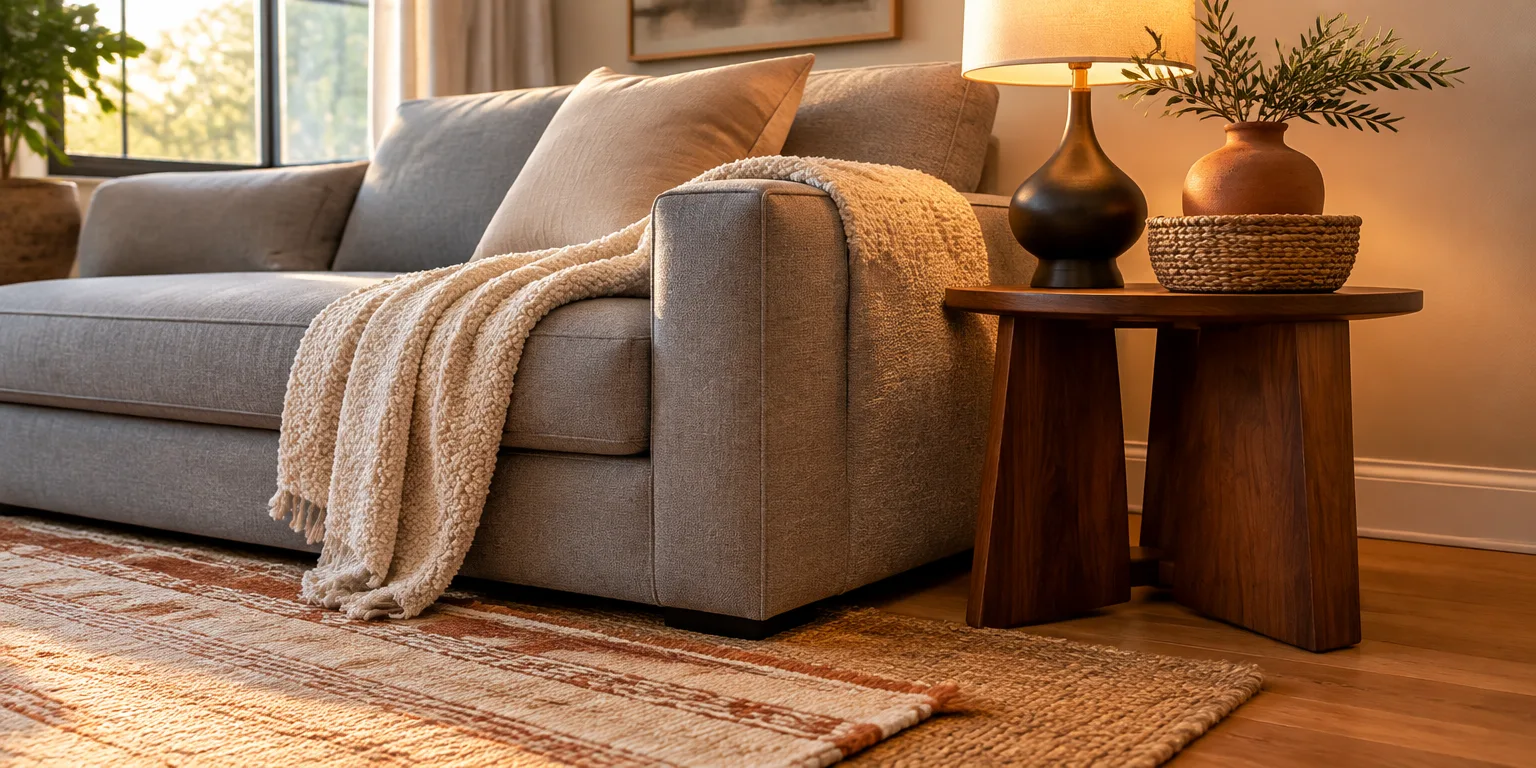
If a gray room feels flat, the home design site Homes by Cathy Wood recommends warming it in layers rather than repainting everything at once.
Start with a warm base on the big, long-lived surfaces. That means a pale cream, warm beige, soft golden tone, or pale clay color on walls, the main rug, and large upholstery.
For a sand and clay palette, the site suggests a ratio of about 70 percent sand to 30 percent clay. Keep sand on walls, rugs, or linen, and add clay through a few smaller pieces you can move easily.
Use a dark color sparingly for contrast, such as walnut, espresso, bronzed black, or deep olive. Homes by Cathy Wood advises placing it "in frames, hardware, lamp bases, and one patterned textile to sharpen edges."
Homes by Cathy Wood also recommends "repeating each tone at least twice" and spacing those repeats across the room. That repetition makes the mix look planned, and lets you tweak one pillow or pot later for less than a repaint.
Make the mix feel rich with texture, not more paint. Pair a tight weave, like a cotton slipcover, with something nubby, like boucle, a looped fabric that feels bumpy, and add unfinished wood, matte ceramics, or woven baskets.
Lay a small flatweave, a thin flat-woven rug, over a larger natural fiber rug for contrast. Before you buy gallons, sample the base and mid-tone in daylight and lamplight.
Choose warm-white bulbs, labeled 2700K to 3000K, so the warmth stays cozy rather than yellow. Then start with textiles and one focal surface before you commit.
Questions people ask
Can I keep gray floors or a gray sofa?
Yes. Keep large gray pieces if replacing them is costly, and warm around them with oatmeal curtains, jute rugs, camel throws, and warm wood. Sample any new warm paint next to the gray floor or sofa in both day and lamp light, since cool surfaces can pull beige toward gray.
How do I keep clay or terracotta from looking orange?
Keep the strong color to about 30 percent of the room, usually one focal wall, a rug, or a chair, with the rest in sand or cream. Use matte paint, off-white trim, and warm bulbs, because gloss and very bright light can push clay and rust toward orange.
What paint finish should I buy for warm colors?
Choose matte or eggshell in living rooms and bedrooms to hide flaws and keep warm color soft. Use satin or semi-gloss in kitchens, halls, and other high-traffic spots, with primer where walls take hits, because it wipes clean and resists scuffs.