Divorce Is Slow Because the Same Forms Get Filled Out Twice
In October 2025, an AI startup for family lawyers said it was automating intake and building an asset division tool trained on 140,000 California cases.
 Aparti · Startup Lessons & VC Insights with Jeff Becker/Antler and Igor Sheremet/ Aparti
Getting divorced is slow less because of courtroom showdowns than because of paperwork. For clients and lawyers, the drag is months of back and forth over intake forms, financial statements, and asset lists, hours of admin work instead of actual lawyering.
The loop starts at intake. A person hiring a family lawyer, a lawyer who handles divorce and custody cases, must fill out a stack of court documents. The lawyer must fill out the same stack with the client, a process that took about 10 hours spread over months, according to Igor Sheremet, the chief executive of Aparti, a startup building automation for family law firms, speaking in October 2025.
Lawyers can bill only part of that time, so the work eats into hours they could otherwise charge for advice and negotiation. Aparti's answer was a conversational intake that acts like an empathetic interview.
The client answers questions in plain language, goes back and forth with the software as needed, and gets initial forms prefilled and ready to file. Sheremet said the company's tool cuts that intake work to about one hour, the company's own estimate for its tool.
The next bottleneck is money. To divide property, someone must download bank statements and asset records, the lawyer passes them to accountants, and the accountants separately charge to go through transactions by hand.
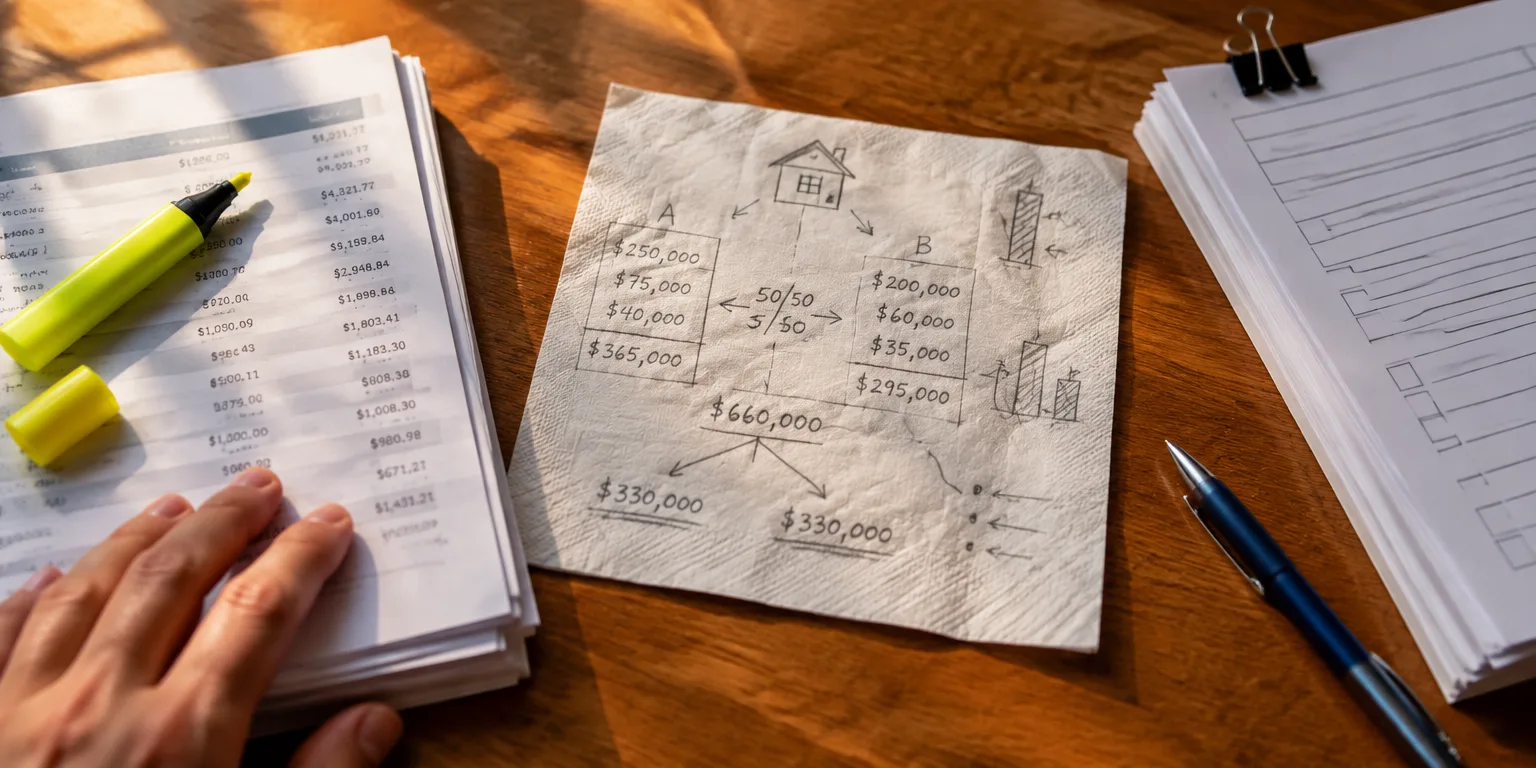
It is so manual that, Sheremet said, a legal technology executive going through his own divorce watched his lawyer sketch the asset division plan on a paper napkin, then months later the lawyer pulled out that same napkin and asked, “do you remember the napkin?”
The planned fix was an asset division engine with a settlement simulator to lay out different division scenarios. Aparti said in October 2025 it was training the model on 140,000 California divorce cases, and was working with nine design partners, early customer lawyers helping shape the product.
The larger plan was one operating system where a lawyer sends a client an intake link, both sides track progress on a shared dashboard, and court dates live in the same place. Less copying and highlighting would mean lawyers spend more paid time helping people split up, and less unpaid time just getting ready to help.
Questions people ask
Will AI replace divorce lawyers?
No, at least not in the model Aparti describes. The pitch is that AI handles intake, form filling, and number crunching, while lawyers still advise clients, negotiate, and appear in court. The firm's line is that AI will not replace family lawyers, but lawyers using AI will have an edge.
How can software predict a divorce settlement?
In general, these tools look for patterns in past cases with similar assets, incomes, debts, and custody arrangements, then show likely ranges for property splits and support. They do not decide the case, and a judge can rule differently. Think of it as a forecast to help negotiation, not a verdict.
How do providers handle sensitive financial information in AI intake tools?
Divorce filings include highly sensitive financial and family details. Providers in this area typically report using encryption, limited staff access, and consent-based rules for whether client data is used to improve products, with retention and training practices varying by firm.