Drake Missed the Treasure Ships and Still Broke Spain's Credit
He came home without a treasure ship, but the Pope and two Italian dukes refused Spain loans and Seville's bank collapsed.
 The Rest Is History · The Shadow War: Elizabeth I vs The Catholics (Part 4)
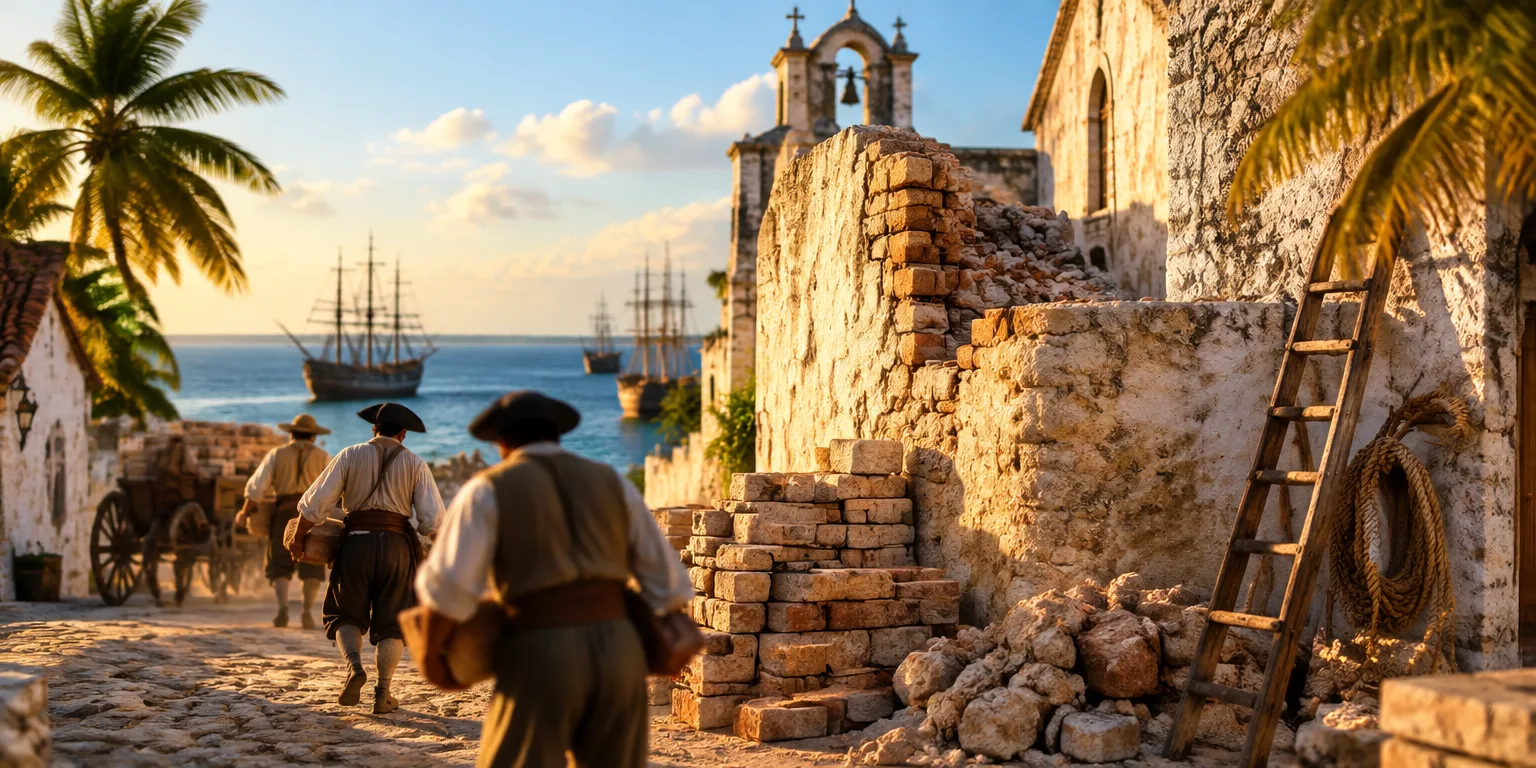
In early 1586, in Santo Domingo on the island now known as the Dominican Republic, English sailors began taking the city apart.
Sir Francis Drake, the English sea captain who had spent the summer readying the largest English fleet raised in more than a century, had captured the Spanish colonial capital and was waiting for its ransom. To hurry the payment, his men started disassembling buildings brick by brick until the Spanish brought the gold.
The threat was financial as much as military. Drake had sailed from Plymouth on September 14, 1585, with about 20 ships, two of them supplied by Queen Elizabeth I herself, including his flagship, the Elizabeth Bonaventure. The plan, drawn up by Drake with Elizabeth and her privy council, was to seize Spanish gold and silver in the Americas and use the proceeds to help pay for England's intervention on behalf of Dutch rebels against Spain.
Lord Burghley, one of Elizabeth's most senior advisers and a former skeptic of Drake, had become a convert to what would now be called economic warfare. He wrote that while Philip's American treasure kept coming, he could wear down rival princes, but if it was cut off, he would quickly fall. Burghley added that Philip feared this voyage by Drake more than anything ever attempted against him.
Drake gave him reason. After first stopping in Galicia in northern Spain, where he extorted supplies from the town of Vigo and stayed for two weeks in what Philip regarded as a deep humiliation, Drake crossed the Atlantic and plundered his way along the Spanish Main. After Santo Domingo he took Cartagena in what is now Colombia and extorted another massive ransom there.
He was back in Plymouth by July 22, 1586, without having captured a single treasure ship, and the voyage was less lucrative than he had hoped, but strategically it was enormous.
By showing how exposed Spain's American empire was, the raid shook Philip's standing with the bankers who funded his wars. The Pope, along with the Dukes of Florence and Savoy, turned down his requests for loans when news of the expedition reached Europe, and Seville's bank collapsed. Burghley called Drake a dreaded enemy of the Spanish king.
Questions people ask
Why did Spain need bankers and loans if it had all that gold and silver from the Americas?
The treasure arrived only once or twice a year in convoys, while Philip II's armies in the Netherlands and elsewhere had to be paid every month. He borrowed in advance against the next fleet, so any hint that the treasure might not arrive made lenders charge more or refuse to lend at all.
What was the Bank of Seville?
Seville held Spain's monopoly on trade with the Americas, and its merchants and financiers handled the silver that flowed in and lent to the crown against future arrivals. When Drake showed that the Caribbean ports could be sacked at will, confidence in that income collapsed, and the bank failed.
How much money did Drake actually bring home?
No total is known from the sources used here. He collected ransoms at Santo Domingo and Cartagena but captured no treasure ships, so the voyage paid less than he had hoped. Its importance lay in exposing Spain's ports and shaking Philip's credit.