Dropping the credit card requirement quadrupled free trials
The catch was fraud, and the company had to do work to block fake pages before it could enjoy the surge.
 Embracing Marketing Mistakes · EP 129: Unbounce's VP Of Marketing Explains What Actually Wins AI Search Visibility Now
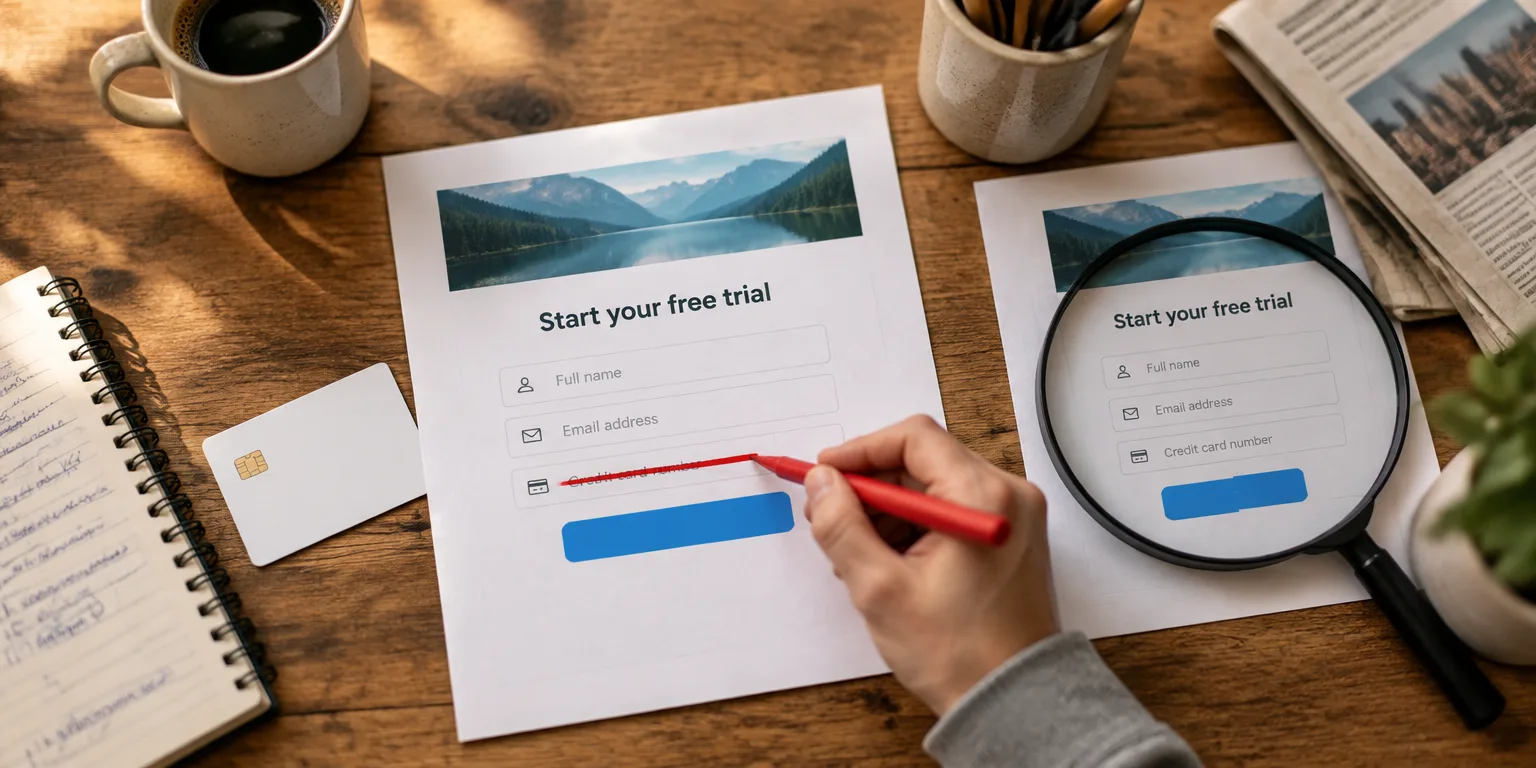
Unbounce quadrupled its free trials by asking for less. When the company stopped requiring a credit card upfront, free trials per month rose from about 1,500 to about 6,000.
Val Riley, vice president of marketing and strategy at Unbounce, agreed that dropping the card removes all the friction. But it was not as simple as deleting a form field. She said that without a card requirement, people can open a free trial to build a trial page and fraudulently scrape data from visitors or get people to click.
The company had to do work to weed out weaknesses that could enable a deceptive page. Once those safeguards were in place, signups rose four to fivefold. "That's the cautionary tale," Riley said.
Questions people ask
Do those extra trial users actually become paying customers?
Usually, yes. Trials that do not ask for a card bring in many more users but a smaller share convert to paid, because the commitment is lower. Companies often still come out ahead because the pool is so much larger.
Why would a fraudster want a landing page trial?
A landing page can look legitimate quickly, with a familiar logo, a form, and a prize or discount. Visitors type in names, emails, or payment details, which the scammer collects, or they click links that install malware.
Does this work for other software companies too?
For many kinds of self-serve software, yes. Tests by software companies routinely find that removing the card increases signups severalfold. The tradeoff is more casual users and more work on fraud prevention and follow-up emails.