Earth Is Barely Habitable. A Better Planet Would Be Bigger and Wetter.
A larger planet with shallow seas and a thicker atmosphere, circling a slow-burning star, could give evolution tens of billions of years to work.
 The Headlines · Israel’s High-Stakes Election, and How Illegal Gold Is Getting Into the Global Market
For decades, the search for life beyond Earth meant looking for another Earth. Astronomers hunted for Earth twins, rocky planets about our size, with water, circling stars like our sun.
Then, about a decade ago, an astronomer left a comment beneath a posted recording of a science seminar on life beyond Earth. "Shouldn't there be planets more habitable than Earth?" the astronomer wrote. The question started a conversation with another scientist, and helped launch a new field, the hunt for worlds even more welcoming to life than ours.
The starting insight is humbling. Earth is only barely habitable. Nudge our planet inward by a tiny fraction, and its oceans would boil into steam. A planet built to be friendlier to life would improve on Earth in two main ways, size and starlight.
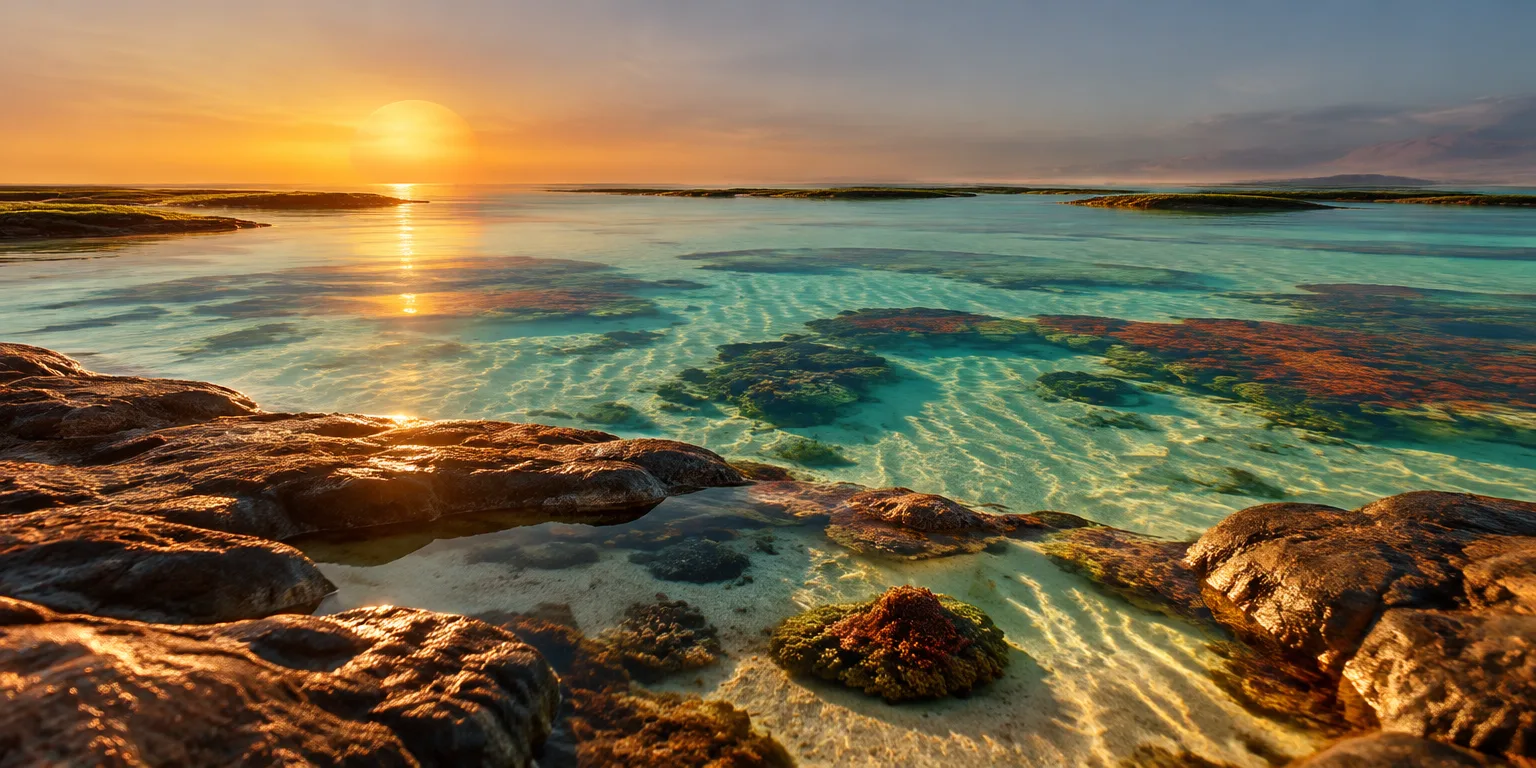
In size, it would be roughly one-third broader than Earth and twice as massive. The stronger gravity would smooth the surface, ironing out deep ocean trenches. Instead of a few vast, deep oceans, the planet might be covered with shallow, warm seas and lakes, full of reefs and biological diversity.
That extra gravity would also hold onto a thicker atmosphere. A thicker blanket of air steadies the climate against swings in temperature, and researchers think the combination of stable warmth and abundant shallows could support life that is more complex and diverse than Earth's whales, armadillos, and humans.
The other upgrade would be the star. Some researchers think the best host is not a star like our sun, but a cooler orange star called a K-dwarf, which burns fuel more slowly. Where life on Earth has had roughly 4 billion years to evolve, life around such a star could have tens of billions of years, far more time for evolution to experiment, diversify, and recover from setbacks.
Questions people ask
What exactly is an orange K-dwarf star?
A K-dwarf is a star smaller, cooler, and dimmer than our sun, with an orange tint. It burns its fuel more slowly, so it can live for 20 to 70 billion years, compared with about 10 billion for the sun, giving any orbiting planets a much longer stable period for life to develop.
Have scientists found a super-habitable planet?
Not yet with certainty. Astronomers have cataloged thousands of planets outside our solar system, including some that are larger than Earth and orbit K-dwarfs, but current telescopes cannot yet measure atmospheres, oceans, or surfaces in enough detail to confirm a true super-habitable world.
Why would shallow seas be better for life than deep oceans?
Sunlight reaches the bottom of shallow water, warming it and powering photosynthesis through much of the water column. On Earth, reefs and coastal shallows pack far more species per square mile than the dark deep ocean, so a planet of shallows could, in theory, be more biologically productive overall.