Earthworms Have Gut Enzymes Found Nowhere Else on Earth
The enzymes disarm tannin, the bitter chemical that keeps dead leaves from being eaten by almost everything else.
 The joe gardener Show - Organic Gardening - Vegetable Gardening - Expert Garden Advice From Joe Lamp'l · 490-How Leaves Conjure Up Our World
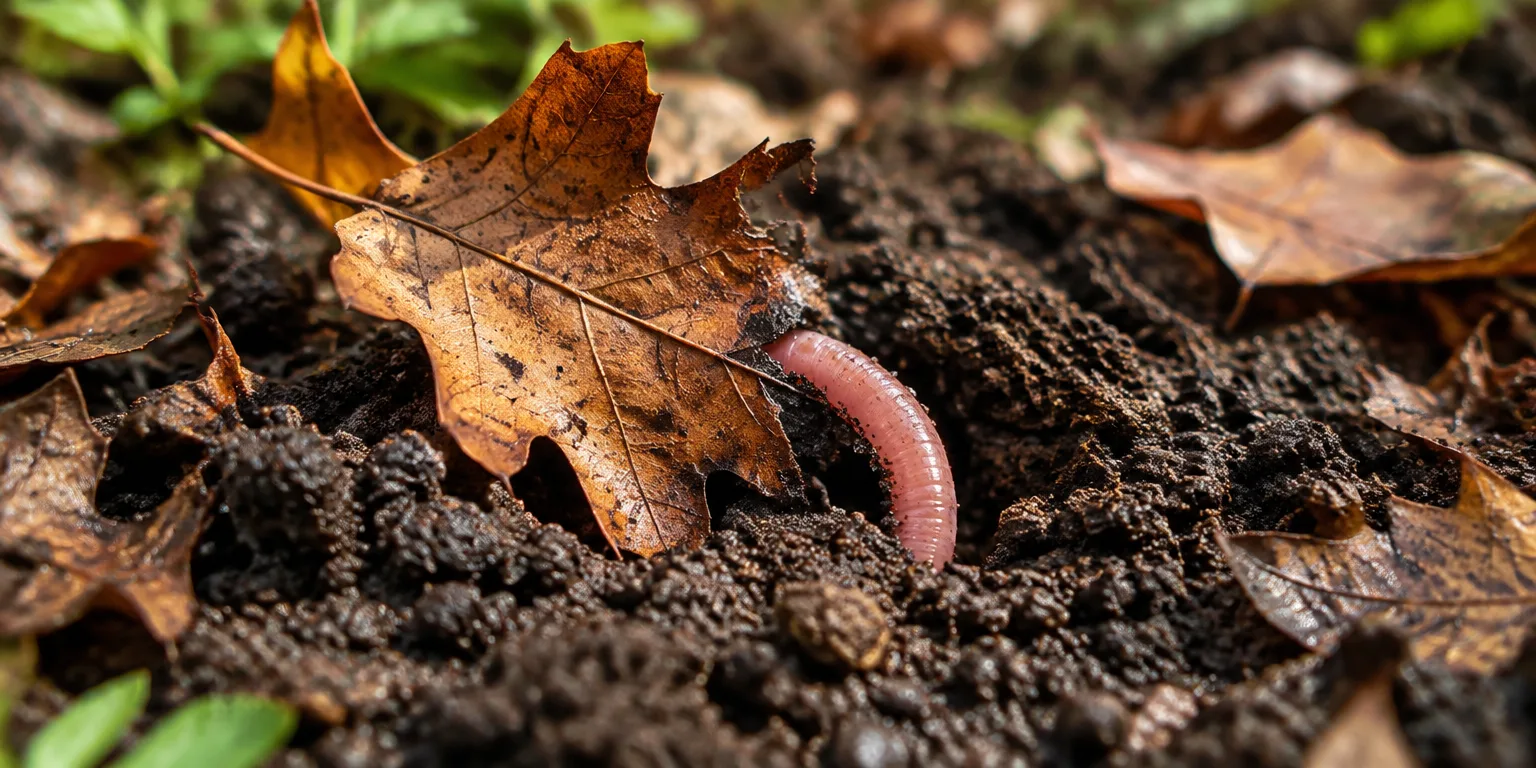
Earthworms can eat fallen leaves because, according to a recent report in the journal Nature, they carry digestive enzymes found nowhere else in the living world.
The problem they solve is tannin, a bitter plant chemical. Plants load their leaves with it to block caterpillars and other leaf eaters from digesting them, and the tannin in bark is still used in tanning leather. Dead leaves are still full of it.
Evolutionary biologist Jonathan Silvertown says earthworms pull those leaves into the soil and break the tannin down with their special enzymes. What comes out is worm compost, which he calls wonderful stuff, soon worked over by bacteria, fungi, and other soil life.
Questions people ask
Why would a plant fill its leaves with something so hard to digest?
It is defense. A growing leaf is full of nutrients that caterpillars and other insects want, and a plant cannot run away. Tannin binds to proteins in an eater's gut and blocks digestion, so the attacker gets less food value and may go elsewhere.
Do any other animals get around tannin?
Yes, some do. Deer, moose, and some insects produce tannin-binding proteins in their saliva, and certain gut microbes can help break tannin down. Earthworms are unusual in having their own dedicated enzymes that do the job directly.
If worms need dead leaves, should I leave them on my yard?
In garden beds, yes. Worms pull fallen leaves underground, digest them, and leave behind castings that add nutrients and help soil hold water. On lawns, chopped leaves worked in with a mower do the same job without smothering the grass.