Egypt's Cities Vanished Because They Were Mud That Was Buried, Moved and Swallowed by Water
While tombs sat untouched in the desert, living cities were rebuilt, built over, and swallowed by a wandering Nile and a rising sea.
 The Ancients · Egypt's Lost Cities
Egypt keeps its dead better than its living because it built for them differently. Tombs were cut from stone and tucked in lifeless desert, away from people, to hold the finest objects for eternity. Temples were also built of durable stone, which is why they survive far better than houses.
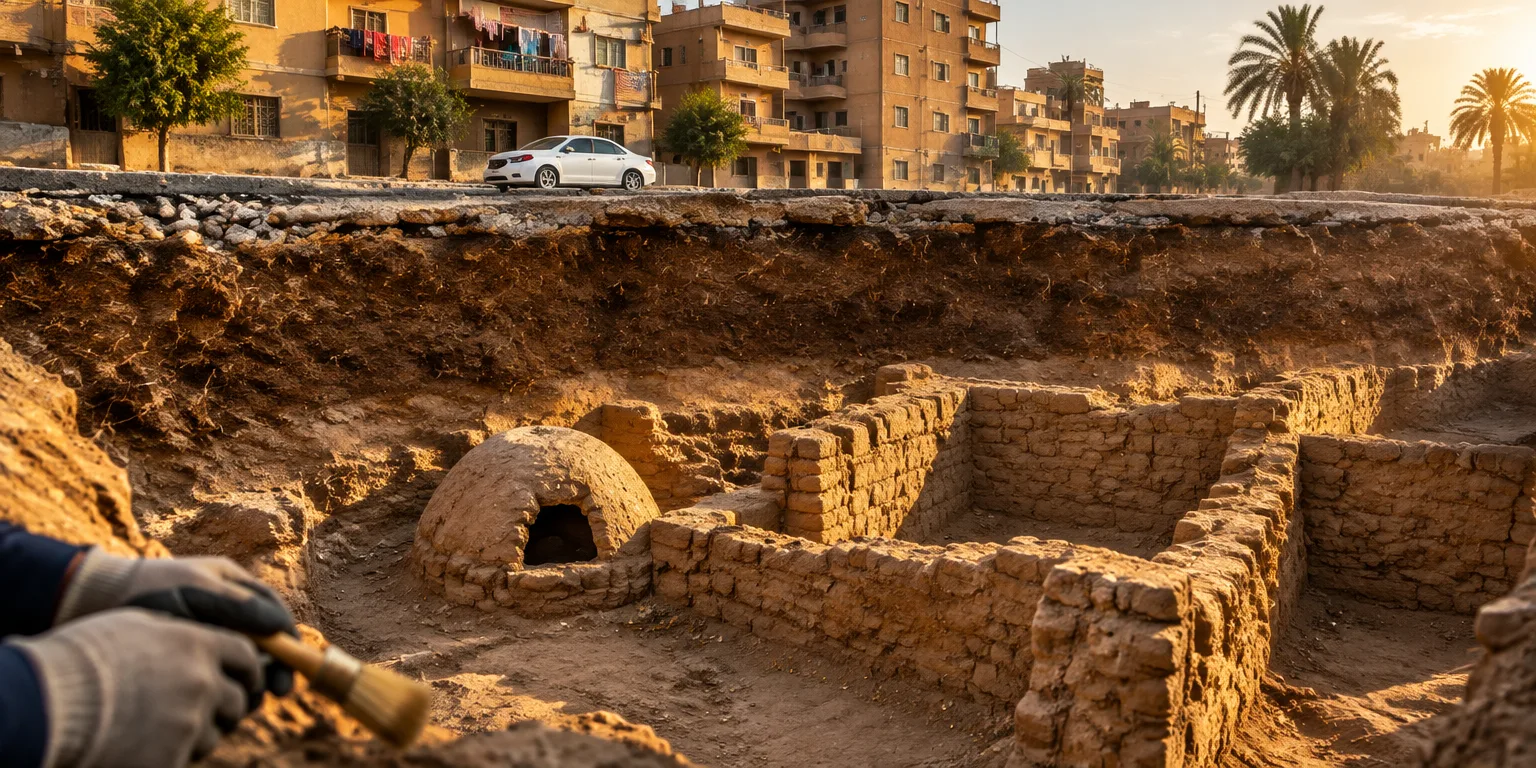
Cities were made of mud brick, and were built to be knocked down, demolished, and rebuilt on a regular cycle for thousands of years, says Chris Naunton, an Egyptologist who studies Egypt's lost capitals. A living city also stays where living is good, which means ancient streets usually sit in, around, or underneath places where people still live.
At Memphis, the capital near the top of the valley where it opens into the broad Delta, houses survive as a jumble of mud that is hard to read next to a painted coffin or a statue. Excavations there in the 1980s reached Middle Kingdom levels but found almost nothing earlier, because the early city is buried under fields, towns, roads, and modern buildings.
Water finished what people started. The Nile can shift hundreds of meters west or east over centuries, forcing harbors and neighborhoods to move with it, and sometimes swallowing earlier buildings outright. Naunton says that is likely what happened to early Memphis, which moved from west to east with the river and now probably lies, in his words, "underneath a load of buildings, a road and a load of buildings, including the museum at Saqqara."
The cause at Pi-Ramesses in the Delta was also water, but in a different form. The city was built on a Nile branch that dried toward the end of the New Kingdom period, so the stone from its temple was carried about 30 kilometers north to Tanis, beside the branch named for that city.
The sea took the rest. Alexandria's monumental quarter sat so close to the coast that it was probably destroyed by a tsunami in the fourth century A.D. Divers are now finding its remains in the Great Harbour, though too broken to show their original form.
Even massive stone temples can almost disappear, like the great temple at Sais, capital of the 26th Dynasty. Naunton says learning how the river moved, and how much the Mediterranean swallowed, has completely transformed the search for cities within his own lifetime.
Questions people ask
Why build cities out of mud if stone lasts so much longer?
Mud brick was cheap, fast, and well suited to Egypt's hot, dry climate, and it kept houses cool. Stone required quarries, transport, and skilled masons, so it was reserved for gods, kings, and the dead, who were supposed to last forever.
Has any Egyptian living city survived intact?
Yes, though none looks like a modern ruin. Workers' towns in the desert, and the short-lived capital at Amarna, survive unusually well because they were built in one phase and then abandoned. Most long-lived capitals were occupied for centuries, so later building erased earlier building.
What was the fourth-century tsunami that hit Alexandria?
In 365 A.D., a huge earthquake off Crete sent a tsunami across the eastern Mediterranean that struck Alexandria and other coastal cities. Ancient accounts describe ships thrown inland and widespread destruction, and archaeologists link that event to the ruined harbor quarter.