Eight in 10 Americans Take Supplements With Little Proven Benefit
A wellness and influencer boom built a $228 billion market that, unlike drugs, never has to prove its products work.
 Morning Brew Daily · AI Leaders Agree to Slow Things Down & Tesla Makes a Surprising Comeback
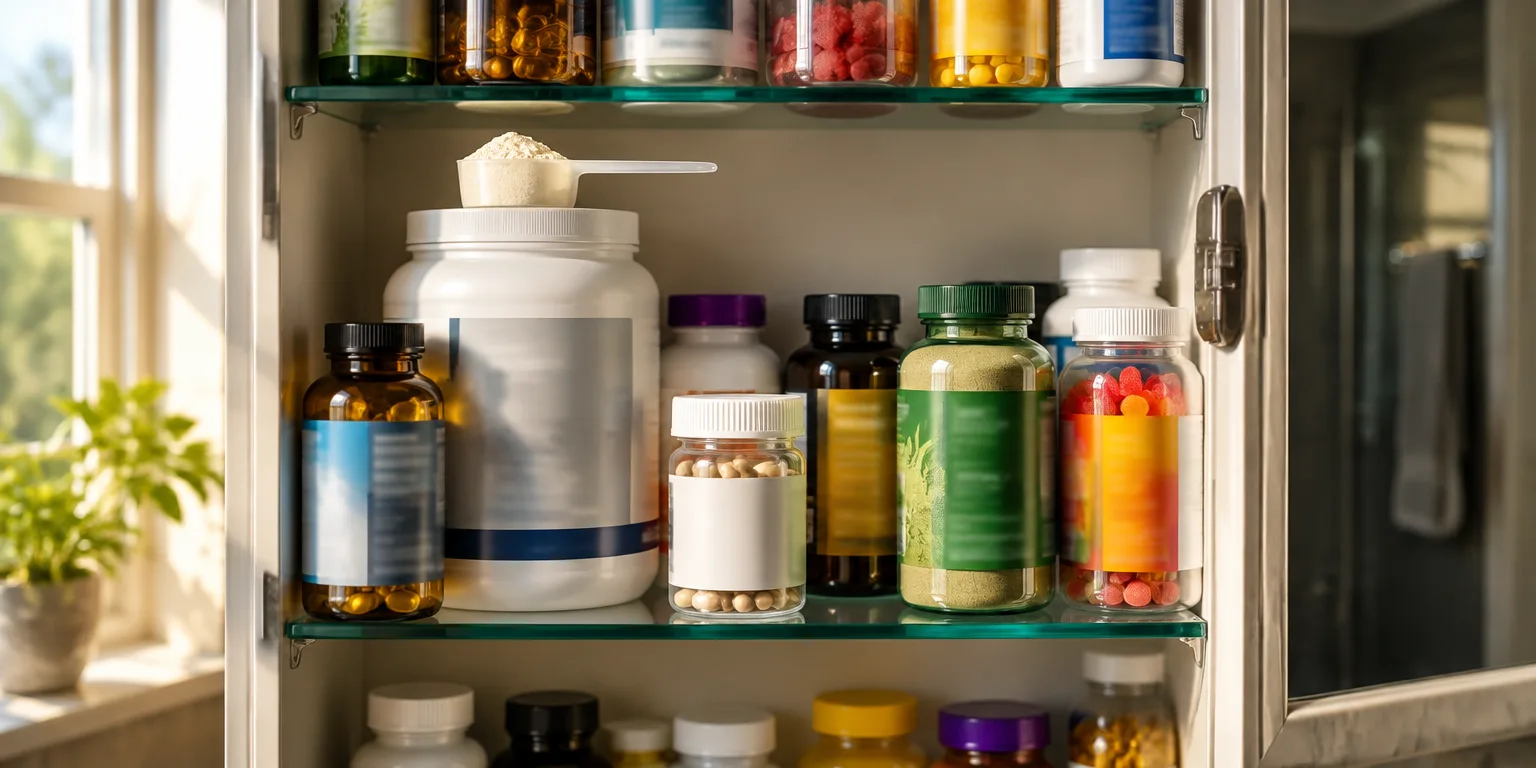
Open just about any medicine cabinet in America and you will find the same thing: a bottle of vitamins, a tub of protein powder, or a jar of fish oil capsules. Recent polling from Pew shows about eight in 10 adults in the United States use one or more dietary supplements, a catchall term for pills, powders, and oils meant to add nutrients to a normal diet.
Vitamins and minerals are the most popular, used by 67% of respondents. Next come protein powders and drinks, then omega-3 pills such as fish oil, and herbal products like ashwagandha, a plant root sold for stress and sleep. Use is highest among adults 65 and older.
That habit has built a $228 billion industry, fueled by social media influencers and a broader boom in longevity and wellness. Yet sales appear to have outpaced what research can support.
The reason is how supplements are regulated. Unlike prescription or over-the-counter drugs, dietary supplements do not need approval from the Food and Drug Administration, the federal agency that decides whether medicines are safe and effective before they can be sold. Makers do not have to prove that a supplement helps, or fully establish what harm it might cause.
That leaves a wide gap between behavior and proof. There are legitimate uses, such as treating a diagnosed nutrient deficiency, when a person lacks a vitamin or mineral the body needs. But most use does not fall into that group, because most Americans already get enough nutrients through food, and protein in particular is taken far beyond what most diets require.
The Harvard physician Peter Cohen puts the share without established benefit at 80 to 90% of use.
Questions people ask
Why doesn't the FDA approve supplements like drugs?
Supplements are regulated as food, not drugs, under a 1994 federal law. The FDA can act against a product after it is on the market if it proves unsafe or mislabeled, but the maker does not have to show safety or effectiveness in advance.
Can supplements be harmful, or are they just useless?
They can be, especially in high doses or when combined with prescription medicines. Because premarket testing is not required, interactions and side effects are often discovered only after people report problems, so doctors advise telling them everything you take.
Should older adults, who use supplements the most, still take them?
A standard multivitamin or specific nutrients can help when bloodwork shows a deficiency, which is more common in older adults, people with limited diets, or certain medical conditions. For most healthy people eating a varied diet, experts say extra pills add little.