Eighteen years before the iPhone, an Apple researcher sketched it; Sony shipped a $1,600 brick
Porat imagined the touchscreen Pocket Crystal at Apple; General Magic designed the Cloud and a shop for apps, but Sony found only 3,000 buyers in six months.
 Cautionary Tales with Tim Harford · Talent, Time and Money: The Curse of General Magic
In 1989, Marc Porat, a researcher in Apple's advanced technology group, sketched a thin glassy rectangle with no buttons, only a touch display. It would make calls, send messages, show television, play games, and book plane tickets. He called it the Pocket Crystal.
In 1990 the idea was spun off from Apple, with Porat and colleagues Bill Atkinson and Andy Hertzfeld to run a new firm called General Magic. Porat pictured owners treasuring it like jewelry, imagining a hypothetical house fire and saying: "Family goes first, and then I grab my Pocket Crystal."
General Magic designed software with digital voicemail, games, e-books, a virtual keyboard, a portable network it called the Cloud, and a shop to buy apps.
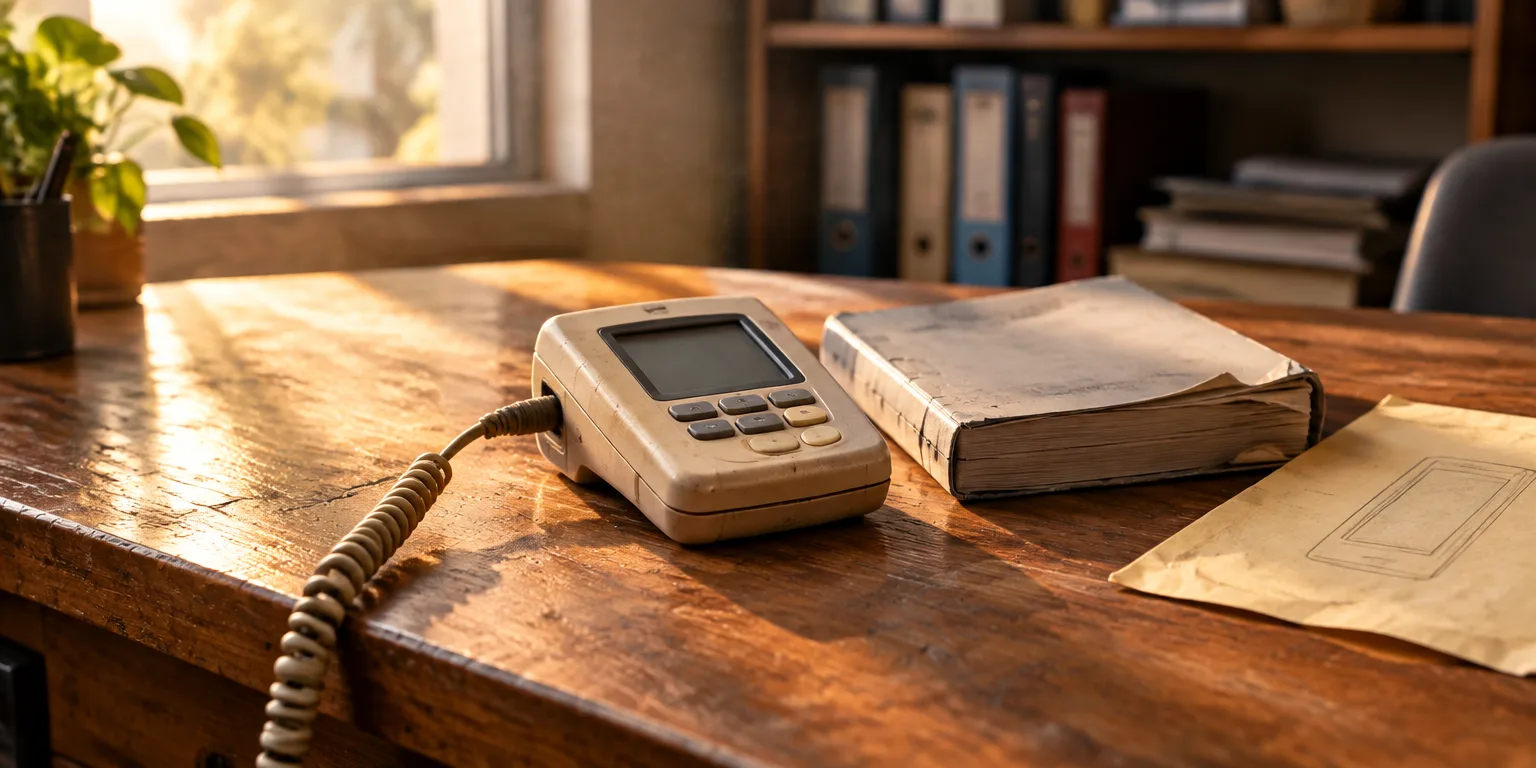
What arrived was Sony's 1994 Magic Link, with a 200-page manual and a telephone jack instead of a cell phone. It cost roughly $1,600 in current dollars. Sony found only 3,000 buyers in its first half-year on sale.
Questions people ask
Why couldn't anyone build an iPhone in 1994?
They were too heavy, too slow, too power hungry, and too expensive, and there was no fast wireless data. By 2007, memory was vastly cheaper, processors were much faster, and Wi-Fi and cellular data made a pocket computer practical.
What is skeuomorphic design?
It means pictures on a screen that look like the physical objects they represent. General Magic used a phone icon to make calls, an inbox for messages, and a door to go out to a virtual street with shops.