El Ninos Are Stronger Than They Used to Be, Galapagos Corals Show
The range between highs and lows is 36 percent larger than before industrial times, driven by stronger warm events.
 Short Wave · 'Super' El Niño is coming. What should you expect?
El Ninos have gotten stronger, and centuries old corals in the Galapagos show it. The range between highs and lows was 36 percent larger during the past four to five decades than in the preindustrial period, which climate scientist Julia Cole attributed to stronger warm events rather than cold ones. She said the pattern points to "some human fingerprints on El Nino."
The Galapagos is an ideal place to find that history because it sits in the eastern Pacific, where the biggest El Nino events have their strongest effect on ocean temperature. El Nino is a periodic warming of the tropical Pacific that shifts weather around the world. A past temperature record from this spot is a direct history of El Nino.
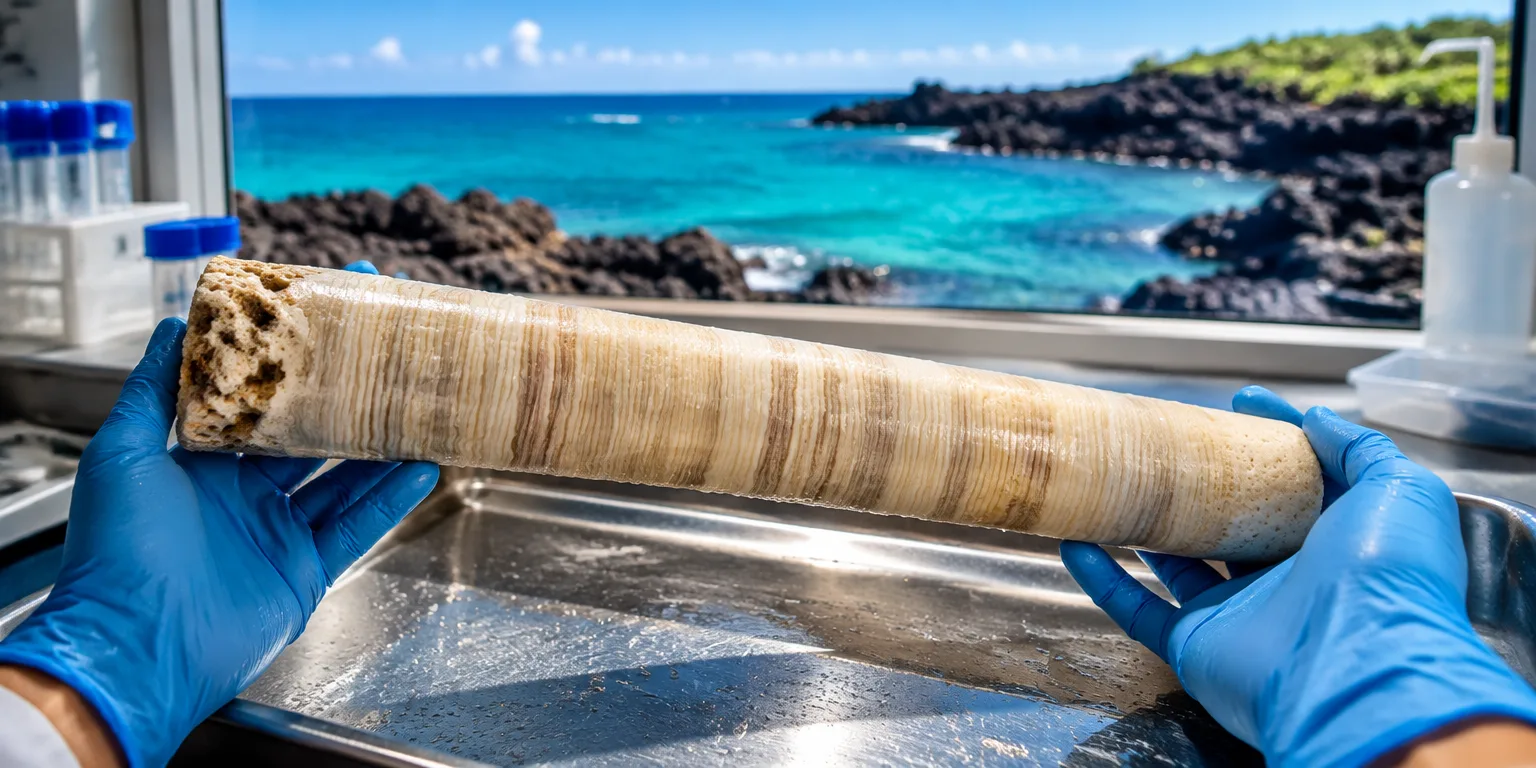
That record comes from long lived corals. Cole and her team dive on scuba to drill cores from living mound corals, then sample the cores millimeter by millimeter in the laboratory. They grind out tiny powders and analyze two aspects of their chemistry, meaning the relative amounts of chemicals in the skeleton that shift with the temperature of the water where the coral grew. Together, those two measures give a history of ocean temperature.
To reach further back, the team also collects dead corals tossed onto beaches by large waves and possibly tsunamis. They estimate the age of those pieces using radiometric methods, which date the coral from the slow decay of natural radioactive elements, and then run the same fine scale chemical analysis. The result is a month by month history of the water temperature in which each coral grew, with warm years marking El Ninos.
When the interviewer compared the method to reading tree rings to learn about past drought or wildfire, Cole agreed it was very similar, with corals preserving ocean history the way trees, ice cores, and cave deposits preserve land and climate history. Where the best satellite records of ocean temperature begin only around late 1981 or early 1982, the corals extend the timeline far into the past and make the recent intensification stand out.
Questions people ask
What exactly is El Nino?
El Nino is a recurring warming of surface water in the central and eastern tropical Pacific, typically lasting about a year. It shifts rainfall, storms, drought, and ocean life well beyond the tropics. Its cool counterpart is called La Nina.
How do scientists know the coral chemistry tracks temperature?
Researchers compare the chemistry in the newest coral layers with directly measured ocean temperatures from the same years. That comparison establishes how the chemical makeup changes with temperature. They then apply that relationship to older layers, using two independent chemical measures as a check on each other.
How far back can one coral record reach?
Many massive mound corals live for decades to more than a century, growing only about a centimeter per year. A core a meter long can therefore span roughly a century. Dead corals from beaches extend the record further when they are dated and analyzed.