Elizabeth Signed the Death Warrant, Then Her Ministers Used It Behind Her Back
She wanted Mary Queen of Scots quietly murdered, so her chief minister used the signed paper anyway.
 The Rest Is History · 696. Elizabeth I vs The Catholics: Killing the Queen of Scots (Part 6)
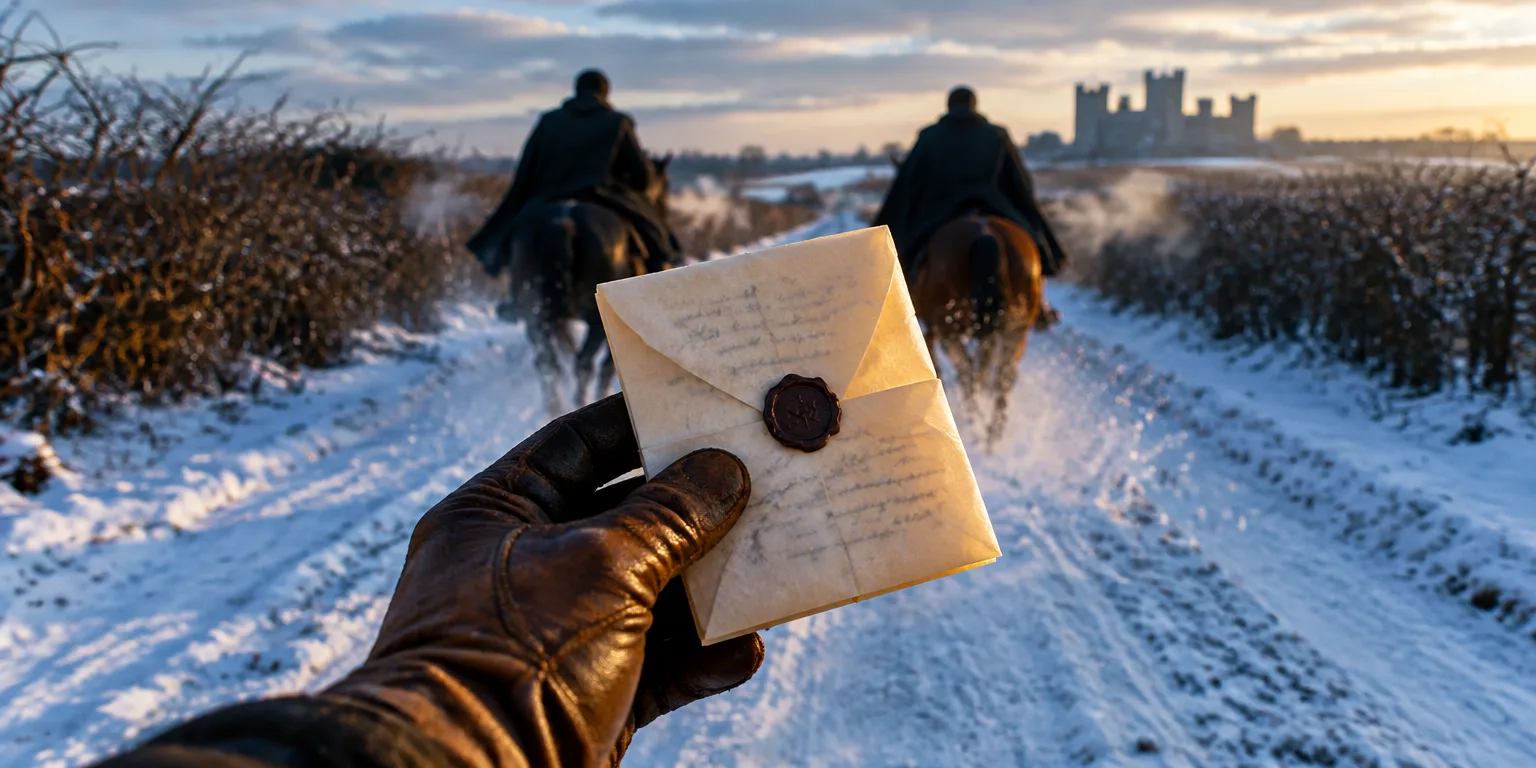
Robert Beale, clerk of the Privy Council and brother-in-law to the spymaster Sir Francis Walsingham, rode north in winter at top speed, carrying a single sheet of paper. With him rode two of the greatest noblemen in England, the Earls of Kent and Shrewsbury, bound for Fotheringay Castle in Northamptonshire where Mary Queen of Scots was held.
The paper was Mary's death warrant. Queen Elizabeth I of England had signed it on Feb. 1, 1587, after months of delay. She had then ordered her ministers not to use it.
That contradiction is the story. Elizabeth wanted her Catholic cousin quietly killed, but she did not want to be the queen who killed a queen. So her chief minister took the signed warrant and used it anyway, behind her back.
Mary, the former queen of Scotland and Elizabeth's heir, had been found guilty of plotting to assassinate Elizabeth. The verdict had come 10 days after her trial, delivered not at the castle but in the Star Chamber at Westminster, a royal court.
Elizabeth had stalled because execution meant two dangers. One was war with Catholic Spain, whose king Philip II was already assembling an invasion fleet. The other was precedent, that if Parliament could license the killing of an anointed ruler, no monarch would be safe.
What Elizabeth wanted instead was a quiet murder in the old royal style, drowned in a butt, a large wine cask, or smothered with a pillow, with no signature and no trial. She kept pointing to the Bond of Association, a pledge signed in 1584 by many of her loyal supporters, including her inner circle of advisers on the Privy Council, members of Parliament, and loyal members of the public, to kill Mary if she ever plotted against Elizabeth. It was, in effect, a promise of lynch law. Elizabeth thought someone should simply act on it.
Her chief minister, William Cecil, Lord Burghley, decided to force her hand. He had Parliament petition for Mary's execution, which Elizabeth received with icy contempt. He then produced a supposed assassination plot against her that was actually old and had already been stopped the previous year, yet which he had kept in reserve. He added a fabricated rumor that Spanish troops had landed in Wales and were marching inland, and told Elizabeth to double her bodyguard. Frightened, she signed.
Even then she held back. Still hoping someone else would do the killing, she ordered Walsingham, who was sick in bed, to write to Mary's jailer, Sir Amias Paulet, a stern Puritan. Why, Elizabeth demanded, had he not yet "found out some way to shorten the life of that queen?"
Paulet refused. "God forbid that I should make so foul a shipwreck of my conscience," he wrote back, "to shed blood without law or warrant." Elizabeth called him dainty, and did not mean it kindly.
That left Burghley holding a signed but frozen warrant. He invited a small group of trusted privy councilors to his house, where they agreed to send it without Elizabeth's final permission, knowing they risked considerable trouble. They gave it to Beale and sent him galloping north.
Questions people ask
Who was Mary Queen of Scots and why was she a prisoner?
Mary was Elizabeth's cousin and the Catholic heir to the English throne. After she fled Scotland in 1568, she spent almost 19 years as Elizabeth's prisoner, and Catholic plots to put her on the throne made Elizabeth's ministers see her as too dangerous to keep alive.
Why was Elizabeth so afraid to execute another queen?
Elizabeth feared that killing an anointed queen would invite invasion by Catholic powers, especially Spain, and would set a precedent that Parliament could remove a monarch. About 60 years later, Parliament did execute Mary's grandson, King Charles I, which suggests her fear was well placed.
Did Elizabeth punish the ministers who went behind her back?
Yes. Elizabeth was furious when she learned Mary had been executed without her final order. The secretary who had dispatched the warrant was prosecuted and fined, though Burghley, who had organized the move, kept his power and his place at her side.