Elon Musk wanted to build a car the way toy cars are made
Five machine makers said no, one said maybe, and that was all Tesla needed to try.
 Founders · How Elon Thinks
Elon Musk, the entrepreneur behind Tesla and SpaceX, was thinking about toy cars.
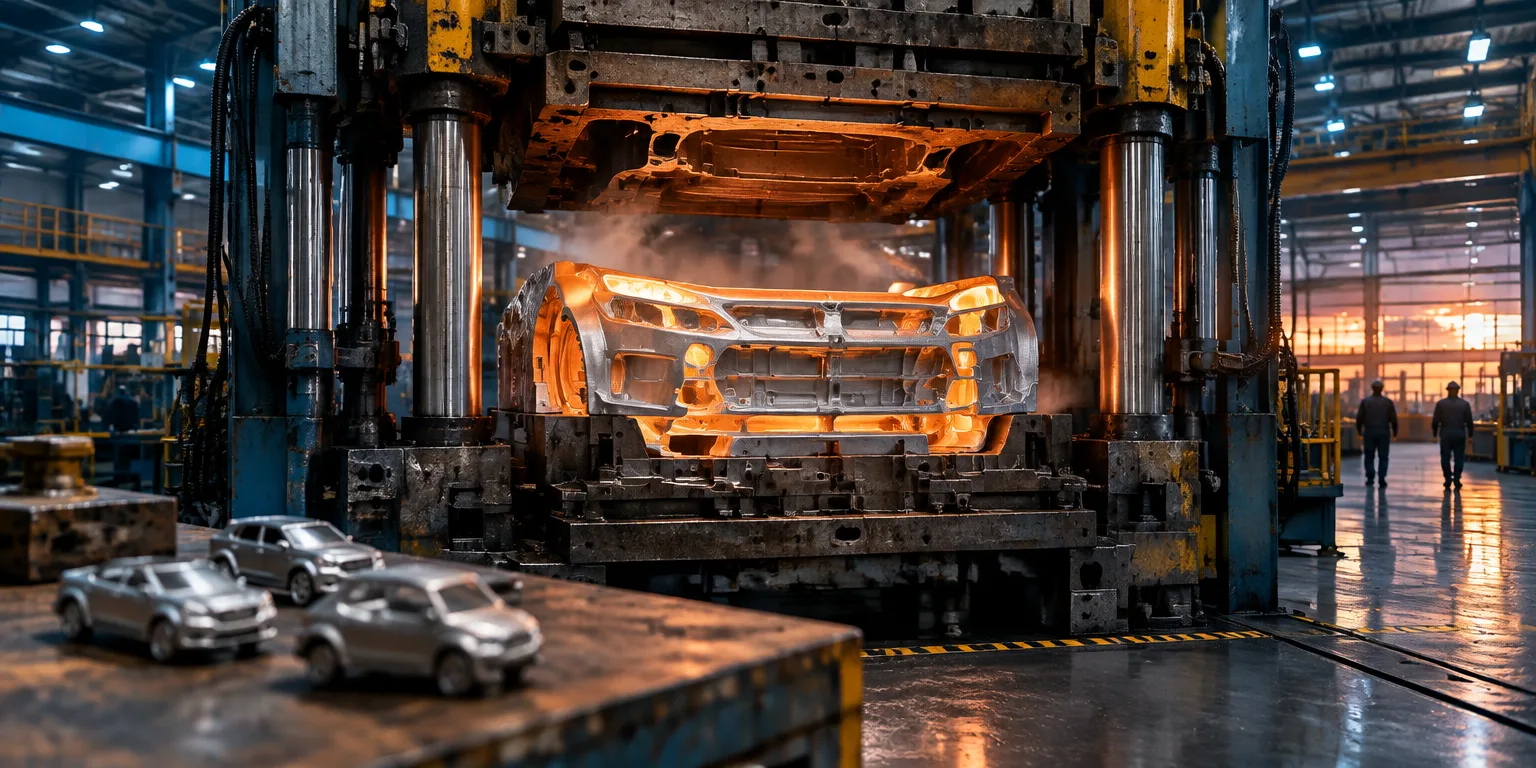
They cost almost nothing, and he wanted to know why. The answer was simple. They just cast them, pouring metal into a mold so it hardens into shape, with no assembly required.
That observation became a manufacturing bet. If a toy car could be made in one pour, why not a real one? At Tesla, the company that builds electric cars, Musk pushed a major innovation, to cast the body of a car as a single piece instead of building it up from many separate parts.
It was a classic example of how he says he thinks. Start with the theoretically perfect product and work backward. Then ask, "What tools, methods, or materials do we need to create to get the atoms in that shape?" He calls thinking in limits a powerful tool, a way of asking what is possible within the absurd.
So Musk asked, "Well, can you build a casting machine big enough for a car?" The answer was that no one had ever done that before. His next question was narrower. Musk asked, "Are we breaking the laws of physics?" The answer was no.
Physics, in his telling, is law and everything else is a recommendation. If his team says something is impossible, his response is to ask, "What would it take?" to get them to consider other answers.
Then came the practical test. Musk said, "Let's just ask them." There were six major casting machine suppliers in the world. He asked all six.
Five of them said no. The sixth said maybe. Musk said, "I'll take that as a yes."
That maybe was enough to proceed, and Tesla later used giant casting presses, often called gigapresses, to cast large front and rear sections in single pours.
In principle, Musk's view was that casting in one piece would mean fewer parts to build, connect and break. In principle that could save time and reduce errors, though huge molds and presses are costly and a mistake can spoil a much bigger piece.
Questions people ask
What does it mean to cast a car as a single piece?
Casting means pouring molten metal, usually aluminum, into a mold and letting it harden into shape. A cast part comes out close to its final form, so it needs much less welding, bolting, and fitting together.
Why would making a car in one piece be better?
In principle, yes. Fewer joints can mean fewer places for errors and less time spent joining parts together. The tradeoff is that a very large mold and press are expensive, and a mistake can spoil a much bigger piece.
Did the idea actually work?
Yes. Tesla now uses giant presses, often called gigapresses, to cast large front and rear sections of its cars in single pours. Suppliers later developed machines large enough to do that routine production work.