England's golden poet finally got his war and died at 31
A minor defeat in Gelderland left him mortally wounded, and his uncle gave him a hero's procession to St. Paul's.
 The Rest Is History · The Shadow War: Elizabeth I vs The Catholics (Part 4)
On September 22, 1586, Sir Philip Sidney finally got to fight. The 31-year-old English courtier and poet, famous for his sonnets, rode out with his uncle's army in the Netherlands with feathers in his helmet and beautiful armor. This was the real war he had wanted, and he rode out relishing it.
Sidney was serving under his uncle, the Earl of Leicester, the English commander sent to help the Dutch rebels hold off Spain. That September, Leicester had finally gone on the attack, capturing a Spanish held town called Doesburg in the eastern province of Gelderland. Emboldened, he moved on to the next target, the town of Zutphen.
The Spanish commander in the Netherlands was determined to save Zutphen and sent 5,000 men to relieve it. What followed was a day of bold mounted attacks. The English soldiers held their own but could not stop the Spanish from getting into the town. It was the kind of minor defeat no one would remember, except for what happened to Sidney.
Sidney charged through the Spanish lines three times. On the second charge his horse was shot from under him, and he found another mount and charged again. On the third, as he was wheeling around to return to his own lines, a musket ball struck him above the left knee. As Leicester wrote afterward in horror, the bone was broken in pieces.
Anxious for his nephew and heir, Leicester put Sidney in a barge and had him carried 20 miles down the river to Arnhem. There surgeons tried to cut out the bullet, but the operation only made the wound worse. Gangrene set in, and Sidney understood he was dying. In his last hours Sidney said that "all things in my former life have been vain, vain, vain." On the afternoon of October 17, 1586, he died.
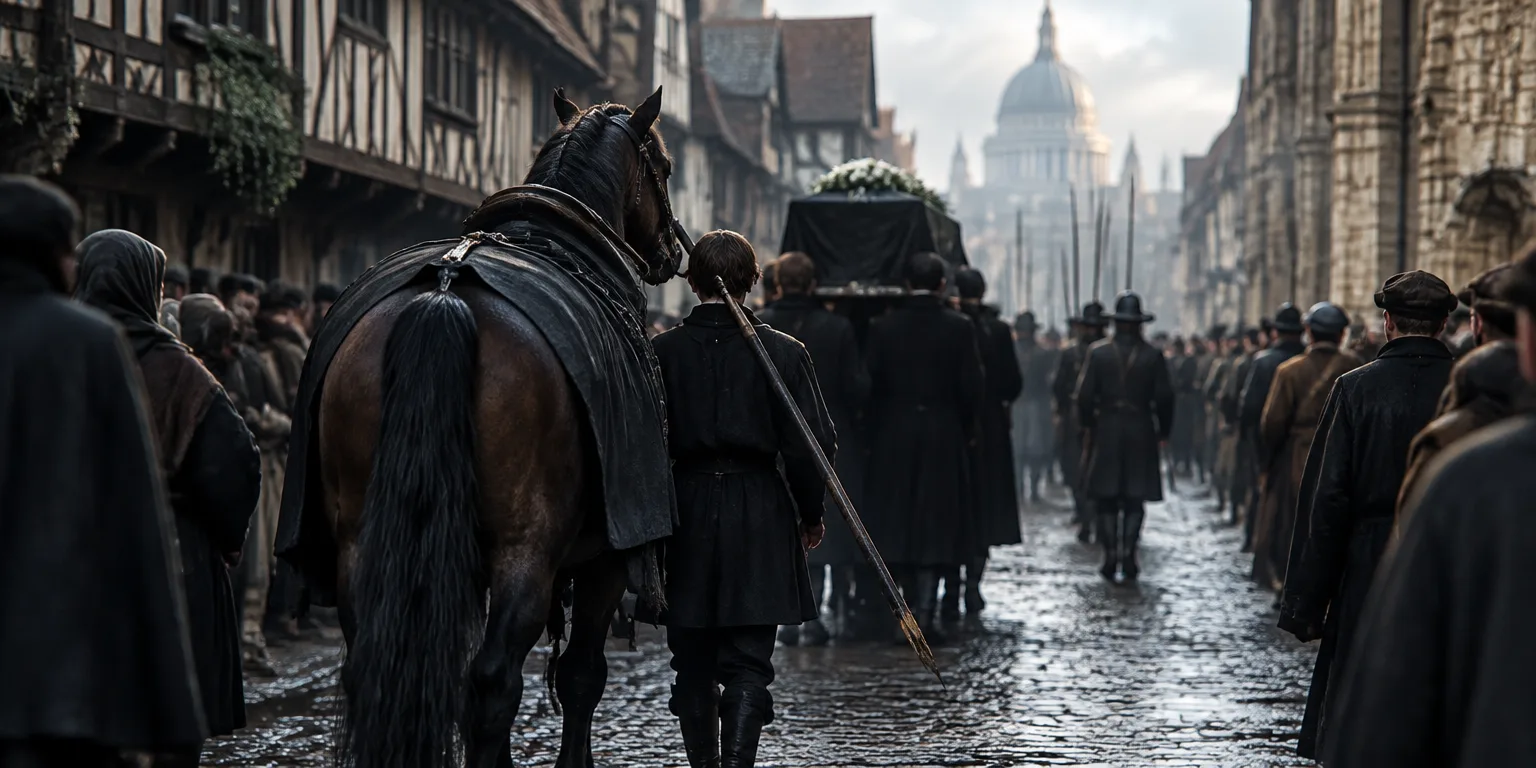
Leicester may have been quarrelsome and ineffective as a general, but he knew how to make a martyr. He arranged a funeral that was slow, somber, and stately, moving from Arnhem to the coast and onward to the English capital. In London, 14 men carried the coffin to St. Paul's Cathedral, accompanied by the Lord Mayor, 300 London citizens under arms, and a page riding Sidney's war horse and trailing a broken lance. The streets were so thronged that the mourners could scarcely pass.
In death, Sidney became the kind of hero he had always wanted to be in life, a celebrated champion for Protestants in England, and indeed for fellow Protestants across Europe. For Queen Elizabeth I, it was a propaganda gift just as the threat of war with Spain was moving across the Channel toward England.
Questions people ask
Why was Sidney so famous before the battle?
Sidney was one of the most admired writers of his age. He wrote a famous sequence of love sonnets called Astrophel and Stella, a long romance called Arcadia, and a short work called A Defence of Poetry that is still taught today. His literary fame is a large reason his early death echoed so widely.
What were the English doing fighting in the Netherlands?
England had promised to help the Dutch rebels against Spain under the Treaty of Nonsuch in 1585. Elizabeth sent soldiers and money, took control of several Dutch port towns as security, and put Leicester in command. Sidney was made governor of Flushing, one of those towns.
Why couldn't doctors save a leg wound?
The wound shattered his thigh bone, and 16th-century surgeons had no antiseptics or reliable way to remove a deep musket ball. Their attempt to cut it out damaged the tissue further and allowed gangrene, or dying tissue from infection, to spread. Once that set in, there was no cure.