England Switched to Brick Because It Ran Out of Trees
An American wood frame goes up in a week or two, while English bricklaying takes a month or two.
 Wendover Productions · Why American Houses Are So Flimsy
Between about 1200 and 1600, England shifted from building homes of wood toward brick because it ran short of good timber.
Region by region, as high quality wood became harder to find, builders turned to brick.
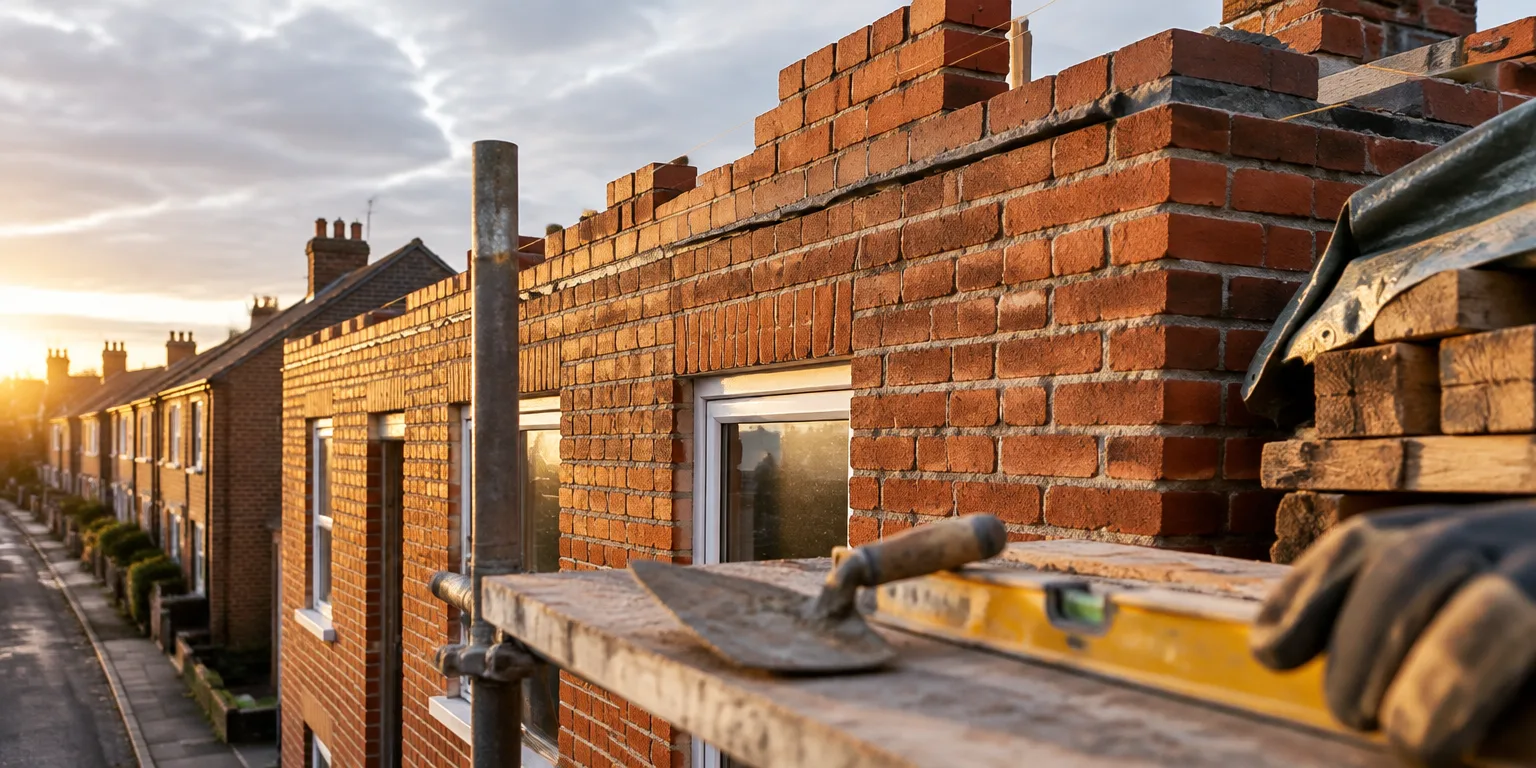
The difference still shows up in speed. The wooden skeleton of an American house often goes up in one to two weeks, while brickwork on a similar English house takes one to two months. Bricklaying takes much more labor, and English bricklayers typically complete a two-year apprenticeship combining classroom lessons with job site experience.
Wood also lost its price edge there. The United Kingdom grows some trees, mainly in Scotland, but most of its lumber comes from Scandinavia. A standard eight-foot stud that sells for about four dollars in the United States sells for about six dollars in Britain, making brick more competitive.
Questions people ask
Does England have any forests now?
Yes, but they are mostly replanted and relatively small. About 13% of the United Kingdom is woodland today, compared with about 36% in the United States, and much of the British timber is soft, fast growing plantation wood rather than the large, high strength beams homebuilders once used.
Why does America still have so much cheap wood?
The United States has vast forestland and a large timber plantation system, especially in the Southeast, that grows uniform trees for lumber. That steady supply keeps a standard eight foot stud cheap and makes wood framing the lowest cost way to build.