Europe Has Lost on AI Chips and Models. Applications Are All That Is Left.
Investor Nicolai Tangen says everyday uses suit a highly educated continent that wants to work less.

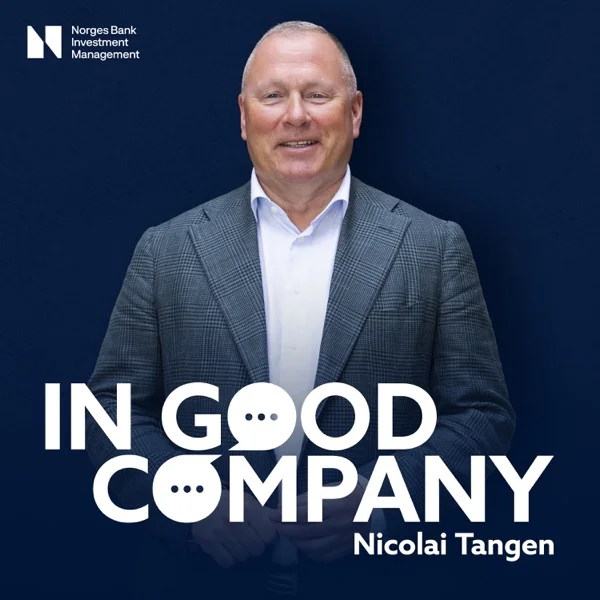 In Good Company with Nicolai Tangen · Friday Wrap-Up: Lessons from Google’s Former CEO and Europe’s AI Regulation Problem
Nicolai Tangen, who runs Norway's sovereign wealth fund, was recapping his recent conversation with Eric Schmidt, the former chief executive of Google, when the talk turned to Europe and artificial intelligence. Schmidt's view, as recounted in the discussion, is that Europe reaches for regulation before pursuing new ideas, and Tangen agreed.
Then Tangen put his version in one bleak summary. “We kind of lost out on the energy side,” he said. “We lost out on chips, the cloud, the models.”
By stack, he meant the layers underneath everyday AI. Energy powers the data centers, chips do the computing, cloud companies rent out that computing, and model makers build the systems like ChatGPT that everything else uses. Tangen believes Europe has fallen behind on all of them.
What remains, he argued, is application, meaning the practical tools built on top of other companies' models to make office work, factory work, and public services faster and cheaper. He described a recent article in the Financial Times by Mario Draghi, the former head of the European Central Bank, as arguing that Europe must deploy AI wherever it can to stay competitive. Tangen added that competition from China is becoming increasingly forceful.
Tangen said that kind of deployment is exactly what Europe needs, and that it should suit the continent. Europeans are highly educated and highly digital, he said, and efficiency pays because “we basically hate working.”
The argument is also self-interested because, as Tangen put it, 25% of his fund is invested in Europe, so he wants European companies to be competitive, make more money, and lift the value of his portfolio.
Questions people ask
What do people mean by the AI stack?
The AI stack is the chain of inputs needed to deliver AI to a user. At the bottom are energy and chips, then the giant data centers and cloud services that rent out computing, then the foundation models, and finally the applications, like customer service assistants or factory scheduling tools, that sit on top.
Why is Europe seen as behind on chips, cloud, and models?
The most advanced AI chips are designed mainly by American companies and made mainly in Taiwan, while the largest cloud providers and leading model builders are also American and Chinese. Europe has strong research and industrial companies but no rival of the same scale in any of those layers.
Who is Mario Draghi and why does his view matter?
He was prime minister of Italy and president of the European Central Bank, and he later wrote a major report on European competitiveness. His message, which Tangen echoed, is that Europe cannot win by inventing everything itself and must adopt AI quickly to raise productivity.