Europe Is Warm Because Water From the Gulf of Mexico Heats It
Trade winds pile sun-warmed water into the Gulf of Mexico, and the ocean delivers it to Europe with the heat of a million nuclear plants.
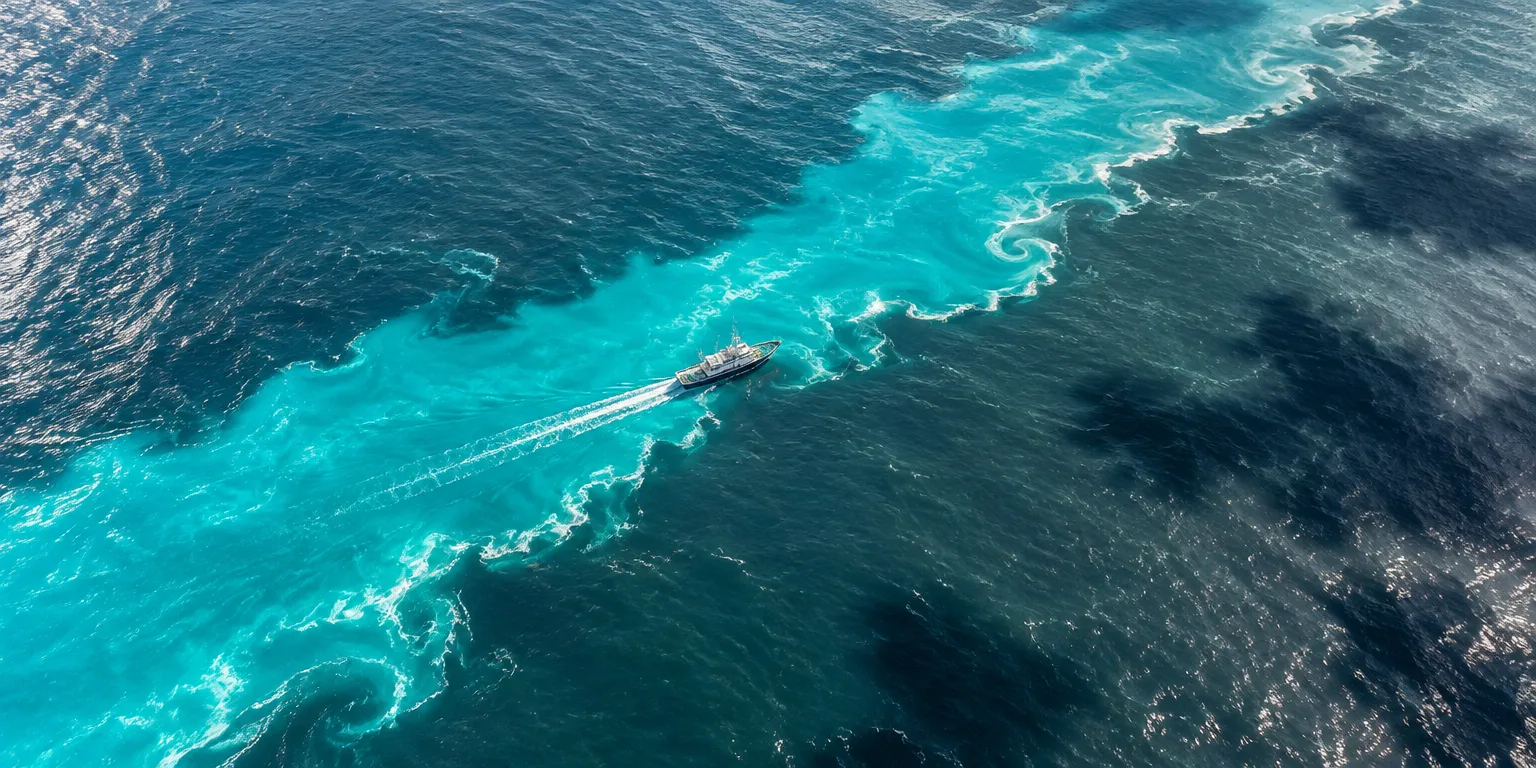
 Kurzgesagt – In a Nutshell · The Gulf Stream Explained
The warm water that softens Europe's weather comes from the Gulf of Mexico, 10,000 kilometers away. The Gulf Stream, among the biggest and swiftest ocean flows on the planet, moves at about 2 meters per second and hauls up to 100 million cubic meters of warm water per second toward Europe.
It begins with wind. A steady wind called the southeast trade wind shoves warm water near the surface toward the northwest, collecting in the Gulf of Mexico and warming to 30 degrees Celsius. Because the planet spins and western winds blow, that piled up, sun warmed water is then steered back across the Atlantic toward Europe.
On the way, the current splits in three. One part flows south, another heads east to join the Canary Current off Africa. The remaining branch continues north as the North Atlantic Current. That northern branch is Europe's heater, giving off large amounts of stored heat into the air as it travels.
The scale is difficult to picture. To produce as much heat as the current delivers to European shores would take about 1,000,000 nuclear power plants. It is also called a heat pump. It also carries animals north from the Caribbean, but its larger cargo is warmth. Without it, temperatures in Europe would be at least five to ten degrees colder, and instead of lush fields there would be extended winters and barren, ice covered terrain. Scientists worry that climate change could bring the current to a standstill.
Questions people ask
How fast is two meters per second?
It is about 7 kilometers per hour, or a brisk human walk. The current is very wide and deep, so even at walking pace it shifts an enormous volume of water.
Why doesn't the warm water just stay in the Gulf of Mexico?
Winds keep pushing more water in behind it, so it has to go somewhere, and the rotation of the Earth and the westerly winds guide it northeast across the Atlantic. In the far north the water cools, grows denser, and sinks. That cold water sinks in the north and pulls more warm water in behind it.
If the Gulf Stream stopped, would Europe freeze overnight?
No. According to climate models, the change would play out over years and decades, not days, while greenhouse warming is also heating the planet. The models point to regional cooling in northwestern Europe and major shifts in weather and farming, rather than a sudden freeze.